The Quiet Physicist Who Outsmarted Invisible Sky Highways and Saved a Nation From the Shadows
CHAPTER 1: THE CABINET ROOM AMBUSH
The heavy oak door of 10 Downing Street groaned shut against the damp London draft.
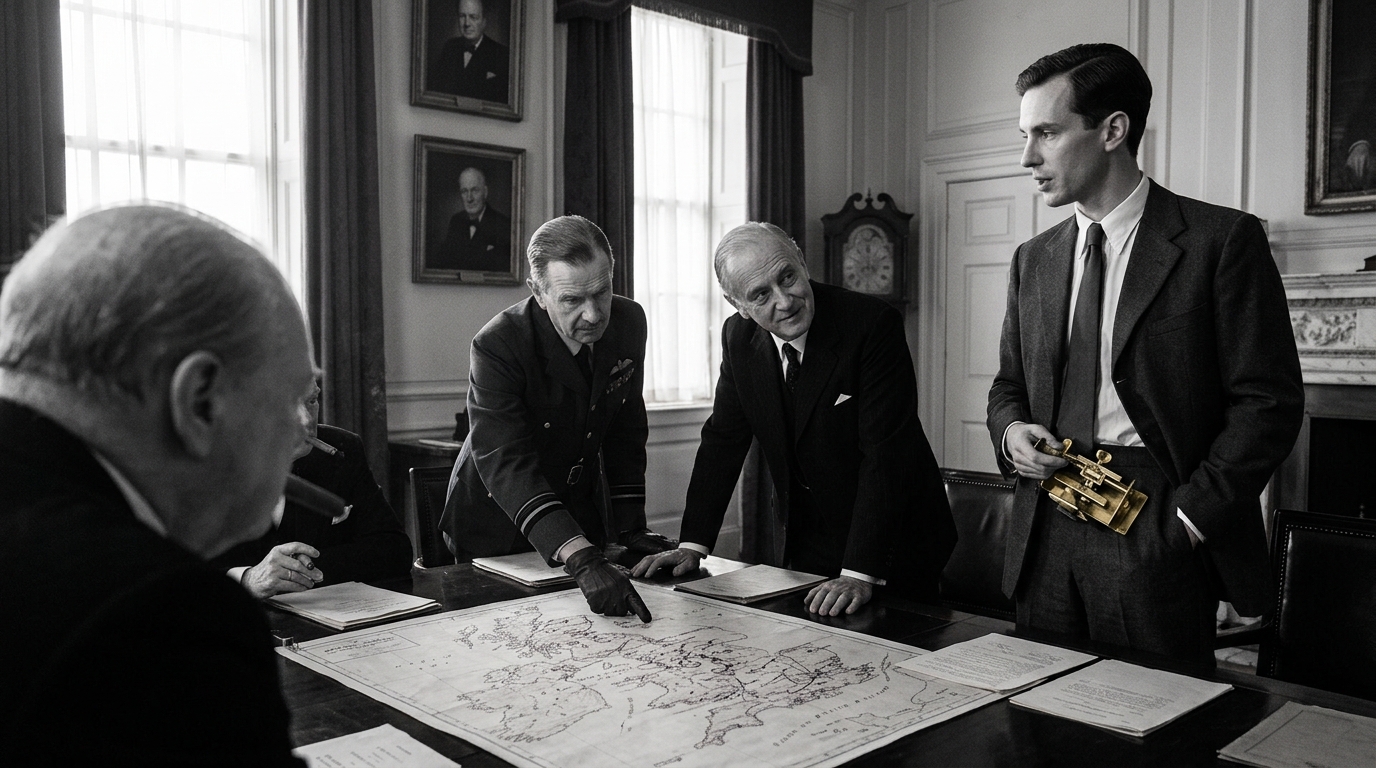
Reginald Victor Jones shifted his briefcase from one sweating hand to the other, his boots clicking sharply on the linoleum as he stepped into the cabinet room thirty minutes late.
Winston Churchill sat at the head of the long mahogany table, chewing an unlit cigar while surrounded by men old enough to be his father.
Air Chief Marshal Hugh Dowding stared down at a stack of tactical reports with a look of fixed exhaustion.
Lord Beaverbrook leaned back, arms crossed, watching the youngest man in the room with undisguised skepticism.
Jones was twenty-eight years old, the son of a postman, standing among the most powerful architects of the British Empire.
“You’re late, young man,” Churchill murmured, his voice a low gravel hum that cut through the murmur of the room.
“Traffic in Whitehall, Prime Minister,” Jones said plainly, refusing to offer elaborate excuses or bow to the heavy atmosphere of institutional seniority.
The Luftwaffe had been dropping tons of high explosives onto British cities at night, cutting through thick cloud cover with an unearthly precision that defied every known rule of navigation.
The official military consensus was simple: it was luck, or spies on the ground using signal lamps.
Jones knew better, but speaking up meant challenging the entrenched brass who viewed a civilian scientist as an intrusive nuisance.
“They tell us the bombing runs are guesswork,” Dowding said, tapping a gloved finger against the map. “Lucky guesses in the dark.”
“They aren’t guesses,” Jones replied, his voice flat and steady against the rising hum of doubt around the table.
Churchill turned his heavy head, his eyes narrowing behind his spectacles. “Explain yourself, Jones. Make it brief.”
Jones reached into his coat pocket, his thumb brushing the cool, scarred surface of a brass adjustment tool he had carried since his days at Oxford.
“The Germans aren’t looking out of windows,” Jones said, stepping closer to the map spread across the center of the table. “They’re following invisible radio highways pointed straight at our manufacturing centers.”
A murmur of dry laughter rippled down the left side of the table.
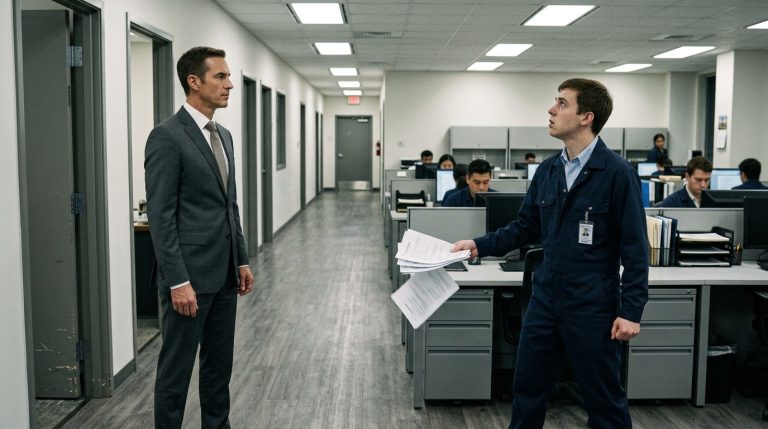
Thomas Eckersley, the chief propagation expert, shook his head with an indulgent smirk.
“Radio waves follow straight lines, boy,” Eckersley scoffed, leaning forward. “They cannot bend over the curvature of the earth across the channel. Physics forbids it.”
Jones felt the familiar, grinding exhaustion of dealing with men who preferred comfortable theories to messy reality.
He kept his grip on the brass tool inside his pocket, squeezing until the metal bit into his skin, keeping his voice level as the room closed in around him.
CHAPTER 2: THE BRASS ADJUSTMENT
Thomas Eckersley leaned back, crossing his arms with the smug finality of a man who believed his textbooks were carved in stone.
“If these imaginary rays could bend around the curvature of the earth,” Eckersley said, his voice dripping with academic condescension, “every radio tower in London would be melting from its own feedback by sundown.”
Jones did not blink.
He kept his thumb anchored to the scarred brass tool in his pocket, turning its smooth edges over and over until the friction bit into his skin.
The military establishment loved clean theories because messy facts required actual work.
“Physics isn’t finished just because your lectures ended in twenty-five, Thomas,” Jones said, his tone dry and devoid of heat.
Dowding shifted heavily in his chair, his gaze sliding between the veteran propagation expert and the twenty-eight-year-old upstart.
“The Prime Minister asked for a solution, not a debate on university syllabi,” Dowding said, cutting through the rising tension with the blunt weight of command. “Can you prove these beams exist, Jones, or are we chasing ghosts in the dark?”
“We test it,” Jones replied, stepping away from the map table.
“With what?” Eckersley scoffed. “Our radar stations can’t pick up frequencies they aren’t built to see. You’re talking about hardware we don’t possess.”
Jones walked toward the tall window overlooking Whitehall, watching the drizzle smear the grey slate roofs across the street.
“We don’t need military radar,” Jones murmured, staring at his own faint reflection in the glass. “We just need a shop in London that sells what amateur radio operators use on weekends.”
Dowding narrowed his eyes. “Explain.”
“A commercial receiver,” Jones said, turning back to face the table. “Off the shelf. Something that listens where the brass thinks nobody is broadcasting.”
The room fell into a heavy, suffocating quiet, broken only by the ticking of the grandfather clock in the corner.
CHAPTER 3: THE OFFTHESHELF RECEIVER
The bell above the cramped doorway chimed with a tinny, high-pitched rattle as the shopkeeper slid a heavy cardboard carton across the timber counter.
“American import,” the old man said, wiping grease from his thumb onto a rag. “Hallicrafters S-27. Cost you a pretty penny, and God knows what you’re tuning into with the military clamping down on the bands.”
Jones dropped a worn leather wallet onto the wood and counted out the notes without a word.
He didn’t have time to wait for a requisition committee to approve specialized hardware that didn’t exist on paper.
“Does it cover thirty megahertz?” Jones asked, his eyes locked on the heavy metal dials of the receiver.
“Pulls in everything from police dispatches to transatlantic static if the atmospheric skip is right,” the shopkeeper muttered, sliding the box into a brown paper wrap. “Just keep your antenna low if the constables come sniffing around.”
Jones hoisted the heavy unit under one arm, feeling the dead weight shift against his ribs as he stepped back out into the damp London mist.
Back at the temporary testing station, the equipment sat on a scarred wooden workbench next to a cold cup of tea.
He didn’t bother calling Eckersley or drafting another memo that would sit unread in a brass-bound folder.
He plugged the heavy black cord directly into the wall socket, flicked the toggle switch, and watched the amber dial glow to life against the darkening room.
The speaker let out a sharp, rhythmic hiss—a steady, pulsing stream of static that cut through the silence like a dull saw.
Jones twisted the tuning knob slowly, his fingers grazing the ridged metal as the frequency needle crept upward toward the invisible band.
CHAPTER 4: THE NIGHT FLIGHT
The cabin of the Avro Anson vibrated with a bone-rattling drone that shook loose flakes of frost from the aluminum framing.
The pilot wiped condensation from the perspex window, staring out into the pitch-black sky above the English coastline.
Jones sat hunched over the commercial radio set strapped securely to a wooden crate between his knees.
He didn’t wear aviator goggles or a thick fleece cap; he just wore his everyday wool suit, the fabric stiff against the biting draft leaking through the fuselage joints.
The modified receiver hummed, its green tuning eye glowing faintly in the dim instrument glow.
“We’re crossing the three-thousand-foot mark,” the pilot shouted back over the engine roar. “If your shop-bought box is a dud, we’re just burning fuel for the Germans.”
Jones didn’t answer.
He kept his gaze fixed on the glowing dial, his fingers resting lightly on the Bakelite knob.
The steady background hiss of atmospheric static suddenly hitched, flattening into a sharp, piercing drone that vibrated straight through the headphones.
It wasn’t random noise.
It was a deliberate, repeating pulse of long dashes—the unmistakable signature of an electronic highway cutting straight through the dark.
“Hold this heading,” Jones said, his voice tight and level against the cabin vibration.
“You found something?”
“We’re sitting right in the middle of their beam,” Jones replied, watching the signal strength needle pin hard to the right.
CHAPTER 5: THE INTERSECTION POINT
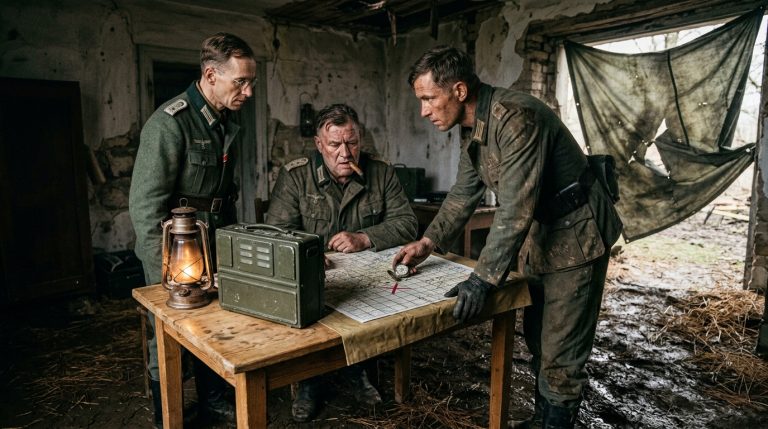
The pencil tip rested hard against the paper grid where two distinct compass lines crossed over the heart of the Midlands.
“Right there,” Jones said, leaning his weight over the drafting table while the office lamp flickered with the grid’s electrical strain.
The pilot wiped ink from his thumb, staring down at the map with a heavy frown.
“Derby,” the pilot muttered, reading the destination name stamped below the intersecting lines. “That’s where they build every single Merlin engine for the fighters.”
“Exactly,” Jones replied, his voice dropping into a flat, cold register. “They aren’t bombing random streets in the dark. They’re using the radio signals as crosshairs.”
The door swung open behind them, letting in the harsh, tobacco-stained air of the corridor.
Thomas Eckersley stepped into the room, his eyes darting to the marked map with an expression of stubborn disbelief.
“A commercial receiver picked up static, and suddenly you’ve redesigned the laws of physics,” Eckersley scoffed, crossing his arms tightly over his vest. “You’ve plotted a coincidence and called it a campaign.”
Jones did not raise his voice.
He picked up the scarred brass adjustment tool from the corner of the desk, turning it slowly between his fingers as he met the older man’s gaze.
“Look at the flight logs from last Tuesday’s raid,” Jones said, sliding the logbook across the timber surface. “Every single bomb fell within a thousand yards of the intersection point. That isn’t luck, Thomas. That’s a target locked by invisible hands.”
Eckersley stared at the open book, his jaw tightening as the weight of the undeniable data began to crack his defensive posture.
CHAPTER 6: THE RUSTED THRESHOLD
Eckersley didn’t offer an apology, nor did he shake hands.
He simply turned on his heel, his coat whispering against the doorframe as he walked out into the corridor without a word.
Jones watched him leave, his palm still resting against the scarred timber of the desk where the map lay pinned under heavy brass weights.
There were no cheering crowds waiting in the hall, and no medals arriving in the post.
The establishment had conceded out of sheer necessity, not out of grace.
“The hospital diathermy sets are being crated from the south districts as we speak,” the pilot said quietly, checking his pocket watch. “They’ll be broadcasting static across the band by midnight.”
Jones nodded, pulling his coat tighter against his chest as the draft from the window shifted.
“It won’t stop them tonight,” Jones said, his voice level and devoid of triumph. “They’ll adapt their frequencies, and we’ll have to chase them to the next frequency band.”
“An endless loop,” the pilot muttered.
“No,” Jones replied, turning toward the window where the London fog rolled gray and heavy over the slate roofs. “Just work.”
He reached into his pocket, his thumb finding the familiar, cold edge of the brass tool one last time before letting it go.
The invisible war in the sky had only just begun, but the highway had finally hit a roadblock built by common sense and stubborn endurance.