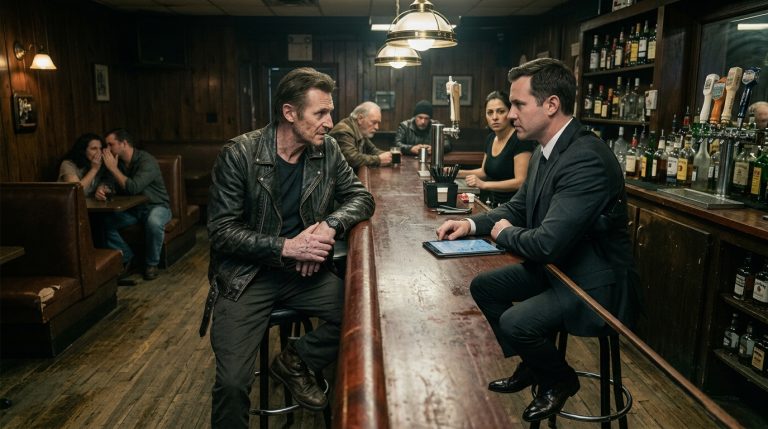
The Measured Line: A Quiet War for the Soul of a 30-Acre Sanctuary
CHAPTER 1: The Intrusion
The words hung in the humid afternoon air, so utterly absurd they barely registered. “As of Monday, this lake becomes a community resource.”
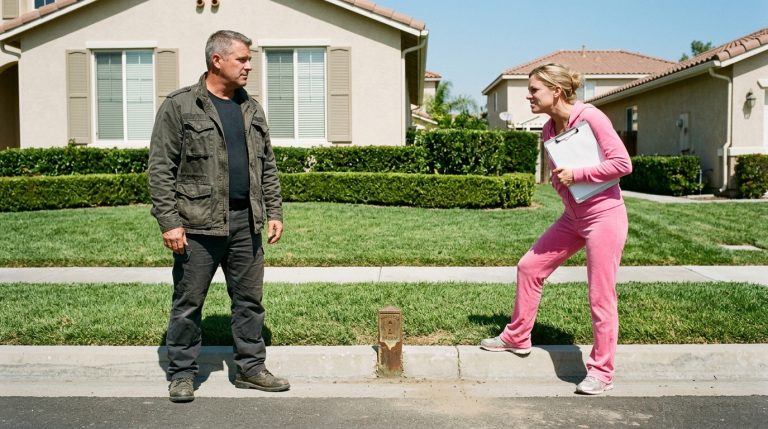
I looked at the woman standing on my lawn. Karen Miller, president of the Lake View Estates HOA, looked like a thundercloud of cheap polyester and entitlement. The logo on her polo shirt strained against her chest, a pastel advertisement for a suburban tyranny I had spent two years avoiding. She clutched a clipboard as if it were a scepter, her face set in a mask of smug, administrative authority.
“I’m sorry,” I said, my voice dropping into a register that usually signaled a tactical retreat or a hard truth. “I think I misheard you. This is private property.”
She let out a dismissive puff of air, smelling faintly of stale coffee and desperation. “Not anymore,” she chirped, tapping her clipboard with a perfectly manicured nail. “The board voted unanimously. We’re establishing a community beach and recreation area right here.”
She gestured with a grand, sweeping arc of her arm toward my lake—the polished-steel mirror reflecting the pines I had spent two years protecting. It was thirty acres of unincorporated county land, free and clear, except for that single, narrow one-acre strip along the road that tied me to the HOA’s legal jurisdiction.
She thrust a garishly colored flyer into my hand. It was an aesthetic disaster of clip-art suns and smiling fish, depicting a sandy beach and a kayak launch positioned squarely in the center of my property. “Construction on the access path begins tomorrow,” she added, as if granting me a favor. “We’ll need you to ensure your vehicles are moved. No obstructions.”
A cold, familiar stillness settled over me. It was the same glacial focus that had kept me alive during fifteen years of recon surveying—the ability to assess a threat, identify the terrain, and calculate the cost of holding a line. My anger didn’t flare; it solidified. I felt the paper of the flyer crinkle under my thumb, the cheap, thin weight of it a stark contrast to the thick, ironclad deed sitting in my office safe.
She was watching me, waiting for the flicker of intimidation she likely saw in every other resident she had bullied. She saw a quiet guy who kept to himself. She didn’t see the man who had spent a decade and a half drawing borders where life and death were the only variables.
“Karen,” I said, my voice steady, barely above a whisper. “You are trespassing. You have ten seconds to get off my property before I call the sheriff.”
Her smugness curdled into a blotchy, furious red. “You can’t do that! The HOA has a recreational easement. You’ll be fined for impeding community access. You’ll be hearing from our lawyer.”
She spun on her orthopedic sandals and stomped back toward the street, her hips swaying with a mix of indignation and misplaced power. I watched her go, my jaw tight, holding the crumpled flyer like a piece of evidence. I had read every line of those covenants before I signed, a document thick enough to stop a bullet. There was no easement. She wasn’t just wrong; she was playing a game of chicken with someone who didn’t recognize her authority.
I turned back toward my home—a converted barn that housed my true arsenal: high-precision surveying instruments, archived county plats, and a resolve that was suddenly as sharp as a new survey stake. The peace I had promised Sarah was under assault. The field was set.
CHAPTER 2: The Assessment
The walk back to the converted barn was a methodical exercise in cooling the engine. My boots crunched against the dry, sun-baked earth, a rhythmic sound that usually calmed me, but today, it felt like the ticking of a clock. Every step across the property was a reaffirmation of ownership, a tactile reminder of the geodetic reality Karen Miller was currently trying to rewrite. The lake shimmered ahead, a brilliant, calm blue that stood in total defiance of the absurdity being peddled at my front door.
I entered the barn, the transition from the humid afternoon to the climate-controlled stillness of my home office immediate. The scent here was different—a mix of high-grade paper, the metallic tang of precision instruments, and the faint, grounding odor of old, treated leather. I walked straight to the drafting table, the crumpled flyer still clenched in my right hand. I didn’t toss it in the trash; I flattened it on the table, smoothing the creases with a calloused thumb.
My office was my command center, a space where sentimentality went to die and data took its place. Along the far wall, the Trimble S-series robotic total station rested on its tripod, a silent, unblinking witness to the land’s true dimensions. I bypassed it, moving instead to the fireproof cabinet. I spun the combination lock—three left, two right, one left—the familiar tactile feedback guiding my hands. The door creaked open, revealing the thick, authoritative binder that held my life’s work.
I pulled out the closing plat. The paper was crisp, authoritative, a document of ironclad, recorded truth. I unrolled it across the drafting table, weighting the corners with heavy, brass-handled glass paperweights. The overhead task lamp hissed to life, bathing the map in a clean, stark white light that bleached out any ambiguity.
There it was. Lot 17. The meets and bounds description was a labyrinth of bearings and distances, the professional surveyor’s language for “mine.” I spent a long moment tracing the boundary line with a stylus. The lake was a perfect blue oval, tucked safely inside the lot, nearly a hundred yards from the boundary of the Lake View Estates Track A. I cross-referenced the coordinates with the notes from my own survey—the ones I had conducted two weeks after moving in, just to be sure.
Karen Miller’s claim of a recreational easement was not just an overreach; it was a fabrication. There was nothing in the recorded documents, nothing in the county plat, and nothing in the covenants that gave the HOA a shred of authority over my water.
I sat in the swivel chair, the leather creaking under the shifting weight. The silence in the room was absolute, a stark contrast to the grating, high-pitched insistence of Karen’s voice from twenty minutes ago. I pulled the current HOA bylaws from the stack, a document thick enough to serve as a doorstop. I began the deep dive. I was looking for the language, the specific turn of phrase that she might be using to justify this insanity. I checked the definitions of “common area,” “access points,” and “member responsibilities.”
The logic was sound, the documents were solid, and the truth was static. She was banking on me not knowing the difference between a deeded right and an administrative assertion. She was betting on the social pressure of a community organization, the fear of legal bills, and the overwhelming noise of suburban drama to force a surrender.
I picked up a legal pad and began to map the battlefield. At the top of the page, I wrote the date and time, followed by a succinct summary of the interaction. My hand was steady, the cursive precise. My training in the Corps had taught me that a well-documented log was the most potent weapon in any dispute—a shield that could deflect even the most frantic, baseless accusations.
The heat of the day was beginning to wane, and the office was growing cooler, the air circulating through the vents with a low, mechanical hum. I leaned back, my eyes tracking the straight, undeniable lines of my property on the map. This wasn’t about a lake. It was about the principle of the border, the absolute, unwavering sanctity of private domain. I felt the familiar, cold resolve settling into my bones, a steady, pulsing thrum of focus. I had the facts, the survey, and the legal foundation.
Now, I needed to know exactly who I was fighting. I reached for my phone, scrolling to the contact entry I had made after seeing Karen’s name on the neighborhood newsletter months ago. I wouldn’t rush this. I would build my intelligence, identify her weak points, and ensure that when the next move was made, it would be based on a reality she couldn’t tear down with a garish, cartoonish flyer.
I looked at the map once more, then turned off the lamp. The office plunged into shadow, the outlines of my surveying tools barely visible in the dim light. I stepped out onto the porch, the air crisping with the oncoming evening. The lake was a dark mirror now, the pines reflecting in the deep water, standing silent and tall, just as they had been for decades before the Estates were built, and just as they would be long after Karen Miller’s petty tyranny was a forgotten footnote in the county records. The quiet was returning, but it was a different kind of quiet now—the silence of a sentinel waiting for the first sign of an encroaching force.
CHAPTER 3: The Reconnaissance
The morning air felt thick, charged with the kind of stillness that usually precedes a storm. I walked the boundary of my property line, the tall grass brushing against my work boots, each step reinforcing the geometry I had spent so long defining. My goal was simple: Arthur Henderson’s garden. It was three houses down, a patch of land that stood out against the uniform, manicured lawns of Lake View Estates. While everyone else seemed intent on achieving a suburban homogeneity that bordered on the sterile, Arthur was growing tomatoes, peppers, and beans with a stubborn, chaotic disregard for HOA regulations.
I approached his yard, the soil yielding softly under my feet. Arthur was already there, kneeling in the dirt, his back to the street. He didn’t look up as I approached, though he surely heard the gravel crunch of my footsteps. His hands were busy, working a small hand-trowel into the dark, damp earth around a tomato plant. He moved with a rhythm that spoke of decades of practice—steady, deliberate, and entirely unbothered by the ticking clocks of the modern world.
“Morning, Arthur,” I said, my voice pitched low to blend into the morning quiet.
He shifted, rising with a groan that creaked in sympathy with his joints. He wiped his hands on a grease-stained rag before turning to face me. His eyes were sharp, bright blue, and set in a face mapped with the deep lines of a life spent outdoors. He didn’t offer a smile, but the look he gave me was one of grim acknowledgment. “Thorne,” he grunted, nodding toward my property in the distance. “I saw you out there with the robotic total station yesterday. Marking your lines again?”
“Just keeping the record straight,” I replied. “Karen Miller stopped by my place yesterday. She seems convinced that my lake is a community asset.”
Arthur let out a sound that was half-laugh, half-growl. He kicked a clump of dirt away from his boot, his gaze shifting to the horizon. “Karen. That woman has a talent for seeing things that don’t exist. She’s been trying to exert control over this neighborhood since the day she got elected. It starts with the grass height, then moves to the color of your front door, and next thing you know, she’s eyeing your property line like it’s a conquest.”
“She mentioned an easement,” I said, watching him closely. “Citing the covenants.”
“Covenants,” Arthur spat the word as if it were bitter. “Those documents are just tools to her. She uses them to prune the neighborhood until it looks like a bonsai tree. If it doesn’t fit her vision, she fines you until you either quit or conform.” He gestured to a series of rusted, waist-high tomato cages in his garden. “She tried to hit me with a two-hundred-dollar penalty last year. Said these cages were ‘aesthetically discordant.’ I told her they were functional, and if she wanted to contest it, she’d have to haul me into a hearing. She backed down, but she’s the type who holds a grudge. She’s not just doing this to you, Thorne. She’s building a power base.”
I leaned against a fence post, the wood weathered and silvered by time. “Why does the board let her?”
Arthur looked at me, a flicker of genuine pity in his eyes. “Because most people here just want to live their lives. They don’t want the trouble. They pay the fine, they paint the door, they pull the weeds, and they hope she moves on to someone else. They think if they stay quiet, they’re safe. Karen knows that. She counts on it.”
He leaned in closer, his voice dropping. “But you… you’re different. I’ve seen you measuring the land. I know you’re a professional. If you want to fight her, you don’t fight her in her meetings. You fight her in the documents. She’s sloppy when she’s arrogant. She’s been cutting corners for years, assuming nobody would ever take the time to read the fine print.”
I considered this, the mental map of my own documents expanding. I had been planning a formal request for information, a way to trap her with her own bureaucratic hubris, but Arthur’s insight suggested the corruption ran deeper than just the lake. “What kind of corners?”
Arthur shrugged, a non-committal gesture that held a mountain of implication. “Watch the minutes of the board meetings. Watch the financials. Money flows through that HOA like water through a sieve, and yet, nobody ever seems to know where it goes. She’s the gatekeeper of the records. If you want to stop her, you have to find out what she’s been hiding in those files.”
I stayed with him for another ten minutes, the conversation shifting to the soil quality and the upcoming harvest. It was a tactical pause, a way to let the information settle. As I walked away, back toward the edge of my own property, the sense of urgency that had been buzzing in the back of my mind since the day before sharpened into a clear, cold objective. Karen wasn’t just a nuisance; she was a predator, and like any predator, she had a territory she was trying to maintain.
I stopped at the property line, pulling out my phone. I didn’t check the time, but the angle of the sun told me the day was slipping away. I had Arthur’s confirmation, but I needed to see more. I needed to witness the fear she instilled, not just hear about it. I needed to see the Garcas, the young couple down the street. If I could get them to speak, to share their story, I would have the foundation for a much larger, more cohesive resistance than a single man with a surveyor’s kit could ever manage on his own.
The neighborhood seemed quiet, perhaps too quiet. A few sprinklers hissed in the distance, casting rainbows in the morning light, but the streets felt empty, as if the residents were hiding behind their closed blinds. I reached the Garcia house, the wooden playset in the front yard looking perfectly reasonable, if not a bit weathered, despite the “inharmonious” shade of cedar. I stood by the driveway for a moment, listening, the weight of the coming confrontation finally beginning to feel like a reality I could actually manage.
CHAPTER 4: The Trap
Maria Garcia opened the door, her expression a mix of caution and fatigue. She didn’t invite me in immediately; she stood in the doorway, shielding the interior of the house with her body. Behind her, I could hear the muffled, frantic noise of two children, the rhythm of a household held together by sheer persistence. When she saw the folder in my hand, her eyes flickered—a brief, involuntary movement toward the street, as if checking for prying eyes.
“We shouldn’t be talking about this, Marcus,” she whispered, her voice tight. “The HOA board, Karen… she’s always watching. She has eyes everywhere.”
“I’m not asking you to fight her alone,” I said, my tone as level as a surveyor’s spirit level. “I’m asking for the truth. If you have any record of the fines you paid, any correspondence she sent you regarding that playset, I need copies. Not for me. For the records.”
She looked at me, really looked at me, searching for something—the reliability that Arthur Henderson had spoken of, or perhaps just the sheer, stubborn refusal to back down that she had been missing. She stepped aside, letting the door swing open enough for me to slip into the foyer. It was a modest, well-kept home, but the air was stale with the tension of being under constant, invisible surveillance. She disappeared into the kitchen, returning moments later with a file folder that was thin but heavy with the weight of surrendered autonomy.
I scanned the documents. There it was: the fine notice, formatted with the same cold, administrative precision Karen used for everything. The language was vague, referencing “unauthorized structural additions” and “aesthetic non-compliance,” but the penalty was explicit. She was extorting them for a piece of wood that stood on their own land. It was a perfect, small-scale blueprint of what she was attempting to do to my thirty acres.
“Keep these,” I told her, tucking the copies into my briefcase. “Don’t say a word to anyone. When the time comes, you’ll be asked to present them. That’s all.”
I left the house, the weight of the folder in my hand no longer just paper. It was leverage. The drive back to the barn was silent, the road winding through the subdivision like a ribbon of asphalt draped over a series of traps. Every house I passed looked the same—neat lawns, quiet streets, the illusion of order—but now, I saw the seams. I saw the fear.
Back in the command center, the drafting table was exactly as I had left it. I spread the Garcas’ evidence next to my own notes. The pattern was undeniable. Karen wasn’t just managing an HOA; she was running an extractive economy, using the bylaws as a tax code to bleed her neighbors dry. I pulled out a fresh sheet of legal stationery. The request for information I had drafted in my mind for weeks finally took shape under the nib of my pen.
It was a masterpiece of cold, clinical inquiry. I cited the specific sections of the state code and the association’s own bylaws that mandated transparency. I asked for the easements, the meeting minutes, the financial line items, and the engineering reports—every single piece of documentation that she would need to prove her authority. I knew, with the kind of certainty that only comes from deep field reconnaissance, that she didn’t have any of it. She couldn’t produce an easement that didn’t exist, and she couldn’t account for funds that were being funneled into her own private agenda.
The pen scraped across the paper, the sound sharp and rhythmic in the quiet room. I didn’t rush. Every word was chosen for its legal weight. I was inviting her to commit perjury or, better yet, to ignore the request entirely, which would be an admission of guilt I could use to dismantle her standing with the board.
When the letter was finished, I sealed it in an envelope, the crisp, thick paper feeling substantial. It was a declaration, a move that would force her out of the shadows and onto the battlefield I had prepared. I stood up and walked to the window. The sun was dipping below the tree line, casting long, dark shadows across the lake. The water looked deeper now, more secretive. I had set the trap; now, the waiting game began. My muscles felt tight, the tactical exhaustion of a day spent navigating suburban minefields setting in, but it was a good fatigue—the kind that comes from knowing the mission parameters are clear and the line is drawn.
I checked the time on my watch, the glow of the dial a faint, clinical green in the deepening dusk. I had thirty days. By the time the deadline hit, she would be forced to show her cards, and when she did, I would be ready to hold her to every single one of them. The quiet of the house wasn’t a retreat; it was an ambush in the making.
CHAPTER 5: The Stakes
The truck didn’t stop. It just rattled past, the dust swirling in its wake like a veil over the driveway. I didn’t rush out to the mailbox. I waited, my breath measured, the training of a decade and a half in the Corps keeping my pulse steady even as the tension in the room ratcheted up another notch. When I finally walked to the box, the heat was already rising, the sun hitting the metal lid with a dull, resonant clatter.
There was no legal response, no thick envelope filled with certified documentation. Just a single, crisp, official-looking notice from the Lake View Estates HOA, delivered by hand rather than post. I tore it open, my eyes scanning the text for the arrogance I had come to expect. It was an announcement for a special community meeting. Agenda: A vote on a special assessment to fund “legal action to secure community access to Lake View Commons.”
She was doubling down. She wasn’t just attempting to intimidate me anymore; she was escalating the conflict by bringing the entire neighborhood into the line of fire. She wanted a war, and she wanted the residents to pay for it.
I looked back at the house, my home office a silent witness to the months of planning. The document in my hand wasn’t just a notice; it was a tactical mistake. By calling for a special assessment—a move that required a majority vote—she had inadvertently placed her own fate in the hands of the people she had been extorting. If she couldn’t secure their funding, the entire project would collapse under its own weight.
I turned back to the barn, my mind already calculating the variables. I needed Ben Carter, my attorney, before the sun reached its zenith. I dialed his number on the walk back, the phone feeling like a heavy, cold weight against my ear.
“She’s making her move, Ben,” I said, my voice as calm as a steady march. “She’s calling for a special assessment to fund the fight for the ‘Commons’.”
“She’s desperate,” Ben replied, his voice a sharp, focused contrast to the distant rumble of thunder. “She’s playing a high-stakes game of bluff. If she gets that funding, she can drag this out in court for years. If she loses the vote, she’s exposed. She’s effectively handing us the chance to turn the entire subdivision against her.”
“I need to be ready for that meeting,” I said, already visualizing the layout of the community center, the way the chairs were arranged, the acoustics of the room. “I need the maps, the property overlays, and the comparison of her flyer against the official county plat. If I can show the residents the difference between a legal reality and her cartoonish fantasy, I can break the support base she’s been leaning on.”
“Don’t go in there as an angry neighbor, Marcus,” Ben warned, the gravel of his voice cutting through the rising static of my own resolve. “Go in there as an expert. The surveyor. Let the facts do the heavy lifting. The truth doesn’t need to shout.”
I hung up, the plan locking into place. The stakes had been raised, the battlefield defined. This wasn’t just about a lake anymore; it was about the integrity of the neighborhood itself. I spent the remainder of the afternoon at the drafting table, refining the visuals. I created a stark, high-contrast map—the precision of a surveyor’s plat against the sloppy, garish amateurism of the flyer Karen had handed me on the lawn.
The room was dimming as the storm clouds finally gathered, the light outside shifting from golden-hour warmth to a bruised, electric purple. I felt the weight of the moment, the air thick with the promise of change. I wasn’t just holding a line; I was preparing to dismantle an entire apparatus of control. Every line on my map, every detail I had cross-referenced, felt like a component of a larger machine I was finally ready to trigger.
The house felt like it was holding its breath, the very walls pressing in with a silent, expectant force. I stepped out onto the porch, the air cooling rapidly, the first drops of rain beginning to tap against the steel roofing of the barn. I stood there, watching the storm roll in over the lake, the water turning dark and choppy under the influence of the wind. My path was clear. There would be no more quiet retreats, no more passive observations. The special meeting was the threshold, the point of no return where the bureaucratic fantasy she had constructed would finally, inevitably, collide with the hard, cold reality of the law.
CHAPTER 6: The Ambush
The community center smelled of damp raincoats and nervous sweat. It was standing room only, the rows of folding chairs packed with residents who had clearly read the packets we’d left on their doorsteps. The energy was electric, a raw, jagged tension that felt ready to shatter at the slightest provocation. I stood near the back, my back against the cold cinderblock wall, watching Karen. She looked composed, perhaps too composed, but there was a tightness around her eyes that suggested she was already bracing for the impact.
She stood up, her movements fluid and practiced, and approached the microphone. The screech of feedback cut through the air, silencing the room. “Thank you all for coming,” she began, her voice ringing out with a manufactured, saccharine sincerity. “We are here to discuss a vital investment in our neighborhood—a project that will ensure our property values remain the envy of the county.”
She didn’t use my name, but her gaze swept the back of the room with the precision of a searchlight. She spoke for ten minutes, weaving a tapestry of pseudo-legal justifications, painting the HOA’s “recreational access” as a sacred duty, a legacy she was fighting to protect against an unnamed, unreasonable antagonist. She was good at it—I had to give her that. She relied on the vague authority of “the board” and “our legal counsel,” using professional jargon to mask the fact that she hadn’t produced a single, actionable shred of evidence.
When she finished, she invited a “brief discussion” before the vote. That was my opening.
I didn’t rush. I walked down the center aisle, the room falling quiet as people realized I was the man at the center of the conflict. I didn’t head for the mic; I headed for the projector technician, a young man who looked like he’d rather be anywhere else. I handed him the thumb drive. “The setup has changed,” I said, my voice low. He hesitated, looking at Karen, who was already frowning, then back at me. He saw the cold, unwavering resolve in my eyes and, perhaps sensing the shift in the room’s temperature, he nodded and slotted the drive in.
I stepped to the podium. Karen’s smile faltered, replaced by a jagged, sharp-edged tension. “Madame President,” I said, the microphone amplifying my calm, even cadence until it seemed to fill the very foundations of the building. “Before this community spends a single cent of its hard-earned money, I believe everyone here is entitled to see the basis of your claim.”
I signaled the technician, and the projector flared to life. Behind Karen, the wall lit up with the split-screen image I had meticulously crafted. On the left, the crisp, technical precision of the official county plat, marked with my signature as a licensed surveyor. On the right, the garish, cartoonish recreation of her “Lake View Commons” flyer.
The silence that filled the room was absolute, a heavy, suffocating pressure. The difference wasn’t just stark; it was damning. One was a document of legal, public record—a reality measured by transit and tape. The other was a work of fiction, a child’s drawing masquerading as an architectural plan.
“Could you please show us the recorded easement that grants the HOA rights to my private property?” I asked, my voice steady, unhurried.
Karen’s face drained of color, her skin turning a pasty, sickly grey. She leaned into the microphone, her composure finally fracturing. “Our legal counsel has advised us—”
“I’m not asking for your counsel’s opinion,” I interrupted, the words polite but cutting. “I’m asking for the document. The official, recorded easement.”
A murmur began to ripple through the crowd—a low, rising sound of realization. The bluff was breaking. She started to sputter, her sentences dissolving into a mess of jargon, but the room was no longer listening to her. I could see the shift in the faces of the residents: the confusion turning to anger, the fear being replaced by the hard, sharp edge of betrayal.
She turned to her board members, seeking support, but they looked away, staring fixedly at the floor. She was alone. I stood there, watching the trap close, the cold satisfaction of a job performed with precision settling over me. The storm outside lashed against the windows, a backdrop of chaos that perfectly mirrored the environment I had built for her. The mask had slipped, and for the first time, everyone in the room saw the petty, grasping reality of the person who had been dictating their lives for years. The meeting was no longer about a vote; it was a trial, and the verdict had been reached the moment those maps touched the wall.
CHAPTER 7: The Filing
The courthouse was a granite fortress of stale air and fluorescent humming, a place where time seemed to slow to the pace of a filing clerk’s stamp. I walked through the corridors with the banker’s box tucked under my arm, the weight of the documents inside providing a strange, grounding comfort. Ben Carter met me in the records room. He didn’t look like a man who had just spent the evening watching an HOA board implode; he looked like a hunter who had finally cornered his prey.
“Everything?” he asked, his eyes scanning the box.
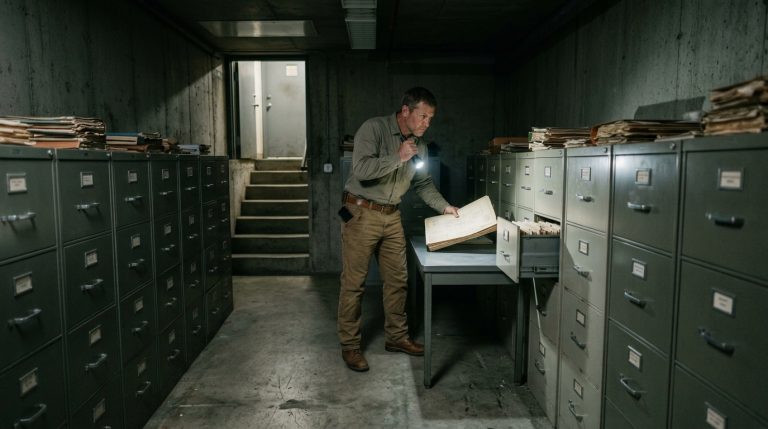
“Everything,” I confirmed. I set the box on the scarred wooden table and began pulling out the files. I had spent four hours in the basement archives, a space that smelled of wet dust and forgotten ambitions. I had gone in looking for the standard property records, but I’d stumbled onto something far more corrosive: the original 1978 development plat.
I spread the papers out. The original developer had dedicated a fifty-foot strip of land along the main road for community access. It wasn’t my lake. It was a larger, public-facing reservoir on the far side of the subdivision. The document was clear, unambiguous, and entirely forgotten by the current board.
“Look at this,” I said, pointing to a set of meeting minutes I’d recovered from three years prior. “She didn’t just ignore this easement. She declared it ‘surplus’ in a closed-door meeting and sold a twenty-foot slice of it to the adjacent commercial developer for ten thousand dollars. She didn’t even consult the homeowners.”
Ben leaned in, his eyes widening as he traced the trail of signatures—Karen’s signature, everywhere. “She sold off the community’s legal right of way, pocketed the cash, and then turned her attention to your lake as a replacement, thinking she could just manufacture a new easement because the old one was ‘gone.’ It’s not just a civil dispute anymore, Marcus. It’s fraud.”
The implications were absolute. We spent the next two hours drafting the filing, the language sharp and clinical. We didn’t just sue for trespass; we sued for breach of fiduciary duty, slander of title, and harassment. We named Karen Miller individually, stripping away the corporate veil that usually protected board members from the consequences of their own misconduct. By using community funds to fuel a personal, illegal campaign, she had effectively opened herself up to a complete financial reckoning.
As we finalized the documents, I felt a strange sense of detachment. The anger I’d felt on the lawn that first day had long since evaporated, replaced by a crystalline focus on the mechanics of the dismantling. This wasn’t about revenge; it was about the restoration of order. I had spent my life drawing lines, creating systems of record, and defending them against chaos. Karen Miller was the chaos.
We filed the papers in the clerk’s office, the heavy thud of the stamp signaling the start of the end. By the time we stepped back out into the bright, sharp light of the afternoon, the storm clouds from the night before had vanished, leaving the sky a vast, indifferent blue.
“She’ll be served by tomorrow morning,” Ben said, his voice clipped. “There’s no way for her to bury this. Not with the records publicly filed, and certainly not when the homeowners find out she sold their real access to a commercial developer to fund a fight for land that was never hers.”
I didn’t feel a surge of triumph; I felt a heavy, resonant satisfaction. I drove home, the road familiar and predictable. The subdivision looked the same, but the power dynamic had shifted. I saw it in the way Arthur Henderson stopped by his garden, looking up as I passed, his expression one of grim, expectant waiting. The secret was out, or at least it would be once the process server finished his rounds.
I parked the truck and walked to the barn. Inside, I sat at the drafting table, the map of the subdivision pinned to the corkboard. I took a marker and drew a clean, bold line through the entire apparatus of Karen’s influence. The case was closed, the records were set, and the truth—the one I had been measuring and verifying for months—was finally ready to be the only thing left standing. The quiet, for the first time in eighteen months, felt like home.
CHAPTER 8: The Final Survey
The fence was not just a barrier; it was a manifesto in black-coated steel. For seven days, the rhythmic thud-clack of the post-hole digger and the metallic ring of the hammer had been the only soundtrack to my existence. I worked with the geodetic precision that the Corps had hammered into my DNA, every post aligned to the second, every segment leveled to within a fraction of an inch. When I tightened the final bolt on the perimeter, the structure didn’t just sit on the land; it felt like it had grown from it, a dark, resolute silhouette against the backdrop of the pines.
I stood back, wiping sweat and fine, gritty soil from my brow with a rag. The lake shimmered beyond the mesh, its surface a perfect, unbroken sheet of glass. It was no longer a disputed territory or a pawn in an extortion scheme; it was, by every measure of law and physics, a sanctuary.
A car slowed on the shoulder of the road. It was Elaine, the new HOA president, the woman who had helped shepherd the community through the fire of the recall. She didn’t cross the property line; she stopped a respectful ten feet away, leaning against the side of her vehicle. She looked at the fence, then at the lake, her expression one of weary, hard-won peace.
“It’s a beautiful job, Marcus,” she said, her voice genuine. “The community… we’re still working through the legal fallout with the developer, but Arthur says we’re close to reclaiming the full easement. Henderson’s Landing is already being cleared for the boardwalk. The neighborhood feels different. Quieter. People are actually talking to each other again, not checking their mailboxes for fine notices.”
“It takes time to reset the baseline,” I said, leaning against the cold steel of the post. “But once the lines are clear, the order follows.”
She nodded slowly. “We were wondering, though… now that things are settled, if you’d ever consider a managed access agreement? A day pass for the families? The community would be very grateful, and we’d handle all the maintenance.”
I looked at the fence, then at the lake, the water reflecting the late afternoon sun in brilliant, jagged splinters. I remembered the feeling of that first flyer in my hand, the arrogant, smug tone of Karen Miller, and the long, grueling nights in the courthouse basement sorting through the wreckage of her lies. I thought about the fear I’d seen in the Garcas’ eyes and the stubborn, silent resilience of Arthur Henderson.
“No,” I said, my voice quiet, devoid of malice but absolute. “I don’t think I will. This line stays where it is.”
She didn’t push. She seemed to understand, a nod of acknowledgment passing between us before she turned and drove away.
I turned back to the barn. The project was finished. The settlement money had been used to cover legal fees and donate to the local community fund, a final act of closing the books on the ordeal. Karen Miller was gone—her house sold to cover the wreckage of her legal bills, her name effectively scrubbed from the neighborhood history. She had tried to build an empire on a foundation of sand, and she had discovered, far too late, that reality has a way of asserting itself against those who think they can edit it to suit their own convenience.
Inside the barn, I walked to my desk. The banker’s box of legal documents was tucked away on a lower shelf, a monument to a battle fought in the dusty, granular language of statutes and plats. I picked up a small, rusted survey pin from the desk—the original one I’d pulled from the earth on day one—and set it inside a small display case. It was a relic now, a reminder of the friction that had led to this clarity.
Sarah came in from the house, her presence a soft, grounding weight against my arm. She didn’t say anything; she just looked at the map on the wall, the lines marked with the certainty of a man who had finally finished his mission. We walked out onto the dock, the wood warm under our feet. The wind was low, a gentle rustle in the pines, and the water was settling into the evening, the deep blue of the sky deepening to a soft, resonant purple.
It was finally quiet. The fence stood, the property was secure, and the lines were, at long last, exactly where they belonged. I didn’t need the lake to be a community resource or a point of contention. I just needed it to be what it was: a space of absolute, verified peace. I looked out at the horizon, the last light of the sun catching the fence posts one final time, and realized that in the end, the most important boundary I had ever drawn wasn’t the one of steel and wire, but the one I had drawn around my own life, reclaiming the space I needed to simply exist, unmolested and absolute.