A Precise Siege: How One Retired Engineer Systematically Dismantled the Rigid Fortress of Serenity Lakes
CHAPTER 1: THE EASEMENT LINE
The morning air was thick with the scent of damp earth and the suffocating sterility of perfectly trimmed hedges. Karen stood there, her pink tracksuit vibrating with an intensity that bordered on the manic, her finger hovering over the document like a surgical blade. She wanted a reaction. She wanted the vein in my forehead to pulse, the apology to fall from my lips, the admission of defeat.
I didn’t give her the satisfaction.
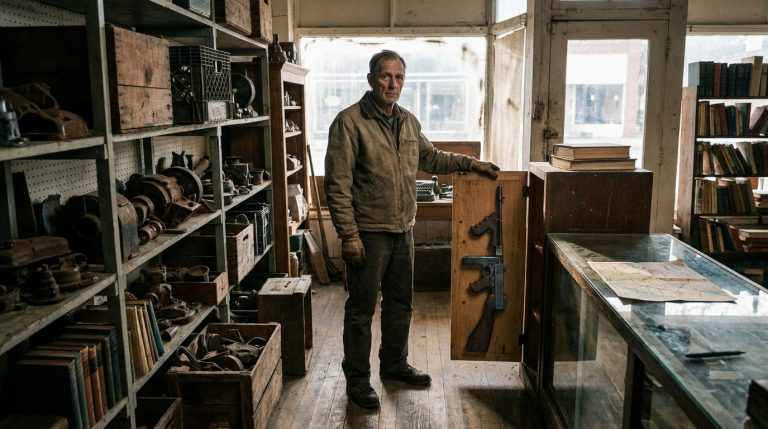
“You’re standing on my property, Karen,” I said. My voice was a low hum, stripped of the fatigue that had been gnawing at my gut for three months. I wasn’t looking at the fine. I was looking at the small, rusted brass pin embedded in the pavement near her heel. It was the original property marker, weathered by time and largely forgotten by everyone except the man who had installed it in 1968.
Karen’s smirk faltered, just for a millisecond. She shifted her weight, the rubber sole of her sneaker scraping against the asphalt. “I’m standing on a public easement, Mr. Harrison. Don’t try to distract me with technicalities. This fine is for those shingles. They are an eyesore, they are a hazard, and they are a direct violation of Section 4, Paragraph C.”
“Section 4, Paragraph C applies to properties within the jurisdiction of the Serenity Lakes HOA,” I replied. I stepped forward. I didn’t rush. I moved with the practiced, deliberate gait of a man who had walked through minefields. “My property, as outlined in the 1968 land grant—which I happen to have in a climate-controlled folder on my desk—is a historical carveout. You are, at this very moment, trespassing.”
The air grew thin. She opened her mouth to retort, the familiar, practiced condescension bubbling up, but I cut her off. I didn’t use volume; I used the cold, hard weight of a fact.
“And while we’re talking about boundaries, Karen, I’ve noticed the irrigation lines for the common area you manage tend to leak exactly where my property line meets the curb. I’ve been documenting the soil erosion. If the city’s water department were to realize you’re rerouting their maintenance flow to avoid your own infrastructure costs, that would be a much larger problem than my shingles.”
She went still. The clipboard lowered. For the first time, her eyes weren’t scanning my house for flaws—they were scanning me for weaknesses. She searched for the military man, the retiree, the man who was supposed to be easy to break. Instead, she found the man who spent his life analyzing the structural integrity of steel and concrete.
She turned on her heel, her movements sharp, mechanical, and retreated toward the golf cart. She didn’t say a word. She didn’t need to. But as she drove away, she left something behind on the pavement—a small, silver earring that had snagged on her collar, glinting in the morning light like a discarded weapon.
I leaned down to pick it up, but then I froze. It wasn’t just an earring. Caught in the clasp was a tiny, shredded piece of a contractor’s work order—a name I didn’t recognize, and a payment amount that didn’t match anything in the public HOA budget.
The war had just shifted. It was no longer about a mailbox or a lawn. It was about what was buried beneath the manicured grass.
CHAPTER 2: THE PERIMETER SURVEY
The earring was a cold, silver weight in the palm of my hand. I stared at the torn edge of the contractor’s work order—a faint, blurred smudge of blue ink that spelled out “Global Landscaping & Maintenance” alongside a figure that made no sense. It was twice the amount the HOA claimed to spend on common area upkeep, yet our shared fences were rotting, and the neighborhood pool was perpetually clouded with algae.
I didn’t head inside to my desk. I didn’t look at the stack of fines on my kitchen island. Instead, I walked to the edge of my property, toward the ancient oak trees my grandfather had planted. My boots crunched against the dry gravel, the sound loud and abrasive in the quiet, manicured stillness of the morning.
The memory hit me with the sudden, sharp clarity of a drill sergeant’s whistle—a night in a Forward Operating Base near Kandahar, staring at a schematic of a supply route. We had been losing fuel. We thought it was insurgents, but it was just a local contractor inflating the mileage. I felt that same cold, familiar prickle of recognition at the base of my neck.
I knelt by the property marker—the rusted brass pin—and pulled a pocket-sized transit level from my heavy canvas jacket. I wasn’t just checking my boundaries anymore. I was checking the perimeter of their lie.
I set the tripod, the metal legs sinking into the soft, over-fertilized soil of the neighbors’ lawn. I took a reading, then another. The math was simple, brutal, and undeniable. According to the original site plans, the “common area” easement—the space Karen claimed authority over—was exactly thirty feet wide. My transit, however, showed a clear, encroaching overlap. They had extended their irrigation lines and installed their aesthetic-compliant planters four feet into my deeded land.
They weren’t just policing the neighborhood; they were stealing its physical footprint, inch by inch, to make their “aesthetic” fit a grid that shouldn’t exist.
A shadow fell over my work.
I didn’t look up immediately. I finished logging the coordinates in my notebook, my movements slow, rhythmic, and entirely unfazed. Only when I was satisfied with the data did I stand, clicking the level shut with a solid, metallic snap.
Mr. Henderson, the elderly man I’d seen earlier, stood at the edge of his property. He looked like a man waiting for a storm to pass, his hands shoved deep into the pockets of his corduroy trousers. He wasn’t looking at me; he was looking at the ground, his eyes darting toward the street to see if Karen’s golf cart was making a return trip.
“You’re making a mistake,” he whispered, his voice trembling. He didn’t move any closer. “She doesn’t just send fines, Mr. Harrison. She makes people vanish from this place. She buys the homes, forces the sales… the house at the end of the cul-de-sac? It used to be a family of four. Now it’s a rental property she manages herself.”
“I’m not a homeowner looking for peace, Mr. Henderson,” I said, my voice steady, stripped of the neighborly warmth I usually kept in reserve. “I’m an engineer. And right now, I’m looking for the foundation cracks.”
I looked at him, really looked at him, and saw the same fear I’d seen in the eyes of local village elders caught between two warring factions. “You said she makes people vanish. How?”
Henderson looked over his shoulder, then took a step forward, his voice a dry, papery rasp. “The bank. The city council. She has connections to the title office. She marks property as ‘delinquent’ before the ink on the fine is dry. You have to be careful.”
I tucked my notebook away. “I’ve spent twenty-five years reinforcing structures against forces much stronger than a woman in a pink tracksuit. Tell me, Mr. Henderson—that contractor, Global Landscaping. Do you ever see them actually working?”
He blinked, surprised by the pivot. “They come at 4:00 AM. Usually two men. They park behind the maintenance shed and leave by 5:30. They don’t do much trimming, I’ll tell you that. Just moving crates.”
I turned back to the work site. The pieces were starting to lock together, like a bridge deck being lowered into place. The fines were just the distraction—a loud, abrasive front meant to keep everyone looking at the lawn, the mailboxes, and the shingles, while something else was being hauled away in the dark.
The sun was climbing higher, turning the manicured lawns into a bright, blinding green. I stood in my own un-annexed plot of dirt and gravel, a jagged island of truth in a sea of beige-painted deception. I had a lot of work to do, and for the first time in months, the war felt winnable. I didn’t need to fight Karen. I just needed to let her own momentum carry her into the trap I was about to build.
I walked back to my porch, the brass marker glinting one last time under the midday light. Inside, I opened the box from the attic. There were maps, deeds, and architectural blueprints from 1968. I spread them out, my finger tracing the lines, looking for the one irregularity that would bring the entire Serenity Lakes facade down.
CHAPTER 3: THE NEIGHBORHOOD SHADOW
I didn’t move. I kept my hand flat on the blueprint, pinning the yellowing paper to the rough-hewn oak of my grandfather’s workbench. Outside, the engine cut out with a precise, metallic snick. I knew that sound. It was the low-idling hum of a commercial-grade flatbed, the kind that didn’t belong in a residential subdivision at ten in the morning.
I stepped to the window, keeping well within the shadow of the heavy velvet curtains. Across the small sliver of common ground that separated my property from the sprawling lawns of Serenity Lakes, a man in a neon-orange vest was unloading crates. They weren’t gardening tools. They were heavy, reinforced plastic containers, the kind used to ship sensitive electronic components or perhaps illicit, high-value inventory.
He didn’t look around. He didn’t check for neighbors. He moved with a practiced, singular focus, stacking the crates in the back of the maintenance shed—the very shed Henderson had mentioned.
I felt the prickle of eyes on my back. I turned, scanning the windows of the neighboring beige houses. They were all shuttered, their reflective glass turning the sunlight back on me, making it impossible to see if anyone was watching. It was the suburban panopticon; everything was orderly, everything was quiet, and everything was fundamentally wrong. I was being watched, I was sure of it, but by whom? Was it Karen, checking to see if I was still stewing over her fines, or was it the neighborhood itself, a collective of silent, fearful witnesses?
I grabbed my jacket and stepped out onto the porch. The heat was already rising, shimmering off the gravel. I didn’t head for the shed—that was a tactical error. Instead, I walked toward the shared boundary, deliberately carrying a set of garden shears. I needed a reason to be outside, a civilian mask to wear while I conducted my reconnaissance.
“Morning,” I called out, my voice carrying easily across the expanse.
The man in the orange vest froze, his hand midway through lifting a heavy crate. He turned slowly. He was younger than I expected, his face hard, his eyes scanning my hands, then my face, then the ground around my feet. He was looking for the same thing I was: the line.
“Private property,” he barked, his voice flat.
“I know the boundaries, friend,” I replied, my pace steady. I didn’t stop. I walked right up to the row of hedges that marked the edge of the HOA’s territory. “Just curious about your schedule. My hedges are getting overgrown, and I’m looking for a maintenance crew that actually shows up. I’ve had nothing but trouble with the management here.”
He relaxed, just a fraction, the tension leaving his shoulders. He was a professional, and professionals respected the language of contracts. “We don’t do residential. Just the HOA common grounds. You’ll have to talk to the board if you want a quote.”
“The board,” I mused, leaning against the wooden fence post. I tapped the wood with my shears, feeling the grain. “Karen Miller seems like a tough negotiator. I’ve got a stack of fines that would make a tax auditor weep.”
The man’s expression shifted, a flicker of something—disdain? Fear?—crossing his features. “She’s not the one you want to negotiate with. She’s just the face. We report to the management firm downtown.”
He didn’t name them. He didn’t have to. He turned back to his truck, clearly signaling that the conversation was over.
I watched him finish the load. As the truck pulled away, I noticed something that hadn’t been there before: a small, dark oil leak on the pavement. I waited until he was well out of sight, then walked over to the spot. I knelt, rubbing a bit of the fluid between my fingers. It wasn’t motor oil. It was high-viscosity hydraulic fluid, too clean to have come from a truck that had been driven across the state.
I stood up, wiping my hands on a rag, and looked back at my house. My grandfather had built this place to last a century, to withstand the elements and the passage of time. Looking at the pristine, artificial perfection of the surrounding houses, I realized they were built to do the opposite—they were built to be modular, interchangeable, and easily replaced.
The epiphany hit me with the weight of a physical blow. The HOA wasn’t just managing the neighborhood; they were laundering the space itself. Every fine, every forced sale, every “compliance” issue was a step in a larger, darker process of clearing the land for something else.
I turned back to the house, my mind already running the logistics. I didn’t need to fight them in the courts; that would take years. I needed to expose the physical reality of what was happening. I needed to trace the hydraulic fluid, the crates, and the management firm downtown.
I went inside and locked the door, not because I was afraid, but because I had reached the next phase of the operation. I opened the attic box again, pulling out the original survey map. I took a red pen and began marking the locations of the “common areas” the HOA had been expanding into. The pattern wasn’t random. It was a perimeter. They were encircling me, isolating my lot, turning my two acres of history into a bottleneck.
I pulled my phone out. It was time to stop being the one who received the calls. It was time to start making them. I dialed a number I hadn’t used since my time in the Corps—a contact in the city zoning office.
“This is Harrison,” I said, my voice cold and precise. “I have a discrepancy in a 1968 land grant that needs an immediate audit. And I think you’re going to want to see what I’ve found underneath the topsoil.”
CHAPTER 4: THE PAPER TRAIL
The call to the city zoning office had been a calculated jab, and now I had to deal with the defensive maneuver. I sat at my desk, the glow of my monitor reflecting off the sharp edges of my grandfather’s drafting tools. Beside me lay a stack of documents I’d pulled from the attic—original site plans, municipal tax records from the late nineties, and a series of correspondence between the county and the nascent Serenity Lakes HOA.
My contact in the zoning office had sent over the digital files, and they were a mess. Digital archives were notoriously easy to tamper with, but they were also susceptible to gaps in logic. I was looking for the paper trail between the HOA and Global Landscaping.
I opened the folder labeled “Maintenance Disbursements.” The ledger was a work of fiction. Payments were logged with cryptic codes, and the sign-off authority for every single transaction was “K. Miller.”
I flipped through the pages, my eyes scanning for a variation in the pattern. My finger stopped on a signature block for a landscaping invoice from six months ago. It was a digital stamp, but the resolution was slightly off—the pixels were blurred, and the spacing of the letters in “Global Landscaping” was minutely uneven, a tell-tale sign of an overlay.
I leaned back, the leather of my chair creaking. It wasn’t just embezzlement; it was lazy. Karen Miller was using the same digital stamp for the invoices, the work orders, and the official HOA correspondence. It was the hubris of someone who had never had their work checked by a qualified engineer.
I didn’t feel a rush of triumph. I felt a cold, analytical satisfaction. This was the opening I needed.
A sharp, rhythmic rapping at my front door shattered the silence.
I stood up, moving away from the light of the monitor. I didn’t rush to the door. I walked with the deliberate, measured pace of a man checking a perimeter. I peered through the peephole. It wasn’t Karen. It was a courier, dressed in an nondescript gray uniform, holding a package that looked heavy and expensive.
I unbolted the door and opened it just enough to keep a safety chain engaged.
“Mr. Harrison?” the courier asked, his gaze fixed on the floor. “Legal document delivery. Requires a signature.”
I signed the pad, the digital screen cold and unresponsive beneath my stylus. He handed over the package—a thick, legal-sized envelope with the embossed seal of a high-end law firm downtown.
I didn’t open it on the porch. I took it into the kitchen, using a utility knife to slice through the seal.
It was a cease-and-desist order. Not from Karen. From the developers themselves, claiming that my “unauthorized maintenance” of my property was creating a liability risk for the entire community. It was a masterpiece of legal intimidation, filled with enough threats of litigation and potential liens to break an ordinary person’s resolve.
They were trying to bury me in paperwork before I could finish the audit.
I dropped the order onto the kitchen counter and looked out the window. Karen’s golf cart was idling at the edge of my driveway again. She was watching the house, her posture stiff, her gaze fixed on the front door as if she were waiting for me to emerge and tear up the document.
She was waiting for fear. She was waiting for the moment I would call her, desperate and confused, begging for a way out.
I walked to the kitchen junk drawer and pulled out a fresh legal pad and a drafting pen. I began to map out a counter-strategy. If they wanted to play with land use and zoning, I would give them a masterclass in the subject. I didn’t need to fight their lawsuit; I needed to move the battlefield.
I called the city zoning office back. “I’ve reviewed the documents,” I said, keeping my voice devoid of emotion. “There’s a discrepancy in the original zoning application for the entire eastern quadrant of Serenity Lakes. It seems the developer failed to secure the necessary environmental impact reports for the storm runoff. If that’s true, the entire HOA charter is null and void.”
There was a long silence on the other end, followed by the sound of rapid typing. “Mr. Harrison,” the clerk said, his voice dropping to a conspiratorial whisper. “If what you’re suggesting is accurate, that’s not just a zoning error. That’s a multi-million dollar regulatory failure.”
“Exactly,” I replied.
I hung up and walked to the porch, opening the door wide. I didn’t look at the document. I looked directly at Karen, still sitting in her cart, waiting for me to blink. I made a show of tossing the cease-and-desist order into the recycling bin, the sound of crinkling paper echoing in the morning stillness.
Her face went blank, then flushed with a sudden, sharp anger. She revved the engine, the golf cart’s wheels spinning in the gravel, and took off down the street.
I stayed on the porch, watching her go. She was starting to panic, and panic was the precursor to a mistake. I just had to be ready to catch it when she made it.
CHAPTER 5: THE EMBEZZLEMENT COLLAPSE
The storm arrived with little warning, a sudden, violent downpour that transformed the manicured perfection of Serenity Lakes into a churning landscape of slick asphalt and overflowing gutters. I sat at my drafting table, the blue light of the monitor illuminating the stacks of digital invoices I had finally managed to decrypt. The pattern was undeniable.
It wasn’t just landscaping.
I scrolled through the ledger—Global Landscaping was a shell company, a ghost entity that existed only on paper. The “maintenance” fees were, in fact, systematic withdrawals from the neighborhood’s reserve funds, routed into a series of offshore accounts that traced back to a holding company controlled by none other than Karen Miller and the lead contractor I’d seen earlier.
The weight of the discovery was cold, like a steel plate settling into my gut. This was it—the Layer 1 secret. But as I traced the routing numbers, a secondary, deeper alarm triggered in my mind. The money wasn’t just being stolen; it was being used to pay off land-use tax liens on the very property I lived on—property that, according to my grandfather’s original deeds, should have been tax-exempt.
They were using the stolen funds to manufacture a debt on my property, attempting to artificially create the legal grounds to seize it for unpaid back taxes. It wasn’t just harassment. It was a hostile takeover.
The power flickered, then died, plunging the house into a heavy, suffocating darkness.
I didn’t reach for a flashlight. I sat still, listening. The rain was a deafening roar against the roof, but beneath it, I heard the faint, distinct sound of a vehicle creeping slowly down the driveway. No headlights. No engine idle—just the rhythmic crunch of tires on wet gravel.
They knew. My inquiry to the zoning office had been the tripwire, and now they were moving to dismantle the evidence.
I moved silently to the kitchen, my movements instinctual, honed by years of navigating dark, unfamiliar terrain. I didn’t reach for a weapon; I reached for my digital camera. I didn’t need to fight them in the rain; I needed to document the intrusion.
I slipped out the back door, keeping low, the mud slick and treacherous beneath my boots. The cold rain lashed at my face, a sharp, biting sting that served only to heighten my focus. I reached the edge of the maintenance shed, the structure looming like a dark monolith in the storm. Two men were there, silhouetted by the occasional flash of lightning, hauling crates from the shed to the flatbed truck.
I framed the shot, the camera’s flash disabled. The images would be grainy, but in the strobe-like illumination of the storm, they would be damning. I captured the crate labels, the faces of the men, and the clear, identifying marks of the HOA-branded equipment being loaded alongside the contraband.
Then, a sudden, blinding floodlight from the truck’s cab swept the area, pinning me against the side of the shed.
“Security!” one of the men shouted, his voice barely audible over the gale. “Get the camera!”
I didn’t hesitate. I turned and sprinted toward the dense line of ancient oak trees bordering the property—the one place in the entire development where the ground was still uneven, still wild, and still mine. I knew every inch of this terrain, every root, every dip in the elevation. They were suburban predators, used to flat, concrete surfaces. I was an engineer who knew how to navigate the landscape.
I dove into the thicket, the branches whipping against my skin. I heard them crashing through the bushes behind me, heavy and clumsy. I didn’t head for the house; that was where they expected me to go. I headed for the storm-swollen drainage ditch that ran along the property line—the same ditch where I’d found the soil erosion earlier.
The water was rushing, a deep, turbulent channel of dark mud and debris. I stepped into it, the water rising past my knees, pulling at my legs with a powerful, hungry force. I waded toward the culvert that ran beneath the subdivision’s main road. It was a tight, claustrophobic passage, but it was the only way to bypass the perimeter they had set up.
As I crawled through the cold, slick concrete, the reality of my situation hit me with the force of the storm. I had the evidence of the embezzlement. I had the proof of the theft. But I had also revealed my hand, and now they knew exactly who I was and what I was capable of.
I emerged on the other side of the culvert, gasping for breath, my clothes soaked and heavy. The rain was beginning to let up, leaving behind an eerie, dripping silence. I stood up, shivering, and looked back at my house.
The lights were back on. And there, standing on my porch, under the warm, inviting glow of the entryway lamp, was Karen. She wasn’t holding a clipboard. She was holding a phone, and she was watching the tree line, her eyes scanning the dark woods with the precision of a hunter.
She wasn’t worried about the police. She wasn’t worried about the law. She was looking for me.
The embezzlement had been the decoy, the first layer of the mask that I had successfully peeled back. But as I watched her, I realized with a sickening clarity that I had underestimated the depth of her desperation. She didn’t just want to control the neighborhood. She wanted to erase anyone who could prove it was all built on a lie.
The war had moved from the desk to the field, and I was the only thing standing between her and the total destruction of my family’s legacy.
CHAPTER 6: THE QUIET CONFRONTATION
I remained still, my breathing shallow and controlled, watching the porch. Karen’s silhouette didn’t waver. She was waiting for a sound, a footfall, a mistake. I knew that posture—the rigid, unnatural stillness of someone who had spent their life projecting an image of control and was now terrified of the crack forming in the porcelain.
I didn’t retreat deeper into the trees. Instead, I began to circle the house, staying within the dense shadows of the oak trees. My mind pulled back to a disaster in my career—a bridge I had inspected years ago, one that looked perfect on the surface but held a terminal, structural flaw in the pilings. It was the same design failure here: an ego-driven construction that could only stand for as long as no one bothered to look beneath the surface.
I circled to the side of the house, away from the porch’s light. I needed to get inside without being spotted. The cellar door—a heavy, wooden bulkhead my grandfather had installed—was my objective. It was old, drafty, and probably unlocked.
As I crept toward the back, I saw the maintenance truck idling at the curb again. The two men from earlier were gone, but their crates remained scattered near the shed, half-covered by tarps. I moved closer, avoiding the gravel, stepping on the soft, wet mulch of the flower beds.
The sensation of being watched grew heavy, an almost physical pressure on my neck. I froze. In the window of the house across the street, a curtain fluttered. Someone was watching, recording, perhaps. The entire neighborhood was a closed circuit, and I was the glitch they were trying to isolate.
I reached the bulkhead and eased it open, the hinges resisting with a low, metallic groan that felt deafening in the quiet post-storm air. I slipped inside, the smell of damp concrete and earth greeting me like an old friend. I was back in the belly of the beast, the place where the house was built to survive.
I ascended the basement stairs, my boots making no sound on the wooden treads. Through the door at the top of the stairs, I heard the faint, rhythmic ticking of a clock—the only sound in the house.
I pushed the door open just a crack, peering into the kitchen.
Karen was inside. She wasn’t holding a phone anymore. She was sitting at my kitchen island, a glass of water in her hand, staring at the blueprints I had left spread out on the counter. She had moved past fear; she was in the process of calculating the damage. She looked smaller in the dim light, the fluorescent pink of her tracksuit dulled by the shadows.
She knew I was back. She hadn’t turned around, but the way her shoulders tensed, the way she held her glass, told me she was waiting.
“You really should have sold, Mr. Harrison,” she said, her voice devoid of its usual saccharine tone. It was hard, crystalline, and utterly detached. “This house is an antiquity in a world that doesn’t want it anymore. We were doing you a favor, streamlining the inevitable.”
I stepped out from the doorway, the floorboards creaking under my weight. She didn’t jump. She just turned, her eyes meeting mine with a chilling, calm intensity.
“Streamlining,” I echoed, my voice steady. “Is that what you call grand larceny and tax fraud?”
She set the glass down. “The neighborhood is a brand, Mr. Harrison. Brands require maintenance. Sometimes that maintenance is expensive, and sometimes it requires making difficult choices about who stays and who goes. You were a structural liability.”
She stood up, walking toward the counter where the documents lay. She didn’t reach for a weapon; she reached for a cigarette, her movements slow and precise. “You think you’ve uncovered a conspiracy. You haven’t. You’ve just uncovered the cost of progress. If you give me the camera, if you burn those documents, I can make sure your property tax liens are cleared, and we can find a way to make you part of the community.”
“You don’t understand,” I said, stepping closer, the air in the room suddenly feeling very thin. “I’m not interested in being part of your community. I’m interested in why you’re so terrified of the zoning records.”
She laughed, a thin, brittle sound. “The zoning records are a fiction, just like your grandfather’s ‘legacy.’ Do you really think you’re the first person to try to fight the system? You’re an engineer, Harrison. You of all people should know that once a structure reaches a certain point of decay, it’s cheaper to demolish it than to try to patch the cracks.”
She picked up the blueprint, her fingers tracing the red ink I had used to mark the encroachment. “You’ve spent your life building things meant to last, and you’re baffled by people like me who understand that everything is disposable. You think you’ve cornered me? You’ve only cornered yourself in a house that’s about to become a very expensive liability.”
She reached into her pocket and pulled out a small, metallic remote—the one that controlled the perimeter lights for the entire subdivision. With a single click, every house on the street flared with blinding, stadium-grade light, turning my property into a stage.
“The neighbors are watching, Mr. Harrison,” she whispered, her eyes dancing with malice. “And when the police arrive in five minutes, they’re going to find a disgruntled, trespassing, and dangerous man in a home he doesn’t officially own. How does that for an engineering solution?”
I looked at the remote in her hand, then at the clock on the wall. I realized then that she hadn’t just been waiting for me to come back; she had been counting down the seconds until she could trap me in the very structure I was trying to save.
The stage was set, the audience was prepared, and the demolition was scheduled. I had to move, but not against her—I had to move against the house itself.
CHAPTER 7: THE LEGAL ANCHOR
I didn’t look at the lights. I looked at the electrical panel box in the corner of the kitchen, the heavy steel door partially obscured by a decorative frame. Karen stood between me and the exit, her posture radiating a fragile, brittle confidence. She truly believed that by framing me, she would eliminate the only variable that understood the math of her deception.
“The police are coming, Mr. Harrison,” she said, her voice dripping with a rehearsed, practiced calm. “You’ll find that when they arrive, they’ll be very interested in the ‘evidence’ I’ve planted in your shed—the crates, the missing funds from the HOA account. It’s a tragedy, really. A decorated engineer, losing his mind and turning to petty theft to pay his property taxes.”
I didn’t argue. I didn’t reach for my phone. I reached for the one thing that mattered in a structure under pressure: the load-bearing point. I stepped toward the kitchen counter, my hand brushing against the drafting pen I’d used to mark the maps. I wasn’t fighting her; I was shifting the weight of the room.
“You’re right about one thing, Karen,” I said, my voice steady, stripped of the fatigue that had plagued me for months. “Structures do fail when they’re pushed beyond their design limits.”
She tilted her head, her smile thinning into a line of white, sharp teeth. “You’re talking like a man already in handcuffs.”
“Am I?” I asked. I moved toward the panel box, my eyes fixed on the heavy, industrial-grade circuit breaker she had installed to power the exterior lights. “You increased the voltage to the entire block to make a statement. You’ve been running the common area pumps, the security grid, and the decorative lighting on a loop that wasn’t approved by the city’s electrical board. It’s a massive, unshielded draw.”
Her smile flickered. “The HOA has the power to manage its own utilities.”
“Not when those utilities are tapped directly into the municipal line without a secondary transformer,” I countered. I reached for the panel door, my movements fluid and final. “You didn’t just break the HOA rules, Karen. You bypassed the city’s infrastructure. If this grid surges—if I were, say, to trigger a short—the entire subdivision would be blacked out, and every unauthorized connection would be exposed for the city inspectors to find.”
She finally moved, her hand reaching out to grab my arm, but I was already braced. I grabbed the master lever and threw it, not down, but into a forced manual override.
A sound like a gunshot echoed through the house. The kitchen plunged into a terrifying, absolute darkness, followed immediately by the sound of electrical transformers popping in a rhythmic, cascading chain down the street. The blinding stadium lights died instantly, and the hum of the neighborhood—the constant, invisible pulse of the surveillance grid—cut out, replaced by a profound, heavy silence.
Outside, I heard the confused shouting of neighbors, the sound of doors opening, and the sudden, panicked realization that the “serenity” of the estate had just been stripped away.
Karen stood in the dark, her breathing ragged, the remote slipping from her hand and clattering onto the hardwood. She was blind, the tactical advantage she had held for months vaporized in the span of a single heartbeat.
“You fool,” she hissed, her voice trembling. “Do you have any idea what you’ve done?”
“I’ve leveled the playing field,” I said, my voice echoing in the pitch-black room. “The zoning office is already on their way, and they aren’t coming to check on a theft. They’re coming to audit why the entire grid just went offline.”
I walked toward the front door, stepping past her without a glance. My hands were steady. Outside, the night was dark, but the air felt different—cleaner, stripped of the artificial tension that had defined the neighborhood for years.
I stood on the porch, looking out into the street. One by one, emergency vehicles began to arrive, their blue and red lights cutting through the darkness, illuminating not the pristine, manicured lawns of an exclusive estate, but the rotting, poorly maintained infrastructure that had been hidden by the HOA’s thin veneer of control.
The “empire” wasn’t crashing down in a grand explosion. It was folding under the weight of its own neglect. I pulled the small camera from my pocket—the evidence I had gathered in the storm—and felt a deep, resonant sense of completion.
Karen walked out onto the porch behind me, her composure shattered. She looked at the flashing lights, at the neighbors coming out of their homes, and finally, at me. For the first time, she wasn’t the president of an association; she was just a woman standing in the dark, watching the world she had built turn back into the messy, complicated reality she had tried so hard to deny.
The war was over, not with a victory in court, but with the simple, unavoidable truth of how things were built, and how they were meant to be maintained.
CHAPTER 8: THE COLLAPSE
The investigators moved through the house with a methodical, cold efficiency that mirrored my own professional training. They didn’t care about the petty HOA fines or the color of the mailboxes; they cared about the structural fraud. I stood on the porch, watching as agents escorted Karen toward a waiting cruiser. She didn’t struggle. She had realized, somewhere in the cold, dark minutes following the blackout, that her manufactured reality had been dismantled by the very thing she couldn’t account for: the verifiable, unyielding truth of the land itself.
As the squad cars pulled away, the neighborhood remained silent. Neighbors peered through their windows, their faces pale, watching the end of the “Serenity Lakes” authority.
I turned back into the house. It felt different now—less like a battlefield and more like the home it was meant to be. I walked to the kitchen and found the file the lead investigator had left on the island. It contained the final determination from the zoning board: the 1990s development approval was indeed a farce, missing the necessary environmental impact studies for the entire eastern quadrant. The “exclusive” subdivision was technically an illegal encroachment on protected land. The fines, the liens, the forced sales—all of it was being rendered legally void by the state.
The payoff was quiet. I sat at the workbench, picking up the small, rusted brass property pin I had pulled from the ground. I had spent months fighting a war against an intangible, invisible wall of bureaucracy, only to realize that the wall had never actually existed. It was held together by fear, by the assumption that the person across the table had more power than you.
I walked out to the perimeter, the flashlight in my hand cutting a clean beam through the dark. I stopped at the boundary line where I had first confronted Karen. I took the brass pin and drove it back into the ground, a permanent, stubborn anchor that defined the edge of my world.
The Poetic Justice of it was not in her arrest, but in the reversal of the power dynamic. She had tried to break me with the weight of her rules, only to be broken by the weight of her own deception. The HOA, as an entity, was now a hollow shell, and the neighborhood—for the first time in years—was just a collection of people living on land that finally had a name and a set of boundaries that were grounded in reality rather than coercion.
The cool down was slow. I spent the next hour simply walking the perimeter of my two acres. The storm had left behind a fresh, clean scent of rain-drenched earth. I stopped at the overgrown bougainvillea that had started the conflict, the plant that had been the first target of her petty, controlling gaze. I took my shears and began to trim it, not with the manicured, forced precision of the HOA guidelines, but with the natural, patient care that allowed it to grow as it was meant to.
I returned to the house and sat on the porch, the silence of the night no longer oppressive. I wasn’t just a man who had won a legal battle; I was a man who had recovered his own space. The symbolic closure was simple: I repaired the fence rail that had been broken during the struggle, working with the steady, measured hands of a carpenter—a trade I had inherited from my grandfather, the man who had built this foundation to last long after the petty tyrants of the world had moved on to their next target.
I felt a deep, quiet connection to the land that had been missing since I arrived. It was no longer a property to be defended or a site to be surveyed; it was a home. The internal conflict that had driven me—the need to prove that my grandfather’s sweat and my own discipline had meaning—was settled. I had honored the legacy, not by selling out, not by conforming, but by holding the line when the structure began to fail.
The sun began to crest over the oak trees, painting the landscape in a soft, natural gold that had nothing to do with artificial aesthetic requirements. I watched the light touch the edges of the house, the wood warm and solid, the paint peeling in a way that showed the life beneath it. I was ready for the next phase of my life, but for now, I was content to simply sit in the quiet, in the space I had reclaimed, and breathe in the stillness of a morning that finally belonged to me.