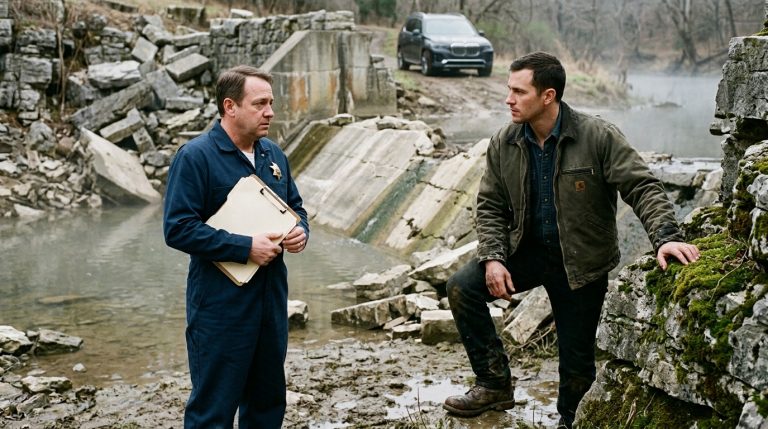
The Ridge Belongs to the Cold: A Retired Commander’s Silent War Against HOA Extortion
CHAPTER 1: THE GATE LINE
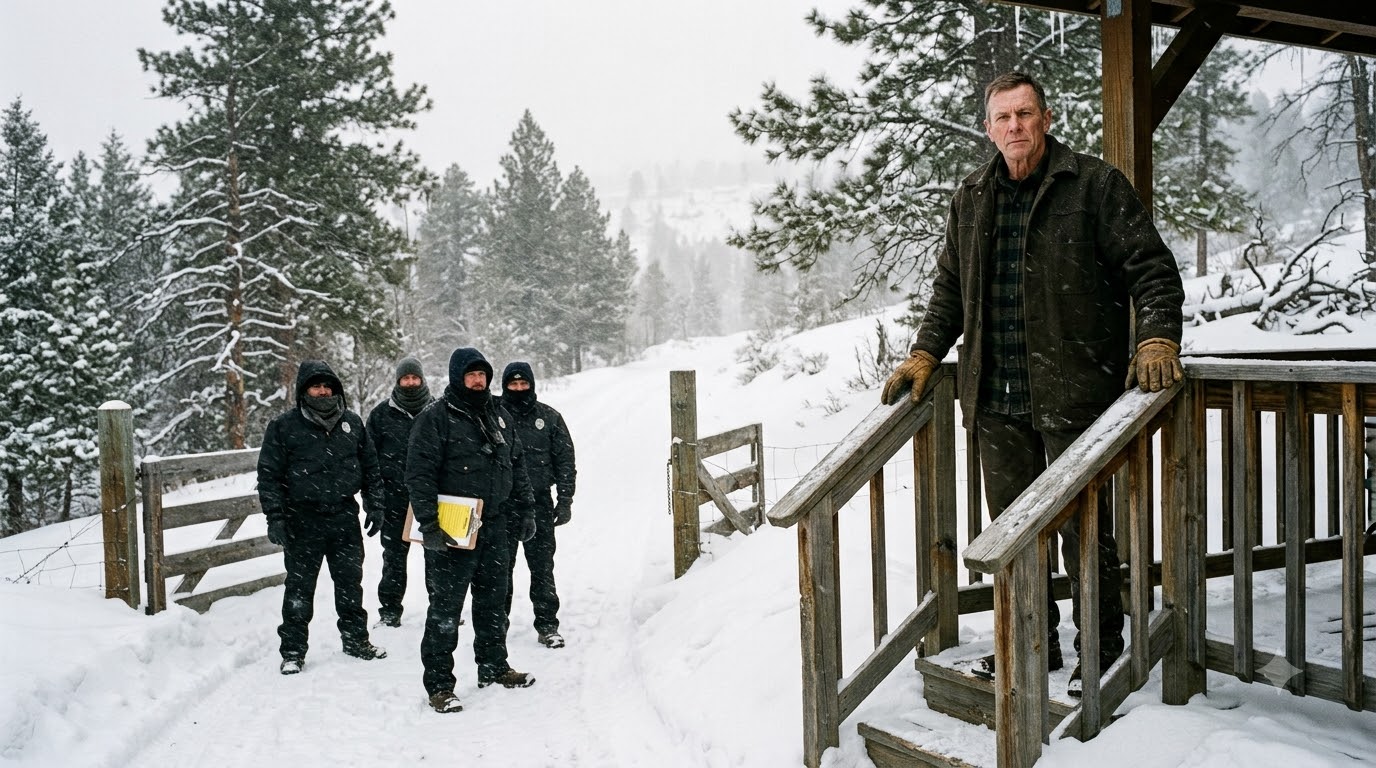
Snow tore sideways across the ridge road, four heavy engines growling through the drift like animals tracking blood.
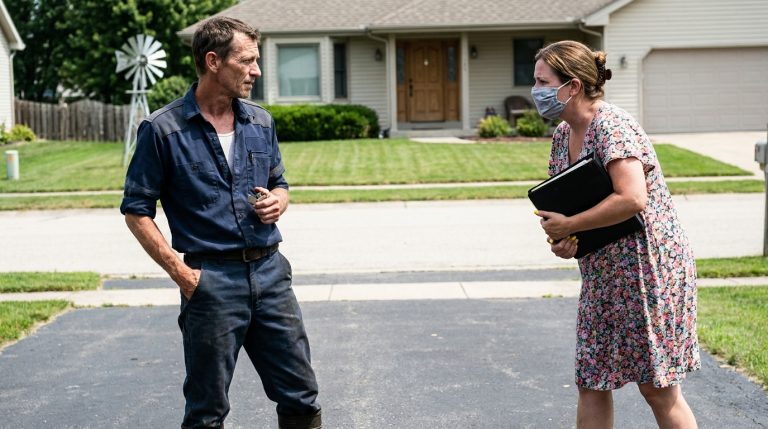
The front SUV slammed its brakes ten feet short of my timber gate, throwing a arc of white powder against the crossbar. Four men stepped into the knee-deep snow, boots crunching loud over the idle engine roar. The lead man slammed his door, a thick plastic clipboard tucked under his heavy arm as his eyes scanned my cabin porch.
“Step aside!” he shouted, his breath clouding thick in the sub-zero air. “This is official HOA business!”
I didn’t answer right away. I stayed on the top porch step, my thick leather work gloves resting against the timber rail. In my right coat pocket, my thumb pressed against the cold brass ridge of my old gate key, grounding the instinct to move fast.
“You’re on private property,” I said. My voice didn’t carry drama, just the flat, heavy density of seasoned pine. “Turn those trucks around.”
The tall one in the front let out a short, barked laugh, jabbing a gloved finger at the yellow paper clipped to his board. “Five hundred and fifty dollars for district snow maintenance! You’re thirty days delinquent, old man. Pay up or we take the gate off the hinges!”
Two of the others shifted left, testing the deep snow drift along my boundary fence line. They moved with the cheap confidence of men who thought four coats meant four votes. They had no idea where the county line ended, or how deep the ditch went under that fresh powder.
I stepped down off the porch, my heavy boots sinking four inches into the crusted white. I stopped two feet inside my own chain, holding a single rolled sheet of heavy blue-lined paper in my left hand. No cameras hung from my eaves; no wire ran back to a digital screen. Just six hundred yards of frozen ground, a paper boundary signed by the county clerk, and four men testing their luck.
“You touch that chain,” I said, voice dropping low enough that the wind nearly stole it, “and you’ll be digging those trucks out of the ravine until midnight.”
The tall one’s grin wavered just enough for his lower lip to freeze against his teeth. He looked down at the rolled survey in my hand, then at the stillness in my chest. For two seconds, the only sound was the radiator fan whistling in the storm.
CHAPTER 2: THE PINESCENTED TRAP
He spat into the drift, yanked his hand back from the rusted iron, and let out a string of curses that lost all their muscle in the wind. “This ain’t over, old man,” he muttered, turning on his heel. “The board’s filing the lien by five o’clock.”
They backed the four SUVs down the narrow ridge road, their tires throwing dirty slush against the snowbanks. I waited until the sound of their engines faded beneath the whine of the storm before I turned back toward the cabin. I didn’t head inside. I walked forty yards east along my boundary line, my snowshoes sinking into the fresh powder, until my boot kicked something hard beneath the drift.
I reached down and wiped away the snow. A pristine cedar stake, painted bright orange at the tip and wrapped in high-grade commercial surveyor tape, was driven deep into the dirt. Fifty yards inside my legal property line.
This wasn’t a sloppy mistake by a cheap snowplow crew. This was a deliberate survey marker for heavy equipment.
Ten minutes later, I kicked the snow off my boots on the mat inside the Mountain Crest HOA main office. The place reeked of cheap pine cleaner, overheated air, and institutional hubris.
Valerie Tras sat behind a faux-mahogany desk, her hairpinned tight, a pristine clipboard tucked under her arm. She didn’t look up right away. She let me stand there while her fake nail clicked methodically against the plastic keys of an adding machine.
“Can I help you?” she snapped, finally looking up, her eyes scanning my faded wool coat like she was calculating my bank account balance from ten feet away. “If you’re here about the notice, late fees accrue after the fifth.”
“I’m here about the trespass,” I said, my voice steady, carrying none of the cold air I’d brought in with me.
I reached into my coat and laid the county-certified survey map flat across her pristine desk, directly over her printed district map. The heavy paper unrolled with a crisp snap that made her pen pause.
“My road is county-approved,” I said, tapping the dark blue ink line. “Your maintenance district stops at the treeline. You have no legal right to assess fees, and you certainly have no right driving stakes into my dirt.”
Valerie’s lips twitched, her tight smile vanishing into a thin line. She didn’t look down at my map. Instead, her index finger tapped a thick pink-shaded overlay on her own paper.
“Depends on which boundary you’re referring to,” she said, her voice dripping with practiced authority. “We updated the district maps during the third-quarter executive session. Provisional inclusion. You’ll be receiving the formal annexation notice in the mail.”
“Provisional inclusion requires a county board hearing and a sixty-percent landholder vote,” I replied quietly. “You don’t have either. What you have is an illegal map and four men who don’t know where my ditch starts.”
A fraction of doubt crossed her eyes, her hand hovering over a thick manila folder labeled Ridge Development – Phase 4. Through the clear plastic window of her desk organizer, I caught a glimpse of a official county tax-delinquency notice stamped with a red ledger mark—not for my property, but for three other senior parcel owners further up the mountain.
“We’ll be updating official county records soon enough,” Valerie said, her voice firming as she pulled the manila file deeper under her arm. “I suggest you pay the five hundred and fifty dollars, Mr. Vance. It becomes very expensive to fight a district assessment once the lien is registered.”
I didn’t argue. I didn’t raise my voice. I rolled my survey back up, the thick paper sliding smoothly into my sleeve. My thumb pressed into the cold brass key in my pocket.
“Update your records all you want, Valerie,” I said flatly. “The county surveyor uses brass markers, not cedar stakes. And I’ll be keeping the one your men left in my woods.”
CHAPTER 3: THE COLD SABOTAGE
The hum died instantly. Inside the cabin, the porch light vanished, leaving only the blue glare of the blizzard reflecting off the snowdrifts.
I didn’t rush down the steps. I pulled my heavy flashlight from my wool coat, keeping the beam dark, and stepped down into three feet of fresh powder. With no cameras scanning the line, I relied on the track I’d walked every winter for twenty years.
Near the main breaker post, fifty yards toward the access road, a shadow shifted behind the snowbank and scrambled through the drift toward a waiting idling truck.
I reached the junction box before the truck’s tail lights cleared the ridge line. The steel lock hung open, sheared off clean by heavy bolt cutters. The heavy insulation around the primary feed line had been sliced twice—deep, precise notches designed to short the main ground the moment the grid surged back on.
I knelt in the snow, clicking the flashlight on for five seconds. Deep boot impressions, size eleven with a distinct diagonal tread, were stamped into the fresh crust next to a dropped pair of yellow-handled steel jaws.
I picked up the bolt cutters by the rubber grip, wrapping them in a canvas shop cloth from my pocket.
At six in the morning, Sheriff Caleb Monroe’s cruiser plowed up the driveway, its tire chains clinking against the frozen gravel. He stepped out into the bitter air, his heavy badge pinned over a canvas parka, eyes scanning the dark cabin windows before looking down at the snow.
“You got power back on?” Monroe asked without preamble, his breath plume hanging thick between us.
“Bypassed the short at dawn,” I said, holding out the canvas cloth with the yellow bolt cutters resting inside. “They took the lock off the utility post. Same angle, same force as the gate chain yesterday.”
Monroe took the tool, examining the jaw edges under the gray morning light. “This is escalation, Jake. Valerie Tras called the county prosecutor’s office two hours ago claiming you’re obstructing district infrastructure.”
“She sent someone up here with bolt cutters to kill my heat in a sub-zero storm,” I said, pointing down at the fresh tracks frozen hard in the drift. “Look at those boot soles. Size eleven, heavy diagonal lug. Check the shoes on Valerie’s nephew—the one who drives the board’s maintenance plow.”
Monroe looked at the deep boot prints, then back at me, his eyes narrowing as he recognized the methodical layout of the evidence.
“This map she filed with the county clerk,” Monroe said quietly, pulling a folded document from his pocket. “It’s got a provisional seal. She’s pushing for an emergency hearing at the board meeting tonight to approve the default liens.”
I reached into my pocket, my thumb feeling the cold edge of the brass key before pulling out the cedar survey stake I’d pulled from my woods.
“She doesn’t want five hundred dollars, Caleb,” I said, thrusting the orange-tipped stake into the snow bank right in front of his boots. “She put commercial development markers fifty yards inside my line. She’s trying to manufacture a tax default so her commercial buyer can sweep up the whole ridge.”
Monroe looked down at the orange tape flapping in the wind, his heavy jaw tightening.
“The board meets at seven,” Monroe said flatly. “And I’m bringing the county deputy prosecutor.”
CHAPTER 4: THE BOARDROOM TRAP
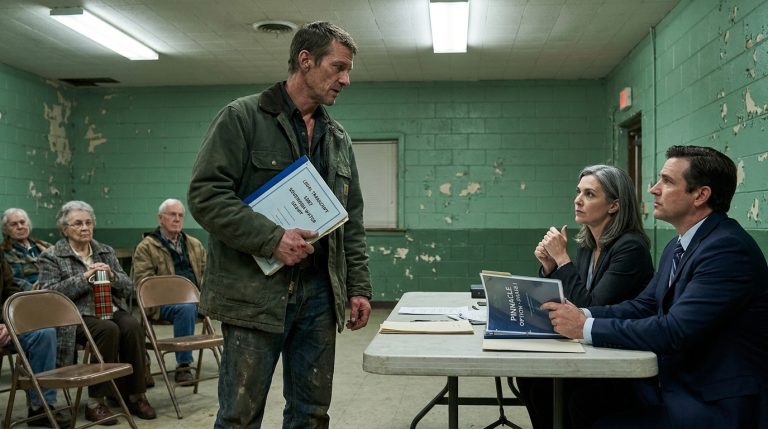
“Item four on tonight’s agenda,” Valerie announced, her voice booming through the cheap ceiling speakers. “Emergency assessment ratification and default notice approvals for outlying ridge parcels.”
She lifted her wooden gavel, ready to bring it down. “Seeing no formal opposition filed under district bylaws, we will move directly to—”
“The county prosecutor would like a word before you swing that hammer, Valerie,” Sheriff Monroe’s voice cut through the hum of the overhead lights.
He stood up from the aisle seat, leaning his heavy hands against the back of the folding chair in front of him. Beside him, a young woman in a dark suit opened a thick leather briefcase, pulling out three identical blue-bound court filings.
Valerie’s hand froze two inches above the sound block. Her eyes darted from Monroe to the back row where I sat.
“Sheriff, this is a private board executive session,” she said, her voice rising half an octave, a nervous twitch catching the corner of her left eyelid. “Non-members have no standing to speak during voting.”
“They do when the voting involves criminal conspiracy and falsification of county records,” Deputy Prosecutor Sarah Whitfield stepped down the carpeted aisle, dropping the first blue file directly onto the board table. “This is a formal freeze order issued by the Circuit Court thirty minutes ago.”
One of the older board members, a retired accountant named Dennis, pulled the file toward himself, his spectacles slipping down his nose as he scanned the first page. His face drained of color in three seconds.
“Valerie,” Dennis whispered, his hand shaking as he turned a page. “What is this? This says we’re being named in a civil RICO claim and an investigation for criminal trespass.”
“It’s a lie!” Valerie slammed her palm against the desk, her pristine hair falling loose from its pin as she glared at me. “He’s an uncooperative resident trying to dodge his fair share of maintenance costs! We have provisional mapping authority!”
“You don’t have provisional mapping authority over deeded land, Ms. Tras,” Whitfield said flatly, pointing to the second document. “What you have is a fraudulent overlay map signed by a disbarred land surveyor. And you used that map to attempt an illegal tax default process on four separate parcels along the ridge.”
I stood up, sliding my sealed manila folder across the table until it rested next to Valerie’s gravel block.
“Inside that envelope,” I said, my voice low and steady, filling the sudden silence in the room, “is a certified copy of the county deed from 1984. It includes the original brass corner markers, the tool marks on my sheared utility box, and a signed statement from the county clerk confirming your ‘provisional inclusion’ map was rejected three weeks ago.”
Valerie grabbed the envelope, her fingers ripping the paper backing as she tore it open. She shuffled through the survey sheets, her breathing coming short and ragged, her smug composure completely disintegrating into cold, panicked fury.
“You think you’re smart, don’t you?” she spat, her face flushing dark red as she gripped the edge of the podium. “You think a few old maps stop us? We run this mountain! You’ll be paying those liens or we’ll starve you out off that ridge!”
“You won’t be running anything, Valerie,” Monroe said softly, stepping closer to the podium as he unclipped a pair of heavy steel cuffs from his belt. “Your nephew is already down at the station explaining whose yellow bolt cutters were sitting in the snow next to Mr. Vance’s power pole.”
CHAPTER 5: RED PAINT ON THE RIDGE
I dipped the brush bristles into the heavy red oil, letting the excess drip back into the tin with a slow, thick plop.
A quiet crunch of boots in the snow made me pause. Dennis, the quiet board member from the night before, walked up the access road wrapped in a worn carhartt coat. He held a thick white envelope in his mittened hand, his eyes staying down on the frozen tire ruts until he reached the crossbar.
“Sheriff Monroe’s deputy served the formal notice at Valerie’s house an hour ago,” Dennis said, his voice flat with the exhaustion of a man who’d been awake all night undoing someone else’s mess. “Full board dissolution. The county attorney voided every delinquent notice, every fine, and every provisional overlay she logged.”
He handed the envelope over the timber post. Inside were four voided lien notices, stamped in blue ink by the county clerk, alongside a formal, court-ordered letter of apology signed by the remaining board members.
“The commercial buyer she was cut-and-pasting those maps for,” Dennis added quietly, looking out over the snowbound pines, “was her brother-in-law’s firm. They were planning to force the tax defaults, buy the parcels for pennies at the county auction, and break ground on a resort access road by spring.”
I took the envelope, sliding the voided papers into my coat pocket next to my brass gate key. I didn’t need to gloat, and Dennis didn’t need a lecture. The paper trail had done the work, and the law had caught up to the audacity.
“Road’s private from here on, Dennis,” I said simply, dipping my brush back into the red paint. “Make sure the new board remembers where the treeline sits.”
Dennis gave a single, firm nod, turned his collar up against the morning draft, and began the long walk back down toward the township line.
I set the flat side of the horsehair brush against the weather-beaten cedar sign hanging off the post. Smooth, deliberate strokes laid down fresh, thick red lettering across the grain, covering thirty years of faded timber with cold, permanent clarity:
PRIVATE ROAD. RESIDENT MAINTAINED. DO NOT TRESPASS.
I wiped a stray speck of red off my thumb with a rag, stepped back, and turned the heavy brass key in the chain lock. The iron latch clicked home with a solid, heavy thud that echoed straight into the quiet woods.