A Rusted Shore and Cold Concrete: How Ordinary Farm Boys Shattered an Unbreakable Fortress Under the Gray Normandy Sky
CHAPTER 1: THE MORNING LAUGH
Dawn broke cold and gray over Juno Beach, washing pale light across miles of jagged steel hedgehogs and barbed wire.
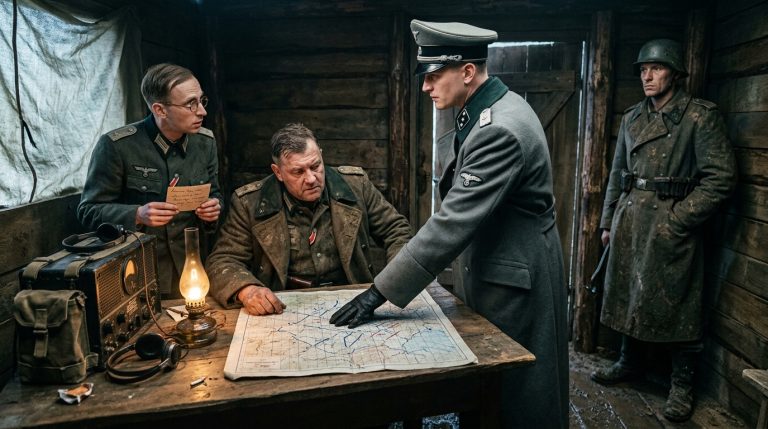
Inside the thick concrete bunkers of the Atlantic Wall, German officers stood at their observation posts with heavy ceramic mugs of coffee.
A major lowered his brass binoculars, a thin smirk pulling at the corner of his mouth as he watched the dark shapes swell on the horizon.
“The Canadians,” he muttered, turning to his staff with an amused shake of his head. “They are sending the Canadians.”
Laughter rippled through the damp pillbox, light and dismissive against the heavy thrum of the surf.
These weren’t battle-tested American Rangers or hardened British commandos, the junior lieutenant noted, leaning over the concrete ledge.
These were lumberjacks and wheat farmers from remote prairie towns, boys used to milking cows and bucking hay bales.
The German 716th Infantry Division had spent two years turning this stretch of coast into an unyielding fortress complete with 85 mm artillery and MG42 machine nests.
Every range was mapped, every obstacle spiked with mines, and every bunker reinforced to withstand a siege.
The officers sipped their hot coffee while the distant landing craft bobbed through eight-foot swells, confident that the morning’s work would be quick and absolute.
Outside, the wind whipped salt spray against the reinforced glass, carrying no hint of the relentless pressure moving toward the shore.
CHAPTER 2: RAMPS DOWN
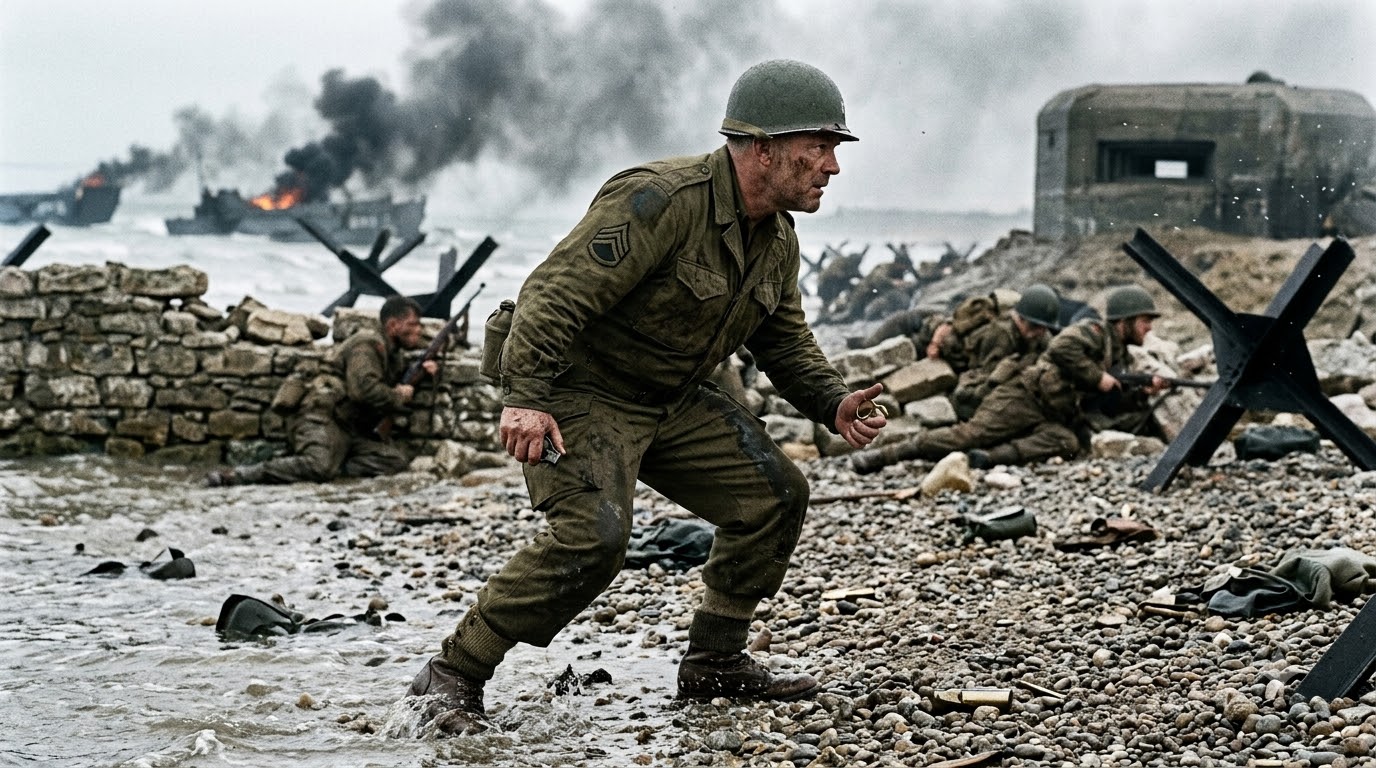
The steel landing craft doors slammed open into the knee-deep surf, instantly plunging the Winnipeg Rifles into the freezing, salt-stung chaos of Juno Beach.
Sergeant Major Charlie Martin didn’t hesitate, his boots finding traction against the shifting, pebble-strewn seabed as machine-gun fire stitched across the foam.
Around him, farm boys from Manitoba and Saskatchewan gripped their rifles with white knuckles, wading straight through the red-streaked tide.
The heavy concrete pillboxes ahead barked with lethal efficiency, the MG42 nests shredding the air like tearing canvas.
There was no cover on the open sand, only the jagged black shapes of steel hedgehogs and the rising smoke of burning landing craft.
Charlie didn’t look back at the grey horizon where the deleted naval guns were supposed to roar; there was only the immediate, grinding weight of wet wool and the urgent need to close the distance.
A sharp metallic clink rang out near his left boot, a spent casing rolling blindly into the churned sludge as another wave of men surged past the obstacles.
They weren’t professional soldiers marching to a textbook drill; they were exhausted laborers pushing through misery, refusing to stop for the deadly math of the open beach.
Charlie kept his head low, his thumb locked onto his rifle bolt, and drove forward into the blinding spray of the seawall.
CHAPTER 3: THE BREN ADVANCE
A heavy concrete pillbox spat endless rounds across the gravel, pinning down the infantry advance with absolute arrogance.
Charlie didn’t wait for a miraculous rescue or the heavy ordnance that wasn’t coming; he let his thumb slide off the warm steel and lunged through the smoking craters.
Around him, men from the Winnipeg Rifles scrambled behind stone retaining walls, panting hard against the stinging sulfur in the air.
The enemy machine gunner up ahead swept the lane again, confident that no civilian-born conscript would dare stand in the open line of fire.
Charlie dropped flat against the damp earth, his chest heaving as he hauled a heavy light machine gun forward into the mud.
“Keep their heads down on the flank!” Charlie shouted across the deafening din, gesturing sharply toward the lower slit of the concrete bunker.
Two nearby riflemen immediately opened fire, their barrels kicking up wild sprays of stone dust against the reinforced wall to blind the gunner inside.
Charlie used that split-second window of friction to sprint upright, closing the deadly gap foot by grueling foot.
He didn’t think about grand heroics or tactical glory; he thought about the endless winters back home and the simple rule that a job wasn’t finished until the obstacle was broken.
He reached the dead zone directly beneath the enemy’s iron firing slit, yanked a grenade from his web gear, and pulled the pin with his teeth.
With a sharp, violent snap of his arm, he tossed the heavy iron directly through the concrete opening before diving flat into the dirt.
The muffled concussive roar echoed instantly from within the bunker, abruptly choking the mechanical chatter of the enemy weapon into a suffocating silence.
CHAPTER 4: NINETY MINUTE COLLAPSE
The courtyard behind the pillbox offered no respite as the Winnipeg Rifles pushed deeper into the burning coastal streets of Corso.
Charlie wiped soot from his brow, his fingers catching on the rough edge of a shattered stone wall that crumbled under the weight of his lean.
Around him, small squads of infantry moved with the ruthless efficiency of men who had spent their youths clearing timber and wrestling recalcitrant farm machinery.
The enemy’s defensive network was fragmenting, but the remaining positions fought back with desperate, erratic bursts of rifle fire from second-story windows.
“Keep moving past the courtyard,” Charlie barked, his voice raspy from sulfur and cold sea air.
A young riflemen from Manitoba winced, clutching a bleeding forearm behind a rusted cart while shaking his head at the blocked doorway ahead.
“The main road is choked with rubble,” the soldier muttered, his teeth gritted against the physical strain.
Charlie didn’t stop to argue or wait for higher clearance; he hoisted the heavy ammunition crate himself, using its raw weight to smash through a wooden gate.
They swarmed the fortified house from three sides simultaneously, ignoring the standard textbooks of military caution in favor of sheer, common-sense labor.
Within ninety minutes of hitting the surf, the entire town was cleared, leaving the enemy’s radio room silent and abandoned.
In the command bunker back down the line, German officers stared at their maps in total disbelief as reports confirmed the sector had collapsed hours ahead of schedule.
CHAPTER 5: THE PANZER WALL
The narrow stone walls of the village lanes offered no breathing room as the elite 12th SS Panzer Division rolled heavily into view.
Charlie dropped flat behind a shattered cart wheel, his breathing shallow as the massive steel tracks of a Tiger tank ground the pavement into gray dust.
Around him, anti-grain crews from the Regina regiment scrambled into position, their boots slipping in the mud of the wet Norman summer.
The enemy armor pushed forward with absolute arrogance, certain that light infantry could never crack their heavy plating without major artillery support.
“Hold until they clear the orchard wall,” Charlie shouted over the roaring diesel engines, his palms sweating against the cold stock of his rifle.
A young private beside him flinched, wiping greasy sweat from his forehead while muttering about the lack of heavy backup.
“We don’t need armor to stop iron,” Charlie spat back, his voice rough and steady as he checked the pin on his last remaining anti-tank charge.
The lead tank surged closer, its turret pivoting in search of targets among the stone rubble.
Charlie didn’t wait for permission or a clean retreat; he lunged out of the ditch as the engine roared past, slamming his charge against the rear track linkage.
The ensuing blast tore a shower of sparks across the cobbles, throwing the heavy machine sideways into a stone fence with a thunderous groan.
The remaining panzers stalled in confusion, their lines fracturing against the unrelenting, stubborn grit of men who refused to break.
CHAPTER 6: THE DUSTY SILENCE
The counterattack crumbled into the churned mud as the remaining enemy armor stalled out against the unyielding wall of infantry grit.
Major Kurt Meyer pulled back his forces from the battered Norman lane, his professional arrogance shattered by men he had wrongly dismissed as amateurs.
There were no grand surrender ceremonies or repentant speeches, only the heavy, sullen retreat of an overconfident adversary beaten by sheer exhaustion and relentless endurance.
Charlie didn’t cheer or celebrate the broken lines; he simply wiped the grit from his palms and checked the securing latch on his equipment strap.
“They’re pulling back down the valley,” a weary voice called out from the ditch, echoing the quiet certainty of a job finished through pure, hard labor.
Charlie nodded once, his eyes scanning the secure supply route stretching all the way back to the foam-streaked shore.
The beach where officers had once sipped coffee and laughed in total complacency now hummed with the steady flow of thousands of tons of provisions.
The Atlantic Wall was a broken husk of concrete and twisted iron, dismantled not by elite military pedigree, but by the stubborn sweat of ordinary farm boys who refused to quit.
Charlie turned his back on the ruined road, picked up his heavy kit, and walked forward into the calm, dust-settling silence of a secured horizon.