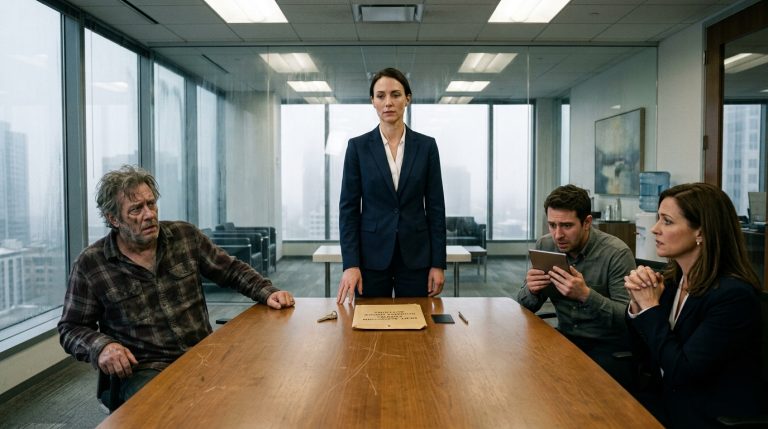
The Golden Heirloom Was Just Glass: How a Forgotten Daughter Reclaimed Her Empire From the Shadows
CHAPTER 1: THE SILVER PLATTER
The crystal chandelier hummed with a high, sterile vibration that set my teeth on edge.
Around the Grand Ballroom, hundred-dollar steaks sat half-eaten on Limoges porcelain while hundreds of invited business associates clapped on cue.
Emma stood at the mahogany podium, her tailored blazer catching the stage lights like polished armor.
My chair made a dry, scraping protest against the parquet floor as I shifted my weight.
My fingers brushed the cold silver strap of my purse, finding the familiar, rigid contour of the wrapped gift inside.
Dad sat two seats down, his napkin tucked neatly into his collar, his chin lifted in that familiar posture of unearned pride.
“Effective immediately,” Emma said, her voice dropping into that smooth, practiced cadence she learned in New York boardrooms, “we are shedding outdated thinking.”
Her eyes flicked past the sea of expensive suits and landed squarely on my chest.
She didn’t name me in that sentence, but she didn’t need to; the heavy silence that rippled through the rows of tables did the work for her.
Dad nodded once, a slow, rhythmic movement of absolute agreement that felt like a blunt instrument striking the back of my neck.
My stomach tightened into a hard, cold knot, but my breathing stayed slow, measured through my nose.
The air smelled faintly of stale champagne and expensive cologne, a thick, suffocating blend that clung to the back of my throat.
Emma leaned into the microphone, her smile razor-sharp.
“Sarah has been adequate for legacy maintenance,” she continued, letting out a soft, theatrical sigh of pity. “But leadership requires vision. And frankly, she simply isn’t cut out for this level of business.”
A ripple of nervous murmurs passed through the second row where the regional directors sat.
I looked at Mom three seats away.
Her fingers were locked together in her lap, her knuckles stark white against the dark silk of her dress, her gaze glued firmly to her water glass.
Nobody looked at me directly, though peripheral stares brushed against my shoulders like cold ash.
Ten years of fourteen-hour days, ten years of sleeping on the cot in the back room of the old strip mall repair shop, reduced to an administrative footnote by someone who didn’t even know how to compile source code.
My pulse thudded heavily in my ears, but my hands remained entirely steady.
I didn’t blink.
I didn’t look down.
When Emma finally stepped back from the podium to a rising wave of polite applause, I stood up from my seat.
The silence that followed my movement was immediate, heavier than the speech itself.
I walked past three rows of stunned faces, my heels clicking a sharp, even rhythm against the floorboards.
Stopping at Dad’s table, I reached into my purse, pulled out the small, neatly wrapped package, and set it squarely beside his crystal water goblet.
“Happy birthday, Dad,” I said, my voice flat, carrying easily across the hushed floor.
Then I turned my back on the stage, the applause, and the glittering room, and walked out into the cool night air.
CHAPTER 2: THE THREE OCLOCK EMAIL
The blue glow from a single monitor painted my desk in harsh, cold light.
Outside the window, the city streetlights hummed a low, monotonous drone against the damp asphalt.
I set my purse down on the wood grain, the weight of the wrapped gift still sitting quietly in the bottom pocket.
My fingers settled onto the keyboard, the plastic keys cool and dry under my fingertips.
The screen blinked, reflecting the tired lines around my eyes without a shred of sympathy.
I didn’t reach for a glass of water, and I didn’t pace the floorboards.
There was no time for wasted motion when the architecture of ten years needed to be dismantled line by line.
My cursor hovered over the draft folder, resting on the meticulously compiled database of Chen Technologies’ primary revenue drivers.
Every single entry represented a client who answered my calls, not Emma’s.
Every contract number was tied to a personal loyalty clause I had insisted on drafting years ago when the company was still surviving out of a cramped strip mall unit.
The room smelled faintly of cold coffee from the mug I had left behind that morning.
My thumb tapped a slow, steady rhythm against the side of the desk while the mail server queued the outgoing packets.
Three o’clock in the morning was a quiet hour, the precise moment when corporate certainty turned into thin air.
I clicked send.
The progress bar didn’t stutter; it zipped across the screen in a clean, silent flash.
Within seconds, the first automated delivery receipts trickled back into the inbox like digital footprints in fresh snow.
Across town, those emails sat waiting in hundreds of executive inboxes, silent landmines ticking down toward nine o’clock.
My shoulders dropped an inch as the tension in my upper back finally shifted, turning from a dull ache into cold, sharp focus.
Emma thought a ballroom full of expensive suits and polite applause constituted an empire.
She forgot that an empire built on someone else’s code is nothing more than a house of cards waiting for a draft.
I pulled the heavy metal paperweight toward me, letting its cold mass ground my palm while I opened the next file.
The licensing agreements for the core inventory software were sitting right there in the secure directory, waiting for their expiration timestamp to click over into the void.
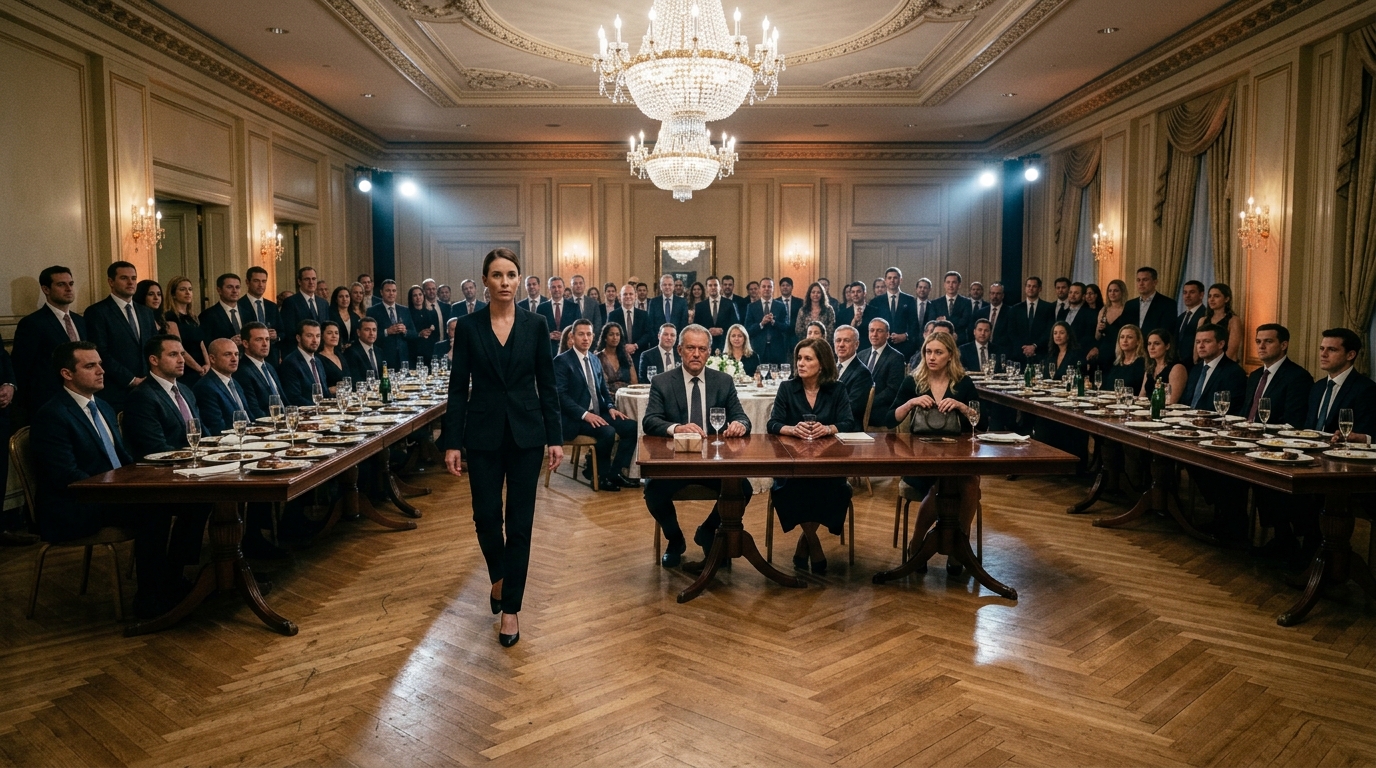
CHAPTER 3: THE NINE OCLOCK COLLISION
The polished oak table gleamed under the recessed lighting, reflecting the sterile corporate aesthetic Emma had spent five years curating.
Emma strode through the main entrance doors a half-step ahead of Dad, both of them wearing matching expressions of bright, unearned triumph.
Her heels clicked sharply against the polished concrete floor, a frantic staccato rhythm that stopped dead the moment she saw me sitting at the head of the long table.
“Sarah?” Emma’s voice hitched, a sudden edge of sharp annoyance slicing through her professional composure. “What are you doing here? I thought after last night you’d have the basic dignity to stay home.”
I didn’t blink, keeping my posture square and grounded against the stiff back of the leather chair.
“Just wrapping up some loose ends, sister dear,” I said, my voice flat and even in the echoing room. “But since you’re both here right on schedule, we should probably talk about the company’s future.”
Dad stepped forward, his face hardening as he placed a heavy hand on the edge of the mahogany surface.
“There is nothing to discuss,” Dad interjected, his voice dropping into a stern, dismissive register. “Emma’s in charge now, and the board has already approved it.”
A bead of sweat broke out near Emma’s hairline, ruining her immaculate makeup line as she registered my complete lack of intimidation.
She reached into her designer handbag with a twitchy, involuntary micro-gesture, her fingers fumbling against the leather before she caught herself.
“The board?” I asked, my fingers sliding a slim tablet across the smooth wood toward them. “Let’s talk about that.”
The air in the room grew instantly heavy, smelling faintly of the expensive parchment paper Dad had used to sign documents he never bothered to read.
Emma’s eyes darted toward the tablet screen, her breathing shallow and uneven against the sudden silence of the office floor.
“You see, while you were busy planning gala parties and giving interviews,” I continued, leaning forward until the metal paperweight under my palm pressed into the grain, “I was actually building the foundation of this enterprise.”
Dad’s jaw tightened, a muscle jumping beneath his weathered cheek as he looked between my steady gaze and Emma’s mounting panic.
“Get to the point, Sarah,” Dad snapped, his fingers curling tightly over the edge of the table until his knuckles turned ash white.
CHAPTER 4: THE PAPERWORK COLLAPSE
Emma’s hand snapped back from her handbag as if the leather had turned to hot iron.
Her gaze dropped from my face down to the digital ledger glowing against the conference room glass.
“That’s impossible,” Emma whispered, her voice tightening into a thin, brittle thread. “Dad would never sign away majority control without checking the lines.”
My thumb flicked to the next file, bringing up the scanned signature block from three years prior.
“He was too busy standing in the front row of your corporate award ceremony in New York to look at the details,” I said, my voice cutting through the heavy silence of the room. “He signed what I put in front of him because he trusted me to keep the lights on.”
Dad shifted his weight heavily from one foot to the other, the floorboards groaning under his sudden tremor.
The color vanished entirely from his cheeks, leaving him looking smaller, older, and entirely stripped of his usual bluster.
“Let me see that,” Dad muttered, stepping forward and bracing his palms against the edge of the wood.
His eyes scanned the digital text, moving slowly over the clauses he had dismissed a decade ago as routine administrative paperwork.
“You see, Dad,” I continued, letting the metal paperweight roll once against my fingertips, “the software that generates eighty percent of this company’s quarterly revenue doesn’t belong to Chen Technologies at all.”
Emma’s breath hitched sharply in her throat, her eyes widening as the full weight of the structure began to cave in around her.
“It belongs to Innovate Solutions LLC,” I said, meeting her frantic stare with absolute, unyielding calm. “And the licensing agreement expired about twenty minutes before you walked through those front doors.”
A low murmur drifted in from the open glass partition behind us, where employees had begun gathering in the hallway to watch the foundation crack.
Emma’s face twisted into an ugly mask of raw, unfiltered fury as she slammed her palms onto the table.
“You underhanded little liar!” Emma shouted, stepping toward my chair with her fists clenched at her sides. “You planned this whole thing just to ambush us!”
I didn’t flinch, keeping my shoulders square against the leather backing while she shook with impotent rage.
“I spent ten years building this business while you collected awards for my work,” I replied softly, letting the cold reality settle over the room. “The company you thought you could inherit by public humiliation doesn’t exist anymore.”
Dad sank heavily into the nearest chair, his hands trembling as he stared down at his empty palms.
CHAPTER 5: THE CLIENT EXODUS
Emma snatched the device off the mahogany surface, her thumb swiping frantically across the glass as the notification banner turned a steady, unbroken red.
“They can’t terminate,” Emma choked out, her face draining of color as another corporate logo vanished from her active dashboard. “These are binding agreements tied to our annual projections.”
“They’re tied to personal loyalty clauses,” I said, leaning back and resting my hands flat against the armrests. “Clauses built around my name, my technical support, and my team’s presence.”
Dad tried to stand up, but his knees buckled slightly against the heavy oak chair, forcing him back down with a dull thud.
“Emma, fix this,” Dad muttered, his voice cracking as he looked toward his favorite daughter for the miracle she had promised in the ballroom.
“I can’t fix this!” Emma screamed, finally dropping the phone back onto the table as her composure shattered completely. “She rigged the entire framework before we even walked through the door!”
Through the glass wall of the conference room, developers and middle managers had stopped pretending to work.
They stood in tight clusters by the water cooler, staring directly into our space while refreshing their corporate emails on their personal devices.
Emma’s chest heaved under her tailored blazer, her breath coming in short, ragged gasps that contrasted sharply with the cold silence of the office floor.
“You’re destroying everything we built,” Emma snarled, pointing a shaking finger directly across the table at my chest. “You’re burning the whole company to the ground just out of spite.”
“I didn’t burn anything,” I replied, my voice dropping an octave as I met her frantic stare head-on. “I simply picked up my tools and walked out of a house built on quicksand.”
Dad buried his face in his weathered hands, his shoulders shaking with the sudden, crushing weight of reality.
“What do you want, Sarah?” Dad whispered through his fingers, the last ounce of his authority evaporating into the stale office air.
“Option one is walking away with my shares and leaving this shell at zero,” I said, letting the silence stretch until it became almost unbearable. “Option two is you both sign the restructuring agreement right now.”
CHAPTER 6: THE QUIET OFFICE
Emma’s fingers hovered over the metal barrel of the pen, trembling with a bitter, exhausted defeat that stripped away every ounce of her public bravado.
“You planned this down to the minute,” Emma spat, her voice cracking as she finally pressed the nib into the paper and dragged it across the page.
“I spent ten years making sure the foundation couldn’t be stolen by a boardroom speech,” I replied, watching the ink settle into the grain.
Dad reached out with a stiff, heavy motion, taking the pen from her fingers to sign his own name beneath hers without a single word of protest.
The silence that filled the office afterward was heavy, devoid of triumph, smelling only of dry paper and cold coffee.
Outside the glass partition, the employees went back to their screens, their movements quiet and orderly under new management that actually knew how the code was written.
Mom came by later that evening, her eyes red-rimmed and quiet as she looked out over the city skyline from my newly reclaimed corner office.
“Did it have to end this way?” Mom asked softly, her fingers gripping the strap of her handbag.
“They left me no choice,” I answered, keeping my gaze steady on the horizon where the streetlights were beginning to blink awake.
She nodded slowly, the weight of the family fracture hanging between us like an unresolvable equation.
The company continued to grow over the following year, tripling its valuation while Emma took a modest position at a distant startup in Silicon Valley.
Dad retired for good, finally understanding that a golden title means nothing if the work behind it is hollow.
These days, I sit at my desk late at night, looking past the reflection of the monitor toward the city below.
I keep the small, wrapped birthday present on the shelf behind me—the photo album of the old repair shop—untouched and quiet.
Respect is earned in the trenches, not handed out on a silver platter under ballroom lights.
The empire is secure, the code is mine, and the quiet work speaks for itself.