The Sovereign’s Iron Debt: A Blueprint for Total Systemic Retribution
CHAPTER 1: THE SMOLDERING VAULT
The soles of my boots sank three inches into slurry—a toxic paste of pulverized drywall, diesel exhaust, and raw rainwater.
At 7,200 feet, the wind doesn’t blow; it shears. It carried the chemical stink of scorched insulation straight down my throat.
I didn’t look at the ravine where the infinity pool had sheared off. Looking at the ravine was emotional, and emotion was waste. Instead, my thumb pressed into the jagged edge of a green glass shard from the atrium skylight. The sharp point bit into my callus, drawing a single bead of blood that I squeezed dry against my palm. Pain kept the focus tight.
Four hours. That was the window they used while my plane was over Nebraska.
Across the cleared perimeter, fifty yards past the yellow crime-scene tape, the white Escalade sat idling. Its engine threw a low, steady rumble into the thin mountain air. Behind the tinted windshield, a silhouette didn’t move. She was watching to see if I’d drop to my knees.
I didn’t give her the satisfaction.
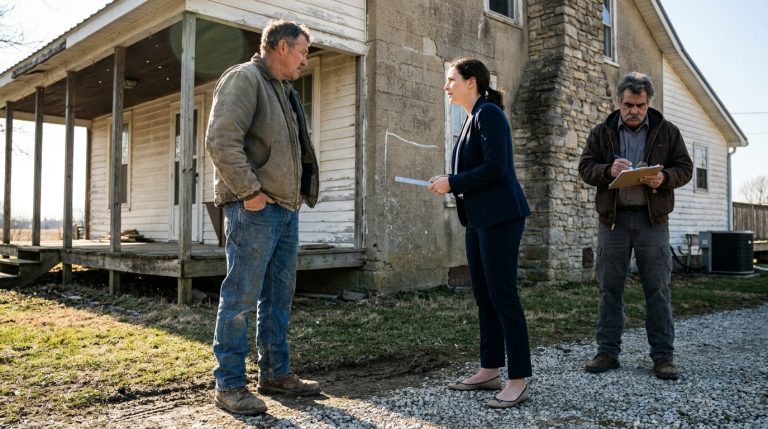
I stepped over a snapped cedar beam—reclaimed timber from a 1912 Montana barn, marked with Elaine’s grease-pencil measurements—and reached the scorched concrete slab that used to be the master closet. The hydraulic track of the excavator had gouged a six-inch trench right through the subfloor.
They missed the steel plate by four inches.
I knelt in the mud, my tailored trousers soaking up grease and ice-water. My fingers found the recessed iron ring buried beneath two inches of crushed tile. The mechanical lock was cold, but the tumbler mechanism had taken three tons of falling masonry without warping.
Four-two-eight-six. Our anniversary.
The bolt retracted with a dull, heavy clack.
Inside, untouched by the water or the dust, lay three black binder clips holding forty-two carbon-copy receipts, eighteen certified mail manifests, and a sealed thumb drive stamped with the state seal.
Footsteps crunched on the gravel behind me. Heavy, measured, deliberate. Not the frantic pace of a panicked bureaucrat.
“You’re trespassing on a condemned hazard site, Governor,” Garrett Pritchard said. His hand rested flat over the leather holster clipped to his belt—a habit thirty years in a patrol car never cured.
I stood up slowly, keeping the steel vault lid open behind my legs. I didn’t look at his gun. I looked at the slight twitch in his right eye—the micro-tic of a man who knew he’d exceeded his brief by three miles.
“The stay of execution was filed at 6:00 a.m. EST, Garrett,” I said. My voice didn’t rise. It stayed flat, hard, and quiet. “Your wife signed the demolition work order at 6:12.”
“The board exercised emergency authority under Section 4,” he grunted, stepping closer. The smell of stale coffee and tobacco rolled off his jacket. “Unsafe structure. Fire risk.”
“You used three thousand gallons of water from my own cistern to suppress the dust while your crew tore it down,” I said. I closed my hand around the binder clips inside my coat pocket. “That’s not a fire response. That’s evidence destruction.”
Garrett’s jaw tightened. “You think being in the capital makes you untouchable down here? This mountain has rules.”
“No,” I said, stepping past him so close my shoulder brushed his leather jacket. “The mountain has laws. You have nine hours to find a very good lawyer.”
CHAPTER 2: TACTICAL RECONNAISSANCE
Garrett didn’t shift his stance. The leather of his jacket creaked as he turned his torso, keeping his right side turned slightly away—a reflex from thirty years of carrying a sidearm on state highways.
“Nine hours is a long time in county court, Tobias,” Garrett said, his voice dropping into a rasp that barely carried over the idle of the Escalade. “A lot of paper gets lost between the clerk’s desk and the sheriff’s file.”
“Not when the clerk uses encrypted cloud backups,” I replied, my boots crunching over a jagged fracture in the asphalt driveway. “And not when the former appellate judge knows every clerk in the third district by their middle name.”
I didn’t turn back to look at him. Looking back implied hesitation. In appellate court, the moment an attorney looks back at the gallery, the bench knows their argument has a structural hole.
At the perimeter gate, my heavy dual-cab pickup sat idling, its exhaust forming thick, white plumes that vanished into the pine canopy. Beside it, idling on the soft shoulder where the state highway met the private HOA road, stood a dark gray three-ton dump truck. Its bed was caked in fresh gray clay—not the topsoil native to Ridgemont Estates, but deep, unweathered shale from a lower elevation. On its driver-side door, half-obscured by road grime, a faded stencil read: Apex-Valero Civil Infrastructure.
A contractor from the lowlands. Not a local crew. Local outfits didn’t haul shale out of a residential zone at six in the morning.
The driver kept his eyes fixed straight ahead, hands locked at ten and two on the steering wheel, refusing to make eye contact as I passed the hood. I noted the commercial license plate—a fleet code registered out of Denver—and stored the six digits behind the binder clip in my memory.
I reached my truck, opened the door, and set the steel-clipped bundle of receipts onto the passenger seat. The leather was cold enough to stiffen the seams.
Behind me, the door of the Escalade slammed shut. The big SUV didn’t accelerate aggressively; it pulled out with a deliberate, heavy glide, its tires spraying wet gravel against the iron gateposts as Vivien Pritchard turned onto the main road toward the county seat.
I picked up my phone from the center console. Three missed calls from Tobias Vance, my senior legal counsel, and one text message from a blocked number sent at 5:42 a.m.
The filing isn’t in the county ledger. Check the regional land registry before noon.
I hit the speed-dial for Vance. He picked up on the first ring, his background noisy with the ambient echo of a parking garage.
“Tell me you didn’t do anything dramatic on camera,” Vance said without greeting me. “Channel 7 is already running footage of the excavator.”
“I have the physical paper from the safe,” I said, setting the phone on speaker and putting the truck into gear. The V8 engine hummed beneath the floorboards, a steady, mechanical vibration that cut through the silence of the cab. “Every check, every approval signature. But Garrett just confirmed they didn’t file the demolition order through the standard clerk’s queue.”
“They don’t have to if they processed it under a hazardous abatement lien,” Vance countered. “If Vivien signed off as HOA board president claiming immediate structural instability, the county recorder executes automatically without a judicial hearing.”
“They brought in an outside contractor,” I said, steering the truck down the winding mountain pass, following the fresh tire tracks the dump truck had pressed into the slush. “An outfit called Apex-Valero. They weren’t just knocking down timber, Tobias. They were hauling earth off the foundation site.”
A long pause stretched over the line, punctuated by the rhythmic click of Vance’s indicator as he merged onto the highway.
“An HOA demolition doesn’t include excavation,” Vance said, his tone shifting from legal caution to sharp calculation. “That’s a site clearance. Why would Vivien pay double out of community funds to move dirt off a private parcel?”
“She didn’t pay out of community funds,” I said, eyeing the rear-view mirror as the gate of Ridgemont Estates shrank into the mountain fog behind me. “She paid out of a shell account. And we’re going to trace the check before the bank opens at nine.”
I hung up, adjusted my grip on the wheel, and felt the small, sharp glass shard in my coat pocket pressing against my ribs—a cold, constant reminder that every move from this second forward was a matter of calculated leverage.
CHAPTER 3: THE DEPOSITION TRAP
The vibration of the highway hummed through the frame of the truck, but my thumb stayed anchored against the razor edge of the glass in my pocket. Pain was a steadying force. It kept the pulse low and the tactical calculation sharp.
“Tobias,” I said, my voice cutting through the engine rumble as I dialed Vance back on the encrypted line. “Where is the recorded deposition scheduled?”
“Room 302, County Annex,” Vance replied instantly, his breath hitching as he walked quickly through a vaulted hall. “The board attorney tried to move it to a private conference room in Vivien’s brokerage building. I filed an emergency motion at 8:15. Judge Miller signed the subpoena for the county court reporter twenty minutes ago. She’s trapped in a public venue.”
“Has she seen the binder contents?”
“Not yet,” Vance said. “She thinks we’re showing up with an injunction request to halt site cleanup. She brought two junior associates from Miller & Vance to act as human shields. They’re expecting a standard administrative dispute.”
“Keep the camera rolling from the second she crosses the threshold,” I told him, shifting into the express lane. “The law doesn’t care about her composure, but the record will.”
Thirty-two minutes later, I pushed open the heavy oak doors of Room 302.
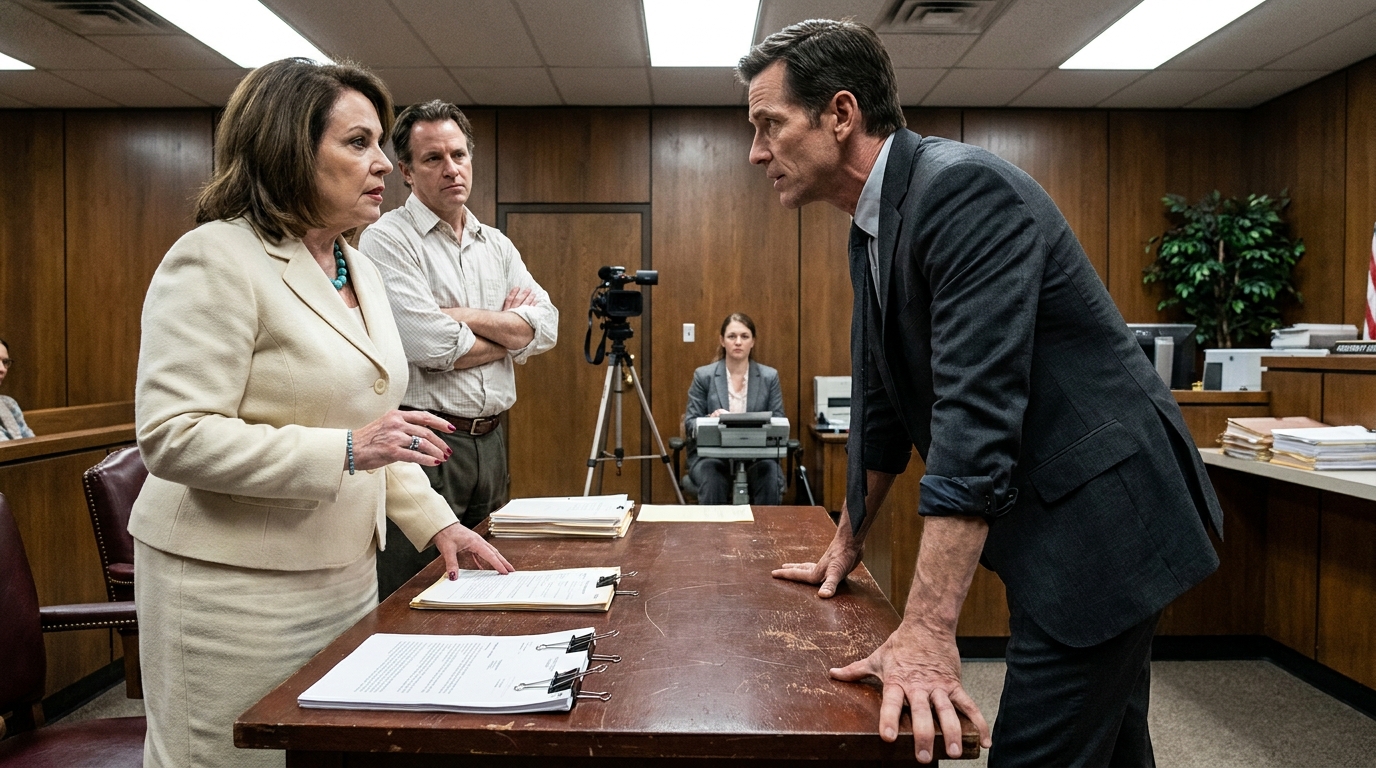
The air inside smelled of floor wax, old parchment, and stale coffee. Vivien Pritchard sat at the far end of a scarred mahogany table, wearing a cream-colored wool suit that looked stiff enough to deflect armor-piercing rounds. Her turquoise necklace sat heavy against her collarbone, five rows of polished stone that didn’t move when she turned her head. Beside her, Garrett stood with his arms folded across his chest, his back pressed against the wood paneling like a bailiff on duty.
The court reporter, a young woman with a focused expression, adjusted the tension on her stenotype machine.
“Governor Kendrick,” Vivien’s attorney said, standing up and smoothing a tie that cost more than a county deputy’s weekly pay. “We were under the impression this was an informal evidentiary exchange before the preliminary hearing at two.”
“Informal ended at 6:12 this morning when the excavator claw hit my roof,” I said. I didn’t take a chair. I walked to the edge of the table, pulled the steel binder clips from my coat pocket, and laid them flat on the polished wood.
The metal clicked against the mahogany with the sharp, distinct crack of a firing pin locking into place.
Vivien’s eyes dropped to the black steel clips. Her manicured fingers twitched, her left hand creeping two inches across the table before she caught herself and locked her hands together in her lap. An involuntary micro-action. A tell.
“Under Rule 30-B,” Vance announced from behind me, setting a digital video recorder on a tripod and aligning the lens directly with Vivien’s face, “this deposition is on the record for civil fraud, arbitrary exercise of authority, and systemic due-process violations.”
“This is an administrative HOA matter,” Vivien’s counsel snapped, stepping between the camera and his client. “The board acted well within its statutory discretion under the community covenants regarding blighted or abandoned structures.”
“Blighted?” I asked softly. I pulled the top sheet from the binder—a carbon-copy receipt stamped by the HOA’s own bank account three weeks prior. “Receipt number 4402. Payment in full for thirty-four thousand dollars in assessed maintenance fees, signed by your treasurer.”
Vivien didn’t look at the paper. “The architectural committee revoked the trim-color approval after the secondary inspection.”
“The committee didn’t revoke anything,” I said, sliding a second document across the wood. “This is a sworn affidavit from Arthur Pendelton, head of the architectural review board for seven years. He states under penalty of perjury that no meeting was called, no vote was logged, and that you personally forged his digital signature on the override authorization.”
The room went dead silent except for the rhythmic, low chack-chack-chack of the court reporter’s keys.
Vivien’s chin rose half an inch. Her eyes narrowed into hard, pale slits behind her lacquered hair. “Arthur Pendelton is an elderly man with failing memory. He signed what his wife told him to sign.”
“Then let’s talk about someone with a better memory,” I continued, leaning down until my face was six inches from her side of the table. “Let’s talk about the account where that thirty-four thousand went.”
Her attorney opened his mouth to object, but I didn’t give him the room to breathe.
“It wasn’t deposited into the Ridgemont Estates primary operating fund,” I said, my voice dropping into a register that made the windowpanes vibrate subtly in their frames. “It was wire-transferred three hours after clearance into an entity registered under the name Apex-Valero Holdings.”
The stone in her turquoise necklace caught the harsh fluorescent light as her breathing shallow-shifted. She didn’t look at her lawyer. She looked past me, straight at Garrett.
Garrett’s posture broke. His back left the wood paneling, his weight shifting forward onto the balls of his feet as his right hand dropped toward his belt line out of pure, instinctual panic.
“Careful, Garrett,” Vance said quietly, not taking his eyes off the camera monitor. “There’s a uniformed bailiff outside that door, and every frame of this room is streaming live to an off-site server.”
Vivien’s lips thinned into a pale, bloodless line. “You think a handful of banking receipts gives you leverage over a community board that has operated legally for a decade?”
“No,” I said, picking up the third document—a certified copy of a state land-use filing that had been pulled from the regional registry less than twenty minutes prior. “I think the fact that Apex-Valero Holdings filed a mineral-access easement under my foundation forty-eight hours before you ordered the demolition gives the State Attorney General grounds for a federal wire-fraud indictment.”
The color drained from Vivien’s cheeks, leaving her skin looking like powdered chalk beneath her makeup.
CHAPTER 4: THE PAPER TRAIL CRACK
Vivien didn’t move a muscle. The silence in Room 302 stretched so long the high-pitched whine of the video camera’s autofocus mechanism sounded like a power saw slicing through drywall.
Her attorney leaned over, his voice a low, frantic hiss against her ear. “Vivien. On the record. Do not validate that entity name.”
Vivien’s hand twitched toward her throat, her nails digging into the large, central turquoise nugget of her necklace until her knuckle turned yellow. “Apex-Valero is an authorized infrastructure vendor,” she said, her tone flat and monotone, like a witness reading a plea statement off an index card. “The board contracts with third parties for geotechnical evaluation when structural integrity is questioned.”
“Geotechnical evaluation,” I repeated, pulling my fountain pen from my breast pocket. I didn’t unscrew the cap; I tapped the silver barrel twice against the edge of the certified filing. “Then why did the wire transfer route through a commercial clearinghouse in Grand Cayman before landing in Apex-Valero’s operational account in Denver?”
Her lawyer slammed his palm onto the mahogany table. “Objection! Counsel is badgering the witness on matters outside the scope of this administrative deposition!”
“There is no ‘counsel badgering’ in a Rule 30-B proceeding when the subject is municipal fraud, Counselor,” Vance said from behind the tripod, his finger hovering over the gain dial. “And your client just swore under oath forty seconds ago that she had no direct financial affiliation with outside contractors.”
Garrett took half a step forward from the wall, his boots squeaking against the polished floor wax. “This interview is over.”
“Sit down, Garrett,” I said without looking at him. My eyes stayed locked on Vivien’s left eyelid, which was fluttering in rapid, involuntary spasms. “If you step between that camera and this table, Vance calls the state police commander in charge of executive protection. You’re a retired officer. You know what interference with a governor’s official corruption inquiry carries on a charge sheet.”
Garrett froze. The leather of his jacket creaked as his muscles locked, his jaw working silently as he swallowed back a surge of useless fury.
I reached into my leather briefcase resting against my chair leg and pulled out a stack of dot-matrix financial ledgers—three hundred pages of sub-account transactions Vance had subpoenaed from the HOA’s local depository at 8:00 a.m. sharp.
I flipped directly to page 114.
“Every HOA operating account requires two signatures for disbursements over five thousand dollars,” I said, running my thumb down the margin. The paper was cold, smelling of fresh toner and chemical bleach. “Here’s your signature, Vivien. And here’s the secondary signature, recorded under an administrative sub-code.”
I pointed to a faint, purple-ink stamp next to the line item for thirty-four thousand dollars.
In the margin, written in tiny, precise block lettering that had been partially smeared by a water droplet, was a reference stamp: PO-SUB9-04.
Protocol Obsidian. Sub-Fault 9. The seed codes lay plain on the page, buried in line-item noise, completely opaque to an outside auditor, but undeniably real.
Vivien’s eyes tracked my thumb. When she saw the purple ink, her lips didn’t just thinned—they receded completely against her teeth.
“That’s an internal filing code,” she whispered.
“It’s an authorization code for a corporate land option,” I corrected softly, sliding the page directly into the center of the camera frame so the high-definition lens captured every pixel of the ink. “The kind of code used when an entity isn’t paying for dirt removal, but buying access to what lies beneath it.”
“We are done,” her attorney said, grabbing Vivien by the elbow and hauling her out of her chair with enough force to knock her leather notepad to the floor. “We are terminating this deposition under Rule 30-B section C. We will seek a protective order in district court at one o’clock.”
Vivien didn’t fight him. She let him pull her toward the oak doors, her high heels clicking a frantic, ragged rhythm against the floorboards. Garrett fell in behind them, his broad back blocking the doorway for three seconds before he vanished into the corridor.
Vance stepped around the tripod and hit the stop button on the recorder. The mechanical beep echoed off the high ceiling.
“She’s going to hit the bank before one,” Vance said, his face pale under the room’s pale lights. “If those Cayman accounts are active, she’s going to initiate a wire sweep the second she reaches her Escalade.”
“She can’t,” I said, picking up my fountain pen and capping it with a heavy, metallic click. “I had the state banking commissioner place an administrative hold on all local sub-accounts tied to that HOA tax ID at eight-thirty this morning.”
Vance blinked, taking a half-step back. “On what authority?”
“Executive Order 12,” I said, gathering the ledgers and stacking them neatly into my briefcase. “Emergency investigation of systemic municipal tax evasion. She didn’t just tear down my house, Tobias. She built a paper trail that connects her directly to a state-level felony before noon.”
CHAPTER 5: SABOTAGE AT DAWN
“Executive Order 12,” Vance repeated, his eyes fixing on the briefcase in my left hand. “Tobias, the press corps has three reporters in the basement press gallery. If you freeze an HOA sub-account using gubernatorial emergency powers, they’re going to frame this as an official abuse of power before the six o’clock broadcast.”
“Let them frame it,” I said, sliding the latch on my briefcase shut with a sharp double-snap. “They can write about procedure while the Attorney General’s forensic unit audits the wire trail. Procedure doesn’t hold up in court when the paper shows a felony.”
My phone buzzed in my coat pocket. A single long vibration, then two short pulses. The private line.
I pulled it out and answered without taking my eyes off the door where Vivien had fled. “Talk to me, Rex.”
“You need to get up to the site,” Rex Dunaway’s voice came through, gravelly and stripped of ceremony. “The staging trailer at your lot. Someone pulled the lock cylinder ten minutes ago.”
My fingers tightened around the phone casing. “Did they touch the safe cavity?”
“No,” Rex said, a burst of static cutting over his signal as wind whipped across his mic. “They didn’t go for the foundation. They went for the timber cache. The reclaimed joists Elaine had indexed—someone doused three bundles in solvent and set a slow fuse. I put it out with the snow shovel, but the trailer door is hanging off its hinges.”
“I’m twenty minutes out,” I said.
I didn’t wait for Vance to pack the camera tripod. I moved down the Annex stairwell two steps at a time, the rubber soles of my boots slapping against the damp terrazzo steps. Outside, the sky had turned a bruised, swollen purple. Freezing rain was coming down in sharp, needle-like sheets, bouncing off the hood of my truck and coating the windshield in a film of gray ice.
The Match Cut Exception: Shadows stretched across the dashboard as the wipers scraped a rhythm into the glass, and forty minutes of white-knuckle mountain driving broke when the truck’s dual rear tires finally crunched onto the gravel driveway of my ruined lot.
The smell hit me before I cleared the cab door—not just diesel and wet drywall now, but the sharp, acrid sting of burnt turpentine and melted plastic.
Rex stood near the hitch of my silver construction trailer, wearing an oversized canvas coat covered in soot. In his right hand, he held a bent pair of fourteen-inch bolt cutters; in his left, a rusted aerosol canister he’d kicked into the mud.
“They brought a saw,” Rex said, pointing with his boot toward the trailer’s aluminum door.
The heavy latch had been sliced clean through, the sheared steel edges showing bright, unoxidized silver against the rust. Inside, the storage racks where Elaine’s hand-annotated blueprints and salvaged Montana cedar had been stacked were completely overturned. Roll after roll of drafting paper lay trampled in the slush, the ink bleeding into blue streaks across the floorboards.
I stepped up onto the metal threshold. The air inside was thick with cold smoke.
I knelt down beside the overturned tool chest—Elaine’s father’s chest, the oak drawers splintered open. Three custom-milled timbers, the ones marked with her white grease-pencil measurements for the central atrium ridge beam, were missing from the top rack.
Spray-painted across the interior plywood wall in thick, dripping red letters was a crude single line: GO BACK TO THE CAPITAL.
I didn’t touch the wall. My gaze dropped to the floor beside the overturned workbench.
Half-buried under a pile of damp insulation was an index card, stiffened by oil, that had slipped out of the lockbox when they smashed it. On the back, printed in crisp laser-ink, was a work-order routing code: APX-VAL-OBSIDIAN-09.
Another physical link. Apex-Valero. Protocol Obsidian. Sub-Fault 9. They weren’t just vandalizing the site to scare me off; they were actively stripping physical markers that linked her initial land survey to the structural clearing work.
Rex stepped into the trailer doorway, his shadow falling long across the ruined blueprints. “Garrett’s truck was logged passing the lower county toll gate at four-forty a.m. I got the highway camera feed off a friend in district four.”
“He didn’t do the cutting himself,” I said, standing up and brushing cold soot from my knee. “His wrists are too stiff from his arthritis to push fourteen-inch bolt cutters through hardened steel in one pass. Look at the bite mark on the shackle—single stroke. Clean leverage.”
“A hired hand,” Rex said. “An outside crew.”
“Apex-Valero’s site crew,” I corrected, picking up the oil-stained index card with my handkerchief and sliding it into my inner coat pocket next to the shard of green glass. “Vivien isn’t playing defense anymore, Rex. The deposition backed her into a corner, and now she’s trying to destroy the physical evidence of what Elaine built before an independent surveyor can map the original sub-slab.”
“What’s the play?” Rex asked, his jaw setting hard.
“We don’t wait for the district court hearing at one,” I said, stepping back out into the freezing rain and looking up toward the ridge where the Escalade usually sat. “We call the State Environmental Protection Division. We report an uncontained industrial hazard on this parcel.”
Rex frowned, wiping rain from his forehead. “Hazard? They tore down a wood-and-glass residence.”
“Those barn timbers Elaine salvaged from Montana in 2018,” I said, my voice dropping into a razor-thin calm as the rain soaked through my wool collar. “The exterior sealer used on the 1910 structural frames contained chrysotile asbestos. I have the original remediation certificates in the safe.”
I looked Rex dead in the eye.
“They smashed those timbers without EPA containment filings,” I said. “Every shovel of dirt Apex-Valero hauled off this mountain this morning is now a federal environmental crime.”
CHAPTER 6: THE TOXIC LEAK
Rex didn’t blink. The rain ran down the deep creases around his eyes, pooling at his chin before dripping onto his canvas coat.
“Federal environmental enforcement takes seventy-two hours just to clear intake,” Rex said, his voice dropping an octave as he stepped closer to the edge of the mud pit where the atrium foundation had been sheared off. “You have sixty minutes before Apex-Valero’s night shift hauls the remaining sub-grade timber to the county landfill.”
“They won’t get past the gate,” I said.
I pulled my phone from my inner coat pocket, the screen slick with moisture. I tapped the direct line to Vance. He answered before the second ring completed.
“Tobias,” Vance said, his voice clipped over the speaker. “The district judge just signed a temporary stay on the HOA’s administrative asset transfers. But Vivien’s legal team filed an emergency motion claiming the board has a contractual obligation to clear hazardous debris from the parcel by four p.m.”
“They created the hazard,” I said, stepping off the trailer threshold into the slush. My boot sank two inches into a trough left by the excavator treads. “Tell the clerk that the salvaged timber from the 1910 Montana barn was sealed with chrysotile-bearing primer. I’m transmitting the original 2018 remediation certification from the vault right now.”
A sharp pause echoed over the line. The sound of Vance’s pen tapping against a desk pad stopped abruptly.
“Chrysotile?” Vance repeated. “If there’s friable asbestos on that site without a state-monitored containment envelope, every minute that excavator operates is an unpardonable environmental felony under Title 42.”
“And Vivien’s brother-in-law signed the demolition work order,” I said. “He operates the equipment for Apex-Valero. Transmit the certificate directly to the Regional EPA Inspector General’s office in Denver. Copy the State Highway Patrol commercial enforcement division.”
“They’ll order an immediate quarantine of the entire parcel,” Vance said, his tone shifting into rapid calculation. “No trucks leave. No earth gets moved. The site becomes a federal evidence locker.”
“Send it,” I said, and ended the call.
I walked toward the edge of the pit where the excavator had ripped through the central foundation wall. A crushed metal electrical panel hung from two severed copper conduits, swaying slightly in the icy wind.
I leaned down, my fingers wrapping around the cold, twisted steel door of the panel. Tucked behind the main breaker housing—placed there intentionally or dropped in a hurry—was a folded sheaf of yellow manifest papers.
I pulled them out. The paper was wet around the margins, stiffened by diesel oil.
Header: Apex-Valero Civil Infrastructure – Site Clearance Protocol Obsidian.
Below the header was a soil-sampling grid map of my property. Red ink circles marked three specific core-sample points right along the fracture line of the ravine. Beside the lowest circle, written in precise technical handwriting, were the words: Sub-Fault 9 pressure gradient verified. Containment seal breach authorized.
My thumb pressed hard against the paper. The decoy secret—the idea that Vivien was merely skimming HOA dues to hide a bad real-time financial audit—shattered right there in the mud.
This wasn’t a cover-up for embezzled maintenance fees. This was an active, deliberate clearance operation to access a high-pressure geological fault line running directly beneath Elaine’s dream home. Vivien’s offshore syndicate wasn’t hiding theft; they were clearing residential obstacles for an unapproved energy extraction corridor.
Behind me, the low, mechanical whine of a heavy diesel engine cut through the sound of the rain.
I turned around. Two hundred yards down the access road, a secondary flatbed truck belonging to Apex-Valero had stopped at the closed gate. Standing in front of the iron bars, wearing a bright yellow high-visibility parka over her cream suit, was Vivien Pritchard.
Beside her, holding an iron crowbar, stood Garrett.
I didn’t run. I walked down the gravel driveway, my hands buried deep in the pockets of my trench coat, my right thumb locked against the sharp green glass shard. Every step was measured, heavy, and deliberate.
“The gate stays locked, Vivien,” I called out as I reached the fifteen-foot mark.
Vivien turned her head slowly. Her hair was damp, plastered against her scalp where the wind had caught her hood. The turquoise necklace was hidden beneath the yellow parka, but her eyes carried the same hard, desperate glare she’d had in the deposition room.
“This is private HOA property, Mr. Kendrick,” she shouted over the wind. “We have a municipal mandate to secure this site before the weather degrades the slope.”
“The EPA regional director issued a site quarantine eight minutes ago,” I said, stopping five feet from the iron bars. “Your trucks aren’t moving an inch of dirt. And your brother-in-law is about to be named as a primary co-conspirator in an uncontained hazardous material release.”
Garrett took two fast steps toward the gate, his hand tightening around the iron crowbar until his knuckles turned white. “You think you can bully this board with regulatory paper, Kendrick?”
“I don’t think, Garrett,” I said, pulling the yellow manifest from my coat and holding it against the cold iron of the gate where both of them could see the red ink circles. “I know. Because you left Protocol Obsidian’s soil map inside my electrical breaker panel.”
Vivien’s face didn’t just turn pale—she took a sharp, gasping breath as if the cold air had suddenly turned to ash in her throat.
CHAPTER 7: THE HOSTILE TOWN HALL
Garrett’s grip on the crowbar loosened by a fraction of an inch, the iron tip lowering two inches toward the slush. He didn’t look at his wife. He looked at the red ink circles visible through the wet yellow paper pressed against the gate bars.
“You have no authority to inspect site documentation,” Garrett said, though the steel had gone entirely out of his voice, replaced by a hollow, defensive rasp.
“The State Environmental Protection Division has the authority,” I said. “And they’re forty minutes behind me.”
I didn’t wait for Vivien to find her tongue. I turned on my heel and walked back toward my truck, my coat heavy with rain, the oil-stained index card and the green glass shard weighed down in my right pocket like lead shot. Behind me, the starter motor of the Apex-Valero flatbed whined twice, caught, and then shifted into reverse as the driver abandoned the gate without waiting for Vivien’s command.
The Match Cut Exception: The freezing rain turned to a low, clinging ground fog as the afternoon light bled into ash gray, and three hours of silent preparation vanished when my truck tires pulled into the crowded asphalt lot of the Ridgemont Estates Community Clubhouse at 6:40 p.m.
Eighty-five vehicles packed the spaces under the towering ponderosa pines.
Inside the main hall, the air was warm, smelling of damp wool coats, industrial floor cleaner, and cheap percolated coffee. Over a hundred residents filled the folding chairs, their voices rising in a jagged, anxious hum that bounced off the exposed cedar ceiling trusses.
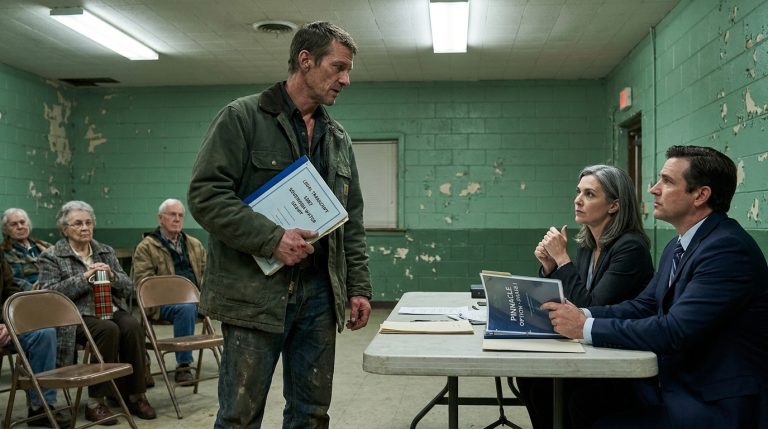
At the front of the room, behind a long folding table, sat Vivien Pritchard. She had changed into a dark slate-gray suit—tailored, sharp, structured—but her turquoise necklace was missing. In its place, a gold-plated bar pin sat crooked on her lapel. To her right sat her corporate counsel; to her left, two empty chairs reserved for board members who had called in sick forty minutes prior.
I walked down the central aisle with Vance on my left and Rex on my right. In my hands, I carried a single, thick black binder—not the raw receipts from the safe, but forty laminated pages of cross-referenced wire transfers, environmental manifests, and state land-registry filings.
The hum in the room died instantly. Every head turned.
Vivien didn’t wait for me to reach the public microphone set up in the center aisle. She struck her wooden gavel against the sound block—a sharp, dry thack that echoed like a pistol shot.
“This quarterly meeting of the Ridgemont Homeowners Association will come to order,” she announced into her goose-neck microphone. Her voice was amplified through four corner speakers, tight and brittle. “Before we open the floor to scheduled committee reports, I must remind all attendees that ongoing litigation involving private parcels is strictly off-limits for public discussion.”
I reached the microphone stand, set my black binder onto the podium shelf, and adjusted the neck until the element picked up the rustle of my coat.
“This isn’t a discussion about a private parcel, Vivien,” I said, my voice carrying clean and flat through the hall without needing to raise my volume. “This is a report on the seventy-five thousand dollars in legal fees charged to this community’s operating fund over the last two quarters.”
A wave of sharp, whispered murmurs rippled across the fifth and sixth rows.
Vivien hit the gavel again. Thack. “Governor Kendrick, you are out of order. You are not a recognized speaker on tonight’s agenda.”
“I am a deeded property owner within this association,” I replied, opening the binder to page three. The white laminate pages reflected the overhead fluorescent tubes. “And under Section 12-B of the state common-interest ownership act, any deeded owner may present physical evidence of board insolvency during a open quarterly session.”
Her attorney leaned into her microphone, his thumb over the mute button. “The chair reserves the right to limit presentations that compromise active municipal contracts.”
“The contract with Apex-Valero Holdings?” I asked, turning to page fourteen and holding the high-resolution scan of the bank routing slip toward the third-row seats where four former board members sat. “The contract where thirty-four thousand dollars in assessed homeowner fines was routed directly into a Cayman-clearing account registered to a shell entity?”
A man in the third row—Arthur Pendelton, his hands trembling slightly as he leaned forward on his cane—stood up. “What clearing account, Vivien?”
“Sit down, Arthur!” Vivien snapped, her composure cracking for a fraction of a second as her hand slammed flat against the table. “These are unverified, manipulated documents brought here by a disgruntled former owner seeking to evade architectural compliance penalties!”
“These are certified bank ledgers provided under subpoena by the State Banking Commissioner,” Vance called out from the aisle, holding up a blue-stamped court verification document. “And they show that Protocol Obsidian was authorized using HOA capital without a full board vote.”
The word Obsidian hit the front table like a physical blow.
Vivien’s lawyer stood up so fast his metal folding chair skidded three feet backward, scraping violently against the linoleum. He grabbed Vivien by the upper arm, his mouth inches from her ear as he whispered something rapid and fierce.
Vivien’s eyes didn’t look at her lawyer. She looked past the podium, past me, straight at the rear double doors of the hall.
Standing in the back doorway, flanked by two uniformed State Troopers, was the District Director for the Environmental Protection Agency. He held a white clipboard with a red hazard-containment order clipped to the top.
“Mrs. Pritchard,” the EPA Director’s voice cut through the room, clear and unamplified. “We have served a federal stop-work and quarantine order on parcel 402. We require your immediate presence outside to identify the site manager for Apex-Valero Civil Infrastructure.”
The entire room erupted into chaos—chairs scraping, voices shouting, phones coming up to record the scene.
Vivien didn’t use the gavel. She slowly unclipped her lapel pin, set it on the table beside her microphone, and stood up with her hands locked tightly at her waist, her jaw set in a hard, pale line of absolute, cornered defiance.
CHAPTER 8: THE SYNDICATES COUNTERSTRIKE
The hall didn’t empty; it turned into a pressure cooker.
As the EPA Director stepped forward, his boots heavy against the linoleum, Vivien’s attorney grabbed her elbow and ushered her toward the side emergency exit behind the podium. Garrett fell in behind them, his broad back forming a moving wall that shoved past two startled homeowners.
I didn’t give chase. Chasing a cornered bureaucrat across a parking lot is amateur work. Instead, I stepped away from the microphone, reached into my coat, and handed Vance the black binder.
“Get Arthur Pendelton and the three other former board members into the side conference room,” I told Vance, my voice barely audible over the roaring chatter in the room. “Have them sign individual affidavits confirming they never authorized the Apex-Valero sub-account transfers. We lock down the local civil paper before midnight.”
Vance nodded once, his face rigid. “What about the news crews outside?”
“Give them the certified wire records,” I said. “Every page.”
I walked toward the rear doors where Rex stood waiting by the glass panels. Outside in the fog, the flashing red and blue LED bars of three state cruiser cars cut through the mountain dark, illuminating the snow slush on the windshields.
Rex leaned in, his voice dropping low. “Garrett’s phone wasn’t silent during the meeting. He took two encrypted VoIP calls while you were at the microphone. I was standing four feet behind him.”
“Did you get the IP routing?” I asked, my thumb tracing the sharp, cold edge of the glass shard in my pocket.
“State police intelligence ran the header,” Rex said, pulling a folded slip of thermal paper from his cuff. “The calls didn’t come from Denver. They were routed through a private server registered to Apex-Valero Holdings in Houston—and mirrored through a corporate communications firm in D.C.”
I unfolded the paper. printed in blue thermal ink was a single media alert timestamped for 7:15 p.m.—fifteen minutes ago.
Headline: Gubernatorial Conflict of Interest: Governor Kendrick Uses Executive Orders to Freeze Municipal Accounts in Personal Land Dispute.
They were counter-attacking through the media pipeline before the state troopers even finished taking Vivien’s statement in the driveway. A coordinated, high-level public relations strike designed to turn a criminal environmental seizure into a story about a rogue governor abusing his office for personal vengeance.
My phone vibrated in my pocket. The caller ID showed the private line for Marcus Hayes, my Chief of Staff at the capital.
I answered and stepped out onto the cold stone porch, the freezing fog biting into my throat.
“Tobias,” Marcus said, his tone clipped and dangerously quiet. “The Morning Caller just posted a draft op-ed online. They’re claiming you deployed state environmental inspectors to harass a private residential board over a personal zoning fine. They have quotes from an anonymous board member claiming you threatened them with state audits during a private deposition.”
“The deposition was recorded on video under Rule 30-B, Marcus,” I said, my boots stepping down onto the ice-crusted steps. “Vivien’s attorney terminated the session after we entered certified proof of wire fraud onto the record.”
“It doesn’t matter what happened in the room if their story hits the morning wire first,” Marcus replied. “The Senate Majority Leader just called my office. He’s threatening to launch an legislative ethics inquiry by nine a.m. if you don’t roll back Executive Order 12.”
“Tell the Majority Leader to read the EPA’s hazardous material containment order first,” I said flatly. “And tell him if he wants to sit in front of a committee camera, I’ll bring the bank ledgers showing Apex-Valero’s wire transfers to his primary campaign PAC.”
A long silence stretched over the line.
“They paid into his PAC?” Marcus asked, his voice dropping into absolute stillness.
“Check the filing under Apex-Valero’s secondary subsidiary,” I said. “The same code appears: PO-SUB9. They aren’t just buying local HOA presidents, Marcus. They bought legislative protection before they ever put an excavator on my lot.”
Through the soles of my leather boots, a faint, rhythmic shudder vibrated through the concrete step—a low, mechanical thrum that didn’t come from the idling patrol cars or the generator in the parking lot. It felt like a deep earth tremor, a muffled acoustic pulse traveling up through the mountain shale.
Sub-Fault 9. The pressure gradient wasn’t just a geological note on a wet map. They were already testing the subsurface.
“Marcus,” I said, my voice hardening until it felt as cold as the iron railing under my hand. “Call the State Geologist. Tell him to pull the seismic monitoring logs for District 4 over the last forty-eight hours. We aren’t fighting an HOA board anymore. We’re fighting a forced land liquidation before the subsurface fractures.”
CHAPTER 9: UNEARTHING SUBFAULT 9
“Sub-Fault 9,” Marcus repeated, the sound of keyboard chatter behind him cutting off instantly. “Tobias, if there’s active subsurface testing happening in District 4, that means the energy corridor permits were filed under a classified state utility exemption.”
“Search the natural resource docket for Protocol Obsidian,” I said, my voice cutting cleanly through the wind whipping off the pines. “They didn’t apply through the county land board because they knew the public notice period would give property owners ninety days to file an injunction. They routed the access grant as an emergency infrastructure survey.”
“I’m opening the state utility vault now,” Marcus said. His breathing turned fast and shallow over the speaker. “Two entries pulled three minutes ago… Tobias, Apex-Valero Holdings didn’t just buy a mineral option. They filed a deep-bore pressure release permit six months ago. The primary release vector sits directly underneath your lot’s foundation.”
“They needed the structure gone,” I said, my hand closing tighter around the phone until the metal frame creaked. “Not because of a trim color fine or an unapproved native garden. A three-story reinforced glass-and-timber structure sitting on the capstone meant any subsurface pressure shift would cause immediate structural cracking—and trigger an automatic state geological audit.”
“If the house is turned to rubble first,” Marcus finished, “they claim the slope failure was natural erosion, collect the insurance settlement through the HOA shell, and seal the fault line under an emergency state containment order.”
“Get Dr. Aris Thorne on a secure line,” I told him. “He’s the chief seismologist for the state survey. Tell him I’m sending Rex to pick him up at his office in forty minutes with the oil-stained index card and the site manifest.”
I hung up, shoved the phone into my coat, and turned back to the clubhouse doorway.
Rex was already stepping onto the stone porch, a heavy flashlight in his left hand and a rolled topographical map tucked under his arm.
“Garrett’s Escalade just cleared the lower gate,” Rex said, pointing the flashlight beam down toward the dark access road where two red taillights vanished into the thick fog. “He left Vivien at the state police cruiser. She’s giving a formal statement to the environmental investigators, but her attorney is blocking every question about Apex-Valero.”
“Let her hide behind counsel,” I said, stepping off the porch onto the slush-covered asphalt. “Garrett isn’t heading for town. He’s heading for the secondary drilling rig behind the old quarry line.”
Rex unrolled the map across the hood of my truck, weighting the corners down with his flashlight and my heavy brass key ring. The map showed the topographic contours of Ridgemont Estates, overlaid with thin red survey lines.
Running straight through the center of my parcel—marked as a dotted black line—was a subterranean fracture zone labeled Sub-Fault 9.
“Look at the depth markers,” Rex said, running a calloused index finger along the dotted line. “Apex-Valero sunk four core monitoring pins three hundred feet below the ravine six weeks before the election. They weren’t testing for shale; they were measuring hydraulic pressure. If that fault is pressurized without a controlled venting sequence, the entire eastern slope slips sixty feet into the valley.”
“They’re going to initiate the vent tonight,” I said. “Before the EPA’s federal quarantine team arrives with a formal site seizure warrant at eight a.m.”
I reached out and picked up the thermal survey printout Rex had pulled from Garrett’s abandoned staging folder. The paper was cool to the touch, printed in shades of gray and stark white. Right along the ravine wall where Elaine’s infinity pool had fallen, a bright white heat anomaly was blooming like a subterranean flare.
“If they fire a high-pressure pulse into Sub-Fault 9,” I said, looking up into the dark pine canopy as another faint tremor hummed through the soles of my boots, “they trigger a localized slope failure. The evidence of the uncontained asbestos, the altered foundations, the entire paper trail buried in that mud pit—it all slides into the river.”
“How do we stop a subsurface pulse?” Rex asked, his jaw setting hard as he looked down at the map.
“We don’t stop the geology,” I said, picking up my keys and turning toward the driver’s side door. “We take out the primary compressor unit on the quarry line before Garrett can cycle the power.”
CHAPTER 10: THE FEDERAL EXECUTION
The dual rear tires threw a shower of wet shale against the underside of the wheel wells as I dumped the clutch.
Behind me, Rex’s truck followed, his halogen high beams slicing twin shafts of yellow light through the swirling ground mist. We didn’t take the main county access road. We took the old logging spur—a four-mile shelf of exposed bedrock that bypassed the gated entrance and dropped directly into the quarry floor behind the ridge.
The Match Cut Exception: Twelve minutes of blind, bouncing mountain descent through the black pines ended when the truck’s tires slammed onto the packed gravel of the lower quarry pit.
The site didn’t look like an industrial survey. It looked like a tactical staging area.
In the center of the gravel bowl stood a trailer-mounted industrial compressor unit painted industrial red, its twin diesel exhaust stacks venting thick, black plumes straight up into the icy air. Thick, wire-braided hydraulic lines snake out from the compressor housing, disappearing directly into a steel casing driven four hundred feet into the granite floor.
Standing on the steel catwalk above the control manifold, holding a heavy wrench in his gloved hands, was Garrett Pritchard. Beside him stood two men in steel-toed work boots wearing high-visibility vests stamped with the emblem of Apex-Valero Civil Infrastructure.
A white suburban with federal government plates sat idling twenty yards away, its headlights illuminating the high-pressure manifold gauges.
Garrett turned as my truck skidded to a halt, blocking the main exit route. The glare of my high beams caught the deep lines etched into his face—not the smug arrogance of a former trooper on his home turf, but the desperate, wild-eyed strain of a man who knew the floor was collapsing beneath his feet.
I opened the cab door and stepped down onto the wet gravel. I didn’t run. I walked straight into the beam of his headlights, my trench coat unbuttoned, my hands flat at my sides.
“Step off the manifold, Garrett,” I called out over the deafening, rhythmic thump-thump-thump of the industrial diesel engine.
“You’re out of your jurisdiction, Kendrick!” Garrett screamed back, his voice straining against the roar of the compressor. “This is a private utility easement! The state land board authorized this pressure relief sequence six months ago!”
“The state land board authorized an inspection,” I said, stopping ten feet from the base of the catwalk. “They didn’t authorize Apex-Valero Holdings to execute Protocol Obsidian.”
Garrett’s grip on the wrench tightened, his knuckles turning white through his work gloves. “You don’t know what you’re dealing with! If we don’t vent Sub-Fault 9 right now, the natural gas gradient builds until the entire slope shears into the valley!”
“It only builds because your backers injected liquid slurry into the fault line three weeks ago to force a land seizure!” Rex shouted from behind me, his heavy flashlight beam locking onto the secondary pressure valve at the base of the casing. “You aren’t venting a hazard, Garrett. You’re triggering one so your offshore syndicate can buy the whole valley for pennies on the dollar!”
The driver’s door of the federal suburban opened. A tall woman in a dark canvas tactical jacket stepped out, holding a silver federal badge pressed flat against her chest.
“Federal Bureau of Investigation,” Special Agent Vance-Cross announced, her voice piercing the noise like a whistle. “Garrett Pritchard, turn off the compressor manifold and step down from the catwalk immediately. This site is under federal seizure under Title 18 wire fraud and environmental terrorism statutes.”
Garrett looked from the FBI badge to me, then down at the red control lever sitting six inches from his right knee.
His face twitched—a violent, involuntary spasm of his jaw muscles. “It’s too late! The automatic sequence is already locked at forty percent capacity! If I don’t manual-override, the back-pressure blows the wellhead!”
“Then hit the emergency shutdown dump valve!” I shouted, taking two fast steps up the metal stairs of the catwalk.
The metal grating shuddered beneath my boots as the compressor engine hit fifty percent load, its high-pitched turbine whine rising to a deafening, metallic scream.
Garrett reached for the red lever—not to dump the pressure, but to lock the automatic bypass down.
I didn’t hesitate. I closed the distance between us in two strides, my left hand driving hard into his right wrist, pinning his arm against the steel railing before his fingers could catch the latch. The weight of his shoulders slammed back against the iron frame, the wrench clattering out of his grip and dropping twenty feet to the gravel below.
“It’s over, Garrett,” I gritted out, my face inches from his as the heat from the exhaust stacks washed over us in suffocating waves. “The paper trail is in federal hands. Vivien is giving her statement. You don’t die for a corporate entity that doesn’t even know your name.”
Garrett stared at me, his chest heaving, the cold sweat running down his temples into his collar. The fight drained out of him in a single, heavy exhale, his body going completely limp against the rail.
I reached past his neck, grabbed the yellow emergency slam-lever, and hauled it straight down with every ounce of weight in my frame.
A deafening, pneumatic hiss tore through the quarry as thirty thousand pounds of compressed air dumped harmlessly through the silencer stack, the diesel engine coughing twice before dying into absolute, ringing silence.
CHAPTER 11: THE CLIMAX TUGOFWAR
The sudden absence of thirty thousand pounds of pressure felt like a physical slap. The silence hit the quarry floor so hard my ears rang with the sharp, high-pitched hum of cooling manifold steel.
Garrett didn’t move. His arm remained pinned against the upper rail beneath my forearm, his chest rising and falling in shallow, ragged bursts. The cold sweat on his forehead had caught the diesel soot from the exhaust stack, leaving dark streaks down his cheeks.
“You think shutting down one manifold stops a corporate land option, Kendrick?” Garrett rasped, his voice barely making it past his teeth. “Apex-Valero already filed the secondary easement with the state land board. They have indemnification clauses.”
“The indemnification clause applies to municipal development, Garrett,” Agent Vance-Cross said as her boots echoed up the catwalk stairs. She held a pair of steel cuffs in her right hand, her flashlight beam locked onto the small of Garrett’s back. “It doesn’t cover federal wire fraud, uncontained hazardous material distribution, or environmental sabotage under Protocol Obsidian.”
Garrett’s chin jerked up, his eyes flashing with a sudden, cornered desperation. “I didn’t sign the Obsidian work orders! Vivien signed them! She handled the bank routing through the Cayman clearinghouse!”
“You signed the site entry permits as head of security,” I said, my fingers slowly relaxing their grip on his wrist. “You cut the lock cylinder on my staging trailer six hours ago. And your tire tracks are sitting in the mud thirty feet from my foundation.”
He didn’t pull away when Vance-Cross clicked the first steel cuff around his left wrist. But as she pulled his arm behind his back, Garrett pivoted his shoulder hard against the railing, his right boot kicking out against the secondary manual bypass valve on the lower manifold.
The steel lever snapped downward. A sharp, high-pitched whistle erupted from the auxiliary line as a cloud of bitter, sulfur-scented steam shot directly across the catwalk floor.
Rex didn’t flinch. From the base of the platform, he swung his heavy flashlight, the aluminum casing slamming into the lower valve handle with a dull, solid thwack that drove the iron pin back into the locked-out position. The steam cut off instantly, leaving only a lingering odor of scorched oil and ozone in the freezing air.
Garrett’s shoulders slumped. The last burst of panic drained out of him, leaving his frame heavy and slack against the federal agent’s grip.
“Get him down to the vehicle,” Vance-Cross ordered the two uniformed troopers ascending behind her.
I stayed on the catwalk, my hands resting flat against the cold, grease-slick iron railing. Down in the pit, the white halogen beams of three federal sedans illuminated the red compressor rig and the two Apex-Valero technicians standing with their hands raised flat against the side of their service truck.
My phone vibrated in my pocket. Marcus.
I pulled the phone out, my thumb cold against the glass screen. “Marcus.”
“The Attorney General just signed the emergency freeze order for every asset held by Apex-Valero Holdings within state borders,” Marcus said, his voice ringing clean and steady over the line. “The Senate Majority Leader withdrew his inquiry ten minutes ago after the federal warrant was posted to the public court docket. He’s issuing a statement supporting the state environmental investigation.”
“And Vivien?” I asked, looking up toward the ridge where the pine trees stood dark against the midnight sky.
“She tried to leave the county annex through the service tunnel,” Marcus replied. “Federal marshals took her into custody at the lower gate. She was carrying three flash drives and a cashier’s check drawn on the HOA’s reserve account for one hundred and twenty thousand dollars.”
I took a deep, cold breath of the mountain air. It didn’t smell like burnt turpentine or crushed drywall anymore. It just smelled like snow and damp pine.
“Hold the press conference until eight a.m.,” I said. “Let the federal team lock down the chain of custody on the soil samples first.”
I ended the call, slipped the phone into my trench coat, and walked slowly down the catwalk steps toward the gravel pit.
CHAPTER 12: ABSOLUTE RECKONING
My boots crunched on the wet gravel as I walked past the idle compressor unit. The white halogen headlights of the federal sedans threw long, stark shadows across the quarry floor, illuminating the high-vis vests of the Apex-Valero technicians being led away in cuffs.
Garrett sat in the back of the lead cruiser, his forehead pressed against the reinforced glass window, his broad shoulders slumped in absolute, defeated silence.
“We have the federal seizure order locked,” Agent Vance-Cross said, stepping alongside me as I reached my truck. She handed me a copy of the stamped court order. “Apex-Valero Holdings’ regional assets are frozen. The Department of Justice is taking primary jurisdiction over the wire fraud and environmental containment charges tomorrow morning.”
“And the HOA sub-accounts?” I asked.
“The Attorney General’s receiver took control of the Ridgemont Estates operating ledger two hours ago,” she said. “Every illegal fine issued over the last three years is scheduled for full restitution.”
I nodded once, slipping the folded document into my trench coat. “Thank you, Agent.”
The Match Cut Exception: Morning light broke over the Continental Divide in thin, pale ribbons of gold, cutting through four hours of quiet mountain fog as the tires of my truck finally pulled back onto the crushed gravel driveway of my parcel at 7:30 a.m.
The site was silent now. The excavators stood cold and dead behind bright yellow federal evidence tape. The air didn’t reek of raw diesel or burnt turpentine anymore—only the crisp, sharp scent of damp pine needles and cold mountain granite.
Rex stood near the edge of the foundation slab, holding a thermos of black coffee. He handed me a steamy metal cup without saying a word.
I took a slow sip. The heat spread through my throat, cutting through the bitter taste of cold mud and adrenaline that had lingered since midnight.
I walked to the edge of the pit where the atrium had stood. Deep in the mud, half-buried under a pile of crushed river rock, lay a section of the reclaimed Montana cedar joist—scarred, weathered, but unbroken by the excavator claw.
I knelt in the damp soil, set my coffee cup on a flat stone, and reached down. My fingers brushed away the wet clay until I found the small, hand-milled oak drafting box Elaine’s father had passed down to her. The hinge was bent, the brass latch caked in grit, but the solid wood body had held against the collapse.
I pulled it out, set it on my knee, and used the tip of my pocket knife to clear the compacted mud from the mechanism.
The brass latch gave a soft, clean click.
Inside, untouched by the rain or the diesel fumes, lay her original charcoal elevation sketches for the mountain face—the precise hand-drawn lines showing the atrium catching the morning light, framed by reclaimed timber that smelled of a century of summers and winters.
I reached into my trench coat pocket, pulled out the sharp green glass shard I’d kept pressed against my palm through every deposition, every confrontation, every high-stakes move.
I set the glass shard inside the oak box, right beside her drafting pencil, and closed the lid. The latch clicked shut, firm and secure.
Beside me, Arthur Pendelton and three other Ridgemont homeowners walked up the driveway, carrying coffee flasks and work gloves. Arthur stopped at the edge of the slab, leaning on his cane, his eyes taking in the cleared perimeter.
“We called an emergency homeowner assembly for Saturday, Tobias,” Arthur said quietly, his voice steady. “The board is dissolved. We’re voting in a new oversight committee, and the first resolution on the docket is a permanent conservation easement over the ravine slope.”
“Make sure the easement explicitly bans deep-bore drilling,” I said, standing up with the oak box tucked under my arm.
“It’s already drafted,” Arthur replied, a faint, resolute smile touching his eyes. “And we’re setting up a community fund to help clear the remaining debris off your slab.”
“No,” I said, looking out over the valley where the morning sun was catching the snow-capped peaks of the Divide, turning the high granite gold. “We clear the site together. And then we rebuild it—smaller, simpler, but built on a foundation that nothing on this mountain can break.”
I turned, walked back to my truck, and set the oak box onto the passenger seat next to the clean legal briefs for the state capital. The fight for the mountain was won, the tyrants were in federal cells, and the debt was paid in full.