The Weight of the Shoreline: A Quiet War of Deeds, Dust, and Decades of Stagnant Truth
CHAPTER 1: The Breach
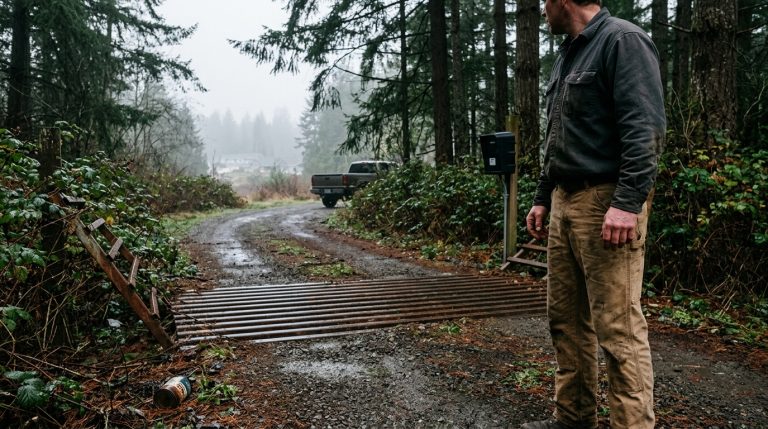
The gravel crunch under the SUVs was a discordant, metallic rhythm against the steady, morning hum of the lake. I didn’t reach for a rifle or a phone; I stood by the gate, my hands buried deep in the pockets of a canvas jacket that smelled of cedar and old diesel.
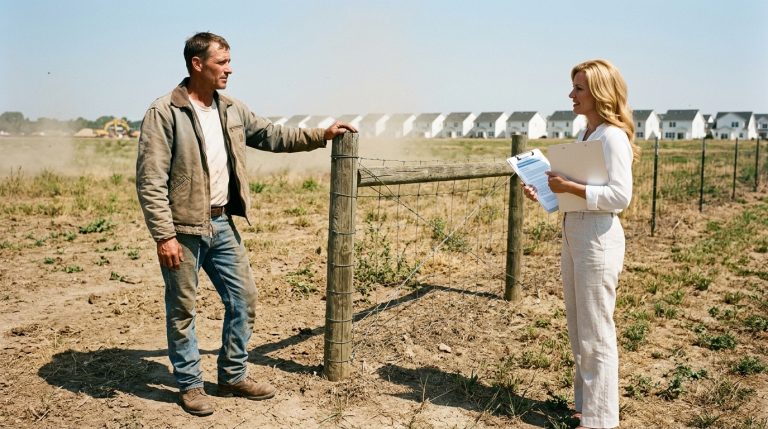
Four SUVs. Lakeshore Estates insignias caught the weak morning light, looking sterile and aggressive against the gray backdrop of the bluff. Elaine Mercer stood in the center of the dust cloud. She held the bolt cutters like a tailor holds shears, the silver steel biting into the padlock with a sharp, final crack. She didn’t look my way. To her, I wasn’t an owner; I was an obstacle, a statistical irregularity in her development roadmap.
“Move the equipment to the staging area,” she said, her voice cutting through the damp air with the clarity of a bell.
I watched the workers. They moved with the frantic, unthinking energy of men paid by the hour to break things. They didn’t see the century-old oaks or the way the shoreline dipped to protect the spawning beds. They saw a flat surface, a canvas for asphalt and glass. My grandfather’s lock, now shattered, lay in the weeds—a small, dark eye staring up from the dirt.
My pulse remained low, rhythmic, trained by years of waiting in places where panic was a death sentence. I watched a bulldozer shudder into life, its exhaust plume curling up into the fog like a black, choking vine.
Elaine turned then. She finally acknowledged me, a brief, dismissive glance that lacked even the courtesy of malice. She was already calculating the profit of the first shovel-turn. She had no idea that the soil she was about to gouge was bound by a federal covenant, a legal phantom that would reach out from 1978 and wrap its hands around her ambition.
But that would come later. Right now, I just watched. I reached into my pocket and felt the cold, familiar weight of a notebook—the one where I tracked every vehicle plate, every name, every inch of unauthorized intrusion. The trespass was literal, but the real crime was about to unfold in the next ten minutes. I checked my watch. The local conservation officer was finishing his coffee at the diner three miles away.
The bulldozer’s blade dropped, screaming against a hidden root.
“Just a little further,” I whispered, the words lost to the wind. “Dig until the ground stops you.”
CHAPTER 2: The Paper Wall
The silence that followed the bulldozer’s first violent bite into the bluff didn’t feel like a pause; it felt like a tactical shift. I stood there, watching the blade tear through the topsoil, exposing a jagged, raw strip of clay that hadn’t seen the sun in decades. My hand was still in my pocket, gripping the notebook. I didn’t reach for the phone yet.
The sound of the machine grinding against a stubborn cedar root was a physical ache in my chest. It wasn’t just noise; it was the sound of a structural failure in the community. Elaine Mercer stood near the tailgate of her SUV, her silhouette sharp against the morning haze, directing the crew with a wave of her clipboard. She was in her element—the architect of a reality that didn’t exist yet, oblivious to the fact that she was writing her own liability.
The smell of disturbed earth—cool, damp, and ancient—rose up to meet me. It was the scent of the land being forced awake. My mind flickered, unbidden, back to a briefing room in a desert thousands of miles away, the stale air thick with the smell of floor wax and the low, droning voice of an officer describing “calculated risk.” That was the training talking, the muscle memory of analyzing a perimeter while under fire. You don’t react to the first pop of gunfire; you identify the shooter’s position, you verify the threat, and then you apply the appropriate force.
Elaine wasn’t a soldier, but she played the game like one. She was maneuvering her assets, testing the integrity of the property lines, looking for the soft spot. I looked down at the orange survey flag she’d had her crew hammer into the ground near the water line. It was a pathetic, flimsy thing, fluttering in the breeze.
I took a slow breath, the air tasting of dry cedar needles. The bulldozer operator reversed, the tracks spinning in the loose dirt, leaving deep, ugly furrows behind him. He repositioned, aiming for a wider section of the bluff. This was the moment. They were clearing a path for the docks they intended to build, ignoring the fact that the entire shoreline was tied to a federal conservation easement. They were effectively digging their own grave, but they didn’t know the ground was consecrated.
I didn’t yell. Yelling would have been a wasted movement, a tell that I was rattled. Instead, I turned and walked toward the ranch house, my boots crunching rhythmically on the gravel. Every step was deliberate, a steady measure of patience. I needed to be inside, away from the dust and the noise, where I could lay out the paper wall. The deed, the maps, the easement documentation—it was all waiting in the study, a silent arsenal.
When I stepped onto the porch, the creak of the floorboards felt like an old friend, a grounded, stable sound that contradicted the chaos unfolding a few hundred yards away. I moved through the house, the cool, dim air contrasting with the harsh light of the morning. I went straight to the desk. The folder was there, exactly where I’d left it.
I pulled out the survey maps. Spread out on the scarred oak surface, they looked like a tactical grid. I traced the boundaries with my finger. The easement was marked in precise, ink-dotted lines—a legal cage protecting the water’s edge. If I pulled the trigger now, the federal agencies would descend. The bulldozers would stop, the work orders would be posted, and the legal machinery would begin the slow, grinding process of dismantling the HOA’s ambition.
But I hesitated, my hand hovering over the phone. If I acted too early, I’d be reacting to their terms. I needed to see how far they were willing to go. I needed to know who else was involved, who was funding this “resort” project before it was even legal. There were whispers of investors, phantom companies registered in distant offices, all angling for a piece of the shoreline. If I moved now, I might only catch the middle-management, the ones like Elaine who were willing to be the face of the operation. I wanted the ones holding the purse strings.
The phone sat on the desk, black and silent. It felt heavy, a terminal device capable of triggering a cascade of consequences. I looked out the study window. I could see the bulldozer again, idling now, the driver climbing down for a smoke. Elaine was walking the perimeter, her posture rigid, her head tilted as she reviewed the damage. She was completely unaware that she was already standing on the wrong side of a federal line.
I took a pen and made a mark on the map. Not a target, but a checkpoint. I would wait until they started on the actual construction of the dock foundations. That was the point of no return, the physical manifestation of the violation. Until then, they were just grading. Once they broke the water line, the evidence would be permanent, and the consequences would be inescapable.
The silence of the house pressed in, a quiet, expectant weight. I looked down at the notebook. The entries for the day were sparse—times, plate numbers, the names of the crews. It was a ledger of hubris. I closed it with a soft click and set it beside the map. My hands were steady. I was no longer a person watching his land get torn up; I was a guardian waiting for the trap to spring. I stood up and walked back to the window. The breeze had picked up, carrying the faint sound of the bulldozer’s engine coughing back into life, a mechanical heartbeat in the stillness of the ranch. The game had begun, and the rules were simple: hold the line, document the breach, and let them build their own defeat.
CHAPTER 3: Shadows over the Pasture
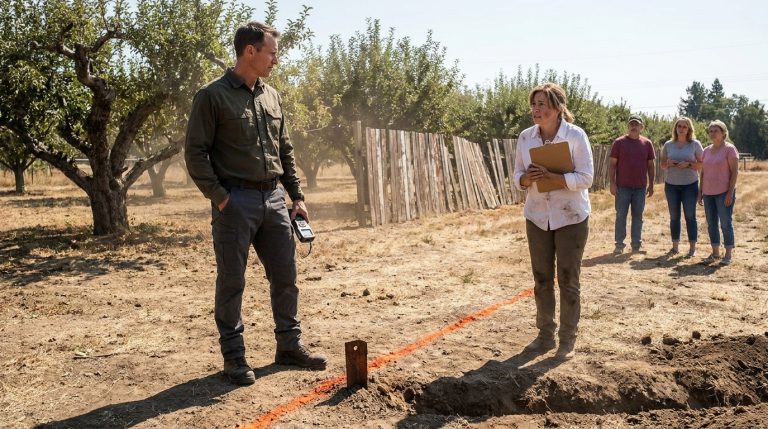
I didn’t leave the study. I moved to the secondary window, the one that offered a clear, unobstructed line of sight to the lower pasture. The bulldozer had stopped, but the activity hadn’t. Two men in high-visibility vests were walking the perimeter of the bluff, their movements deliberate, scanning the ground with handheld devices that caught the morning light. They weren’t just clearing brush; they were mapping.
My hand tightened on the wooden sash of the window. The wood felt cool, rough-hewn and solid, a stark contrast to the sterile, synthetic precision of the tools those men carried. I pulled my notebook from my pocket, the pages slightly frayed at the edges. I needed more than just times and plate numbers now. I needed to see what they were marking. I stepped out onto the porch, the screen door clicking shut behind me with a soft, final thud.
The air was still, heavy with the scent of sun-warmed cedar and the sharp, metallic tang of ozone. I stayed in the shadows of the porch, my movements practiced. I didn’t walk across the open grass. I moved through the cedar break, the trees acting as a natural screen. The needles crunched softly under my boots—a sound I’d learned to suppress, a habit honed in terrain where the wrong noise invited trouble.
As I neared the edge of the clearing, the buzz of a drone drifted down from the sky. It wasn’t the distant hum of a hobbyist toy; it was the high-pitched, insistent whine of a professional surveillance unit. It hovered maybe sixty feet above the construction zone, its lens gimbaling with fluid, insect-like motions. It was watching the ranch, specifically the areas I had been frequenting.
I stopped. I didn’t look up. I knew better than to acknowledge the camera. If I looked up, I was reacting; if I kept my eyes on the horizon, I was just a man walking his land. I shifted my focus to the men in the high-vis vests. They were kneeling near the edge of the slope, hammering a stake into the ground. A bright orange flag danced in the wind, a beacon of intrusion.
The feeling of being watched intensified, a crawling sensation across the back of my neck. It was a phantom, the ghost of a threat I’d felt before in different theaters, a reminder that in any game of cat and mouse, the cat usually has the better vantage point. But they were looking for a reaction. They wanted to see me storm out there, shout, try to pull the stakes—they wanted a confrontation that would make me look like the aggressor, the “difficult neighbor” interfering with community progress.
I stayed silent. I focused on the way the light caught the dust around their boots. They were using a laser transit, the beam cutting through the morning haze like an invisible tripwire. They weren’t just surveying the bluff; they were measuring the distance to the old fence line, the one that marked the actual boundary of the easement.
I crouched behind a low-hanging branch, the needles brushing my face, the scent of sap sharp and grounding. I pulled my phone and took a series of steady, zoomed-in photos. The men’s faces were clear, their gear detailed. I captured the way the bulldozer sat, the angle of the blade against the soil. I made sure to include the timestamp in the corner of the frame.
Then, something shifted. One of the men stopped his work and looked toward the cedar break. He didn’t look directly at me, but he lingered for a second too long, his eyes scanning the tree line. The drone overhead pitched forward, dipping its nose toward my position. My heart didn’t race; it slowed. This was the dance.
They wanted me to reveal myself. They wanted to see if I was armed, if I was hiding, if I was a threat. I stayed perfectly still. I forced my breathing to stay deep and measured, matching the slow sway of the cedars in the wind. After a long minute, the man turned back to his work, the drone leveled off, and the tension in the air thinned.
They didn’t know yet. They thought they were dealing with a property owner worried about his view. They had no idea they were walking into a web of federal code that was already tightening around them. I stood up slowly, keeping the brush between me and the clearing, and began the long, quiet walk back to the house.
My mind was already synthesizing the data. They weren’t just surveyors. The way they worked—the coordination, the speed, the equipment—it felt like a commercial development team, the kind that moved in, staked the land, and then sold the “rights” before the local council even signed the permits. That was the missing piece. If they were pre-selling plots of land that hadn’t even been zoned for construction yet, they were operating on pure, desperate momentum. They were banking on the assumption that once the earth was moved, the legal battle would be too expensive for a single landowner to maintain.
They were wrong. Every stake they put in the ground was a new piece of evidence, every dollar they spent on those contractors was a liability they wouldn’t be able to recover. I reached the porch, the wood groaning slightly under my weight. I looked back one last time at the orange flags dotting the pasture like a rash. They were marking the spot where their project would finally and completely collapse.
I went inside and closed the door. The house was quiet, the air cool. I didn’t turn on the lights. I didn’t need them. I had everything I needed here in the dark: a desk, a map, and the slow, steady resolve to let them keep digging until they hit the bedrock of the law.
CHAPTER 4: The Bait Shop Whispers
The truck ride to the general store was a study in patience. The gravel road, usually a familiar, soothing passage of washboard ridges and dust, felt different today. It felt like a line of supply I was watching for an enemy. I drove slow, my eyes constantly checking the rearview. No black SUVs, no drones, just the flat, arid expanse of the county passing by in a blur of sun-bleached cedar and dry, brown grass.
Tom’s Bait Shop sat at the intersection of the county road and the main highway, a small, unassuming block of concrete that served as the nervous system for the local gossip mill. I parked near the far end of the lot, away from the main door. The air here smelled of damp earthworms, salt-cured bait, and the faint, lingering scent of stale coffee.
I didn’t head straight for the counter. I moved through the aisles with the casual air of a man looking for sinkers, my mind focused entirely on the shift in the community’s mood. When I finally reached the register, Tom was there, his sleeves rolled up, wiping down a counter that hadn’t been clean since the nineties. He looked up, his eyes narrowing slightly as he recognized me. He didn’t smile, but he didn’t turn away either.
“Coffee’s still hot,” he said, nodding toward the thermos in the corner.
I poured a cup, the liquid dark and bitter, and leaned against the counter. The shop was quiet, the hum of the freezer units providing a rhythmic, low-frequency backdrop.
“Construction crew is out at the ranch,” I said, my voice neutral, testing the current.
Tom stopped wiping. He looked at me, his gaze shifting to the window. “I heard. HOA’s pushing hard.”
“They’re pushing for something that isn’t theirs,” I replied. I took a slow sip, the heat cutting through the dry air. “They’ve got surveyors out there every morning. Drones, too.”
Tom sighed, a heavy, rattling sound. He leaned in, lowering his voice. “It’s not just the resort, Daniel. There’s talk. Down at the feed store, they’re saying the HOA is already signing contracts. Selling dock spots, even a few lakefront parcels. People are buying in on the promise of that development.”
My grip on the cup tightened. So that was it. The pre-sale scheme. It wasn’t just a fantasy; it was a fraud. They were trading in land they didn’t own, leveraging future access to my shoreline to secure investment capital. It was a classic trap: create a demand, sell the supply, and force the issue by making the “future” too expensive to stop.
“They don’t own the frontage,” I said, keeping my tone flat.
“They don’t care,” Tom countered. “They’ve got the brochures, the digital mockups, the fancy talk. People see the money, they don’t see the titles. And Elaine? She’s been making the rounds, telling everyone it’s a done deal, just a matter of ‘finalizing the paperwork.’”
I looked around the shop. A few local guys were browsing the racks, their faces distant. The divide was widening. The community was choosing sides based on a projected profit they had never seen, and I was the ghost in their machine, the one person whose existence proved the whole thing was a house of cards.
“Thanks, Tom,” I said, setting the empty cup on the counter.
As I turned to leave, my eyes fell on the wall map of the county. A specific property pin—a red, plastic-topped marker—was stuck into the section of the lake that covered the northern boundary of the ranch. It was misplaced by at least three hundred yards, sitting squarely on top of the conservation easement buffer. I walked over and tapped the pin.
“Who put this here?” I asked.
Tom came around the counter, frowning at the map. “One of the guys from the development office. Said he needed to mark the ‘proposed impact zone.’ Why?”
I didn’t answer. I just stared at that red plastic tip. The misplacement wasn’t an accident. They were subtly rewriting the local understanding of the property lines, literally changing the map to suit their narrative. If a buyer looked at that map, they’d think the easement area was part of the HOA’s playground.
I walked out of the shop, the heat of the afternoon hitting me like a physical blow. The sunlight felt harsh, bleaching the color out of the world. I climbed into the truck and sat there for a long moment, staring at the dust swirling on the dash. I had the confirmation I needed. It wasn’t just an aggressive HOA board; it was a coordinated effort to manufacture reality, to build a future on the back of a lie.
I started the engine, the vibration of the motor echoing the tightness in my chest. I wasn’t just protecting a ranch anymore. I was protecting the truth of the ground itself. The road ahead looked clear, but I knew better. The dust I was kicking up was just the start of the cloud they were going to have to walk through. I shifted into gear and turned the wheel, heading back toward the silence of the lake. Every mile back was a step deeper into a battle they didn’t even realize they were already losing.
CHAPTER 5: The Archivists Discovery
The road back to the ranch wasn’t just a path; it was a gauntlet. The sky, which had been a clear, taunting blue, began to bruise purple over the horizon. A heavy, humid tension hung in the air—the kind that makes the hair on your arms stand up and forces the cedar trees to lean, as if preparing for a blow. I pushed the truck, the engine straining against the washboard ruts, but I didn’t care about the wear. The map I’d seen in Tom’s shop—the deliberate, fraudulent shift of that property pin—sat on the passenger seat, a scrap of paper that felt like a smoking gun.
If they were moving the markers, they were preparing to file for an emergency variance. They were going to argue that the land was “underutilized” and “geographically indistinct,” paving the way for a legal fast-track that would bypass the standard conservation reviews. They were gambling on the bureaucracy.
The first drop of rain hit the windshield with a sound like a gunshot. Then another. Within seconds, the dry, baked earth of the county was transformed into a slick, treacherous slurry. I slowed, the truck fishtailing as the gravel turned to mud. The storm wasn’t just a weather event; it was a physical barrier. If I didn’t reach the ranch house and secure the primary records—the actual 1978 original copies of the easement—they might try to hit the site while the weather kept everyone else indoors.
I pulled into the drive just as the sky opened up. The ranch house sat in the middle of the deluge, the tin roof ringing with a deafening, metallic percussion. I didn’t wait for the rain to let up. I grabbed my jacket and sprinted to the porch, the water soaking through my clothes in seconds. Inside, the house was a sanctuary of silence and dust. The smell of old paper, cold hearth, and cedar rose to meet me—the scent of history, waiting to be used.
I headed straight for the study, my boots leaving muddy tracks on the hardwood. I didn’t turn on the lamps. I knew the layout by heart, every shelf, every drawer. I went to the wall safe hidden behind the grandfather clock. My hands, wet and cold, worked the dial. Click. Click. Click. The heavy door swung open, revealing the stack of blue-bound folders.
I didn’t take the whole stack. I took the specific parchment: the original federal conservation easement, signed and notarized, with the topographical survey maps attached. As I unfurled it on the desk, the paper crinkled—the sound of decades of dormancy finally being broken. There it was: the survey, with the original metal markers explicitly plotted. The pin in Tom’s shop wasn’t just misplaced; it was a deliberate forgery, a document that would fall apart the moment it was compared to the original records held by the federal office.
A flash of lightning illuminated the room, turning the maps into stark, high-contrast grids of black ink and white space. Thunder followed, a deep, guttural rumble that shook the windowpanes. My gaze caught a discrepancy I hadn’t noticed before. At the very bottom of the easement document, in a small, cramped hand—my grandfather’s hand—was a footnote: Subject to structural survey, hydrological impact study 78-B.
I squinted. Hydrological impact study 78-B. I didn’t remember that. I pulled open the secondary drawer, the one filled with the mundane history of the ranch—tax receipts, cattle sales, equipment manuals. I dug until I hit a layer of yellowed, brittle paper. 78-B. It wasn’t just a survey. It was an environmental analysis of the lakebed itself.
I started reading, and the temperature in the room seemed to drop. The study hadn’t just been about land usage; it had been about what was under the water. The 1978 report noted “significant industrial residue” at the base of the shoreline bluff, suggesting that long before the ranch was a family home, it had been a dump site for the old cedar mills or perhaps something older, something more toxic. The conservation easement wasn’t just to save the trees—it was to prevent the lakebed from being disturbed, because digging into that shoreline would unleash a chemical plume into the Clearwater water table.
My breath hitched. The HOA didn’t know. Or maybe they did, and they were the most dangerous kind of greedy. If they started dredging for their marina, they wouldn’t just be violating a land-use agreement; they would be triggering an environmental catastrophe. They were playing with a poison they couldn’t see.
I heard the crunch of tires on gravel.
I froze. The sound of a vehicle door closing was muted by the rain, but unmistakable. I doused the desk lamp and moved to the side of the window, pulling the curtain just an inch. A single SUV, headlights off, was idling near the gate. Elaine Mercer. She was out in the storm, her silhouette illuminated by a brief flare of lightning as she moved toward the ranch house. She wasn’t here to talk. She was here for something else.
I looked at the documents on the desk. They weren’t just evidence anymore; they were a death warrant for her project. She was coming for the paper. I retreated into the shadows of the hallway, my hand settling on the heavy iron fire poker by the hearth. The front door groaned under the pressure of the wind, then the handle turned. The intruder had arrived, and the game had officially moved from the pasture to the threshold.
CHAPTER 6: The Quiet Confrontation
The front door didn’t swing open with a grand flourish; it gave way with a dry, splintering crack as the wood near the deadbolt surrendered to a heavy, practiced shove. The rain followed her in, a swirling mist of gray that clung to her expensive, tailored coat and turned the hardwood of the foyer into a dark, slick mirror. She stopped the moment she crossed the threshold, her eyes scanning the dark hallway. She wasn’t holding a weapon, but she carried herself with the lethal confidence of someone who assumed the world would always move out of her way.
“Daniel,” she said, her voice smooth, unaffected by the storm outside. She didn’t sound like a trespasser. She sounded like a guest who had been kept waiting too long.
I remained in the shadows of the hallway, the poker held low, my weight balanced on the balls of my feet. I didn’t step forward into the light. I let the silence stretch, forcing her to account for the space between us. She saw me then, her gaze shifting to the silhouette in the dark. She didn’t flinch. She just straightened her shoulders, her hands moving to the pockets of her coat.
“You’re making a mistake,” she continued, her tone patronizingly calm. “This land is a community asset. You’re holding it hostage based on antiquated notions of ownership.”
I moved then, stepping out just enough for the dim, ambient light to reveal the poker in my grip. I didn’t brandish it; I simply held it, a heavy, silent presence. “You broke my lock, Elaine. You’re not here for a community meeting.”
She glanced at the study door, her eyes lingering on the closed frame where the maps sat on the desk. “I’m here to finalize the transition. My partners are tired of the delays. You’ve had your time to play the steward. Now, it’s time to move on.”
“Your partners,” I repeated, the words tasting like iron. “Are they the ones who told you the shoreline was clear for dredging?”
A flicker of something—not fear, but irritation—crossed her face. It was the crack in the porcelain. She knew about the dredging. The realization hit me like a physical weight: she hadn’t been lied to by an engineer; she had been the one pushing to ignore the reports. She wasn’t just an HOA president; she was a facilitator for a project that would poison the entire lakefront.
“That’s none of your concern,” she snapped, the mask of professional poise slipping just enough to reveal a frantic, underlying greed. “The area is perfectly stable. The report you’re thinking of is irrelevant. It’s a relic of a different time.”
“It’s a record of the ground you’re standing on,” I said, my voice steady, the rhythm of my breathing matching the slow, relentless beat of the rain on the roof. “And it says if you touch that bluff, you’ll release a plume of toxins that will turn this lake into a wasteland.”
She laughed then, a sharp, brittle sound that didn’t reach her eyes. She reached into her coat pocket, but she didn’t pull out a phone. She pulled out a set of keys—my keys, the ones I had left hanging on the hook by the door when I came in from the shop earlier that day. She held them up, a small, silver taunt. “You’re not in charge here anymore, Daniel. The paperwork for the emergency variance is already in front of the board. By tomorrow morning, this ranch will be under the association’s management.”
I didn’t lunge. I watched her hand, the way it trembled ever so slightly as she held the keys. She was losing her grip, not on the situation, but on the narrative. She had come here expecting a defeated, quiet man who would hand over the keys and slink away into the night. She hadn’t expected the truth to be waiting on the desk.
“You’re not going to take this land, Elaine,” I said, my voice barely above a whisper, yet it cut through the room with the force of a command. “Because I’ve already sent the original files to the regional conservation authority. Every single piece of documentation. The easement, the 78-B study, the map of your ‘impact zone.’ It’s all sitting on a federal agent’s desk as we speak.”
The color drained from her face. For the first time, she looked small, the tailored coat suddenly looking like an oversized shell. She took a step back, her heel catching on the edge of the rug. She knew the consequences. Federal intervention wasn’t a zoning fine; it was a wrecking ball.
“You… you wouldn’t,” she stammered, the confidence of the HOA president finally collapsing into the reality of a desperate woman.
“I didn’t have to,” I replied, moving toward her now, the poker clicking softly against the floor. “You did it for me the moment you brought a bulldozer onto protected ground.”
She turned, her movements jagged and frantic, and scrambled toward the door. She didn’t look back. She stumbled out into the storm, the rain swallowing her whole as she fled toward her SUV. I stood in the doorway, watching the taillights cut through the black, churning rain. The ranch house was silent again, save for the rhythmic dripping of water from the broken door frame. The battle wasn’t over—the paperwork would take months, the legal fallout would be a long, drawn-out war—but the illusion of her progress had been shattered. I reached out and touched the splintered wood of the door, the raw, exposed grain a reminder that some things, once broken, can never be fully restored to how they were. But the land remained. The shoreline, the cedar, the water—it was all still there, waiting for the storm to pass.
CHAPTER 7: The Federal Hammer
The storm didn’t break; it simply exhausted itself, leaving the world in a state of dripping, saturated stillness. I remained in the doorway, the splintered wood of the frame biting into my hand, my eyes tracking the vanishing glow of Elaine’s taillights until they disappeared behind the ridge. The ranch was silent, save for the rhythmic, steady drip of water from the eaves. I didn’t move. I didn’t feel relief. I felt only the heavy, kinetic exhaustion of a man who has held a line until his muscles screamed.
My phone, sitting on the side table near the entryway, vibrated—a harsh, buzzing insect sound in the quiet house. I walked over and picked it up. A notification from the regional conservation office. Investigation initiated. Federal oversight team dispatched. ETA: 0600.
I set the phone down. The game had moved past me now. I had triggered the mechanism, but I was no longer the one pulling the levers. My role had been the trigger-man; the federal agencies were now the weight falling. I turned back to the study, my boots heavy with the mud I’d tracked in from the porch. The maps, the easement, the 78-B study—they were all spread across the oak desk like a confession.
I sat in the chair, the leather cool against my back, and stared at the footnote again. Hydrological impact study 78-B. The reality of it was finally sinking in. The poison wasn’t just a concern for the lakebed; it was the entire foundation of the HOA’s business model. They were selling plots that sat atop a subterranean chemical hazard, and in their greed, they hadn’t bothered to look past the surface. They had looked at the water and seen only profit; they hadn’t looked at the soil and seen the debt.
The hours between the storm and the dawn were the longest I’d ever experienced. I didn’t sleep. I sat in the study, listening to the house settle, hearing the wind rattle the shutters, and watching the shadows stretch and retreat across the maps. I found myself thinking of my grandfather, of the way he used to lean against the fence and talk about stewardship. I had always thought he meant the trees, the hay, the cattle. Now, I understood he had been talking about the truth itself. The land doesn’t lie; it only waits for someone to be patient enough to hear what it’s trying to say.
When the sun finally crested the ridge, it was a pale, washed-out gold, filtered through the lingering mist of the storm. The federal vehicles arrived in a line, three dark trucks with official seals on the doors, their arrival signaled by the crunch of gravel and the low-frequency thrum of idling engines. I walked out to the porch.
The lead investigator, a man with a face like polished granite and eyes that seemed to have seen every variety of environmental crime, stepped out. He didn’t look at the house; he looked at the shoreline, at the raw, gouged earth of the construction site. He pulled a folder from the passenger seat, his movements practiced and devoid of emotion.
“Mr. Carter,” he said, his voice clipped and precise. He didn’t offer a handshake. “We have the documentation you provided. We’ve also reviewed the initial reports from the county.”
“It’s all there,” I said, pointing toward the study door. “Everything I found, plus the 78-B study.”
The investigator nodded, a short, curt motion. “If your findings on the chemical residue are accurate, this entire development is a violation of multiple federal statues. We’re seizing the site. We’re also pulling the association’s permits pending a full environmental audit.”
I looked toward the lake. The water was calm, reflecting the pale morning sky, but I knew what lay beneath the surface. I looked back at the investigator. “What happens to the homeowners?”
“They’re creditors now,” he said, his voice devoid of pity. “They invested in a project that was legally dead from the moment it began. The HOA board will be held liable for the damages. That includes the restoration costs, the legal fees, and the environmental remediation.”
He waved to the other agents, and the team moved toward the construction equipment with the mechanical efficiency of a surgical unit. They began tagging the bulldozer, the excavators, the pallets of lumber—the artifacts of a greed that had been interrupted. I watched them work. There was no joy in it. There was no victory party, no sense of triumph. There was only the cold, hard satisfaction of a boundary being re-established.
I turned back to the ranch house. The door frame was still splintered, a scar on the face of the home. I reached out and traced the jagged wood. The investigation would take years, the legal battles would be a slow, grinding process, and the quiet of the lake would be replaced by the hum of remediation crews for seasons to come. But the land was safe. The truth had held. I walked inside, the floorboards creaking beneath my feet, and for the first time in months, I didn’t check the perimeter. I sat down in the study, opened the ledger, and began to record the day’s events. The ranch was still here. That was the only thing that mattered.
CHAPTER 8: The Stillness Returns
The federal cleanup crew worked with the methodical, cold precision of a coroner’s team. Over the following weeks, the ranch became a controlled site, cordoned off by yellow tape and the low, hum of ventilation fans. They didn’t just remove the equipment Elaine Mercer had brought in; they stripped the earth itself. The 78-B study had been accurate: a layer of dark, iridescent soil lay beneath the surface of the bluff—a legacy of industrial negligence that would have turned the shoreline into a silent killer if it had been disturbed by the HOA’s planned marina.
I watched from the porch, a mug of black coffee in my hand, as the agents placed the final protective matting over the exposed ground. The restoration was slow. It wasn’t the manic, high-speed construction the HOA had attempted; it was a process of healing. They weren’t building; they were mending.
Elaine Mercer didn’t return. Her downfall was swift and absolute—the kind of public failure that erases a person’s reputation faster than a storm erases a footprint. The HOA board had been dismantled, the association’s assets frozen, and the legal repercussions for the pre-sale fraud and environmental negligence were still being calculated in a courtroom three hours away. She had tried to build a monument to her own ambition, but she had only succeeded in creating a marker for her own vanity.
The denouement wasn’t dramatic. It was quiet. The neighbors who had once avoided my gaze at the general store now offered hesitant nods, a silent acknowledgment of the shift in the balance of power. The rumors had died, replaced by the mundane reality of legal proceedings and environmental audits. The lake began to breathe again. The blue herons returned to the rocky points, and the river otters claimed the restored shoreline as their own, seemingly indifferent to the months of chaos that had preceded their arrival.
I walked down to the dock—the crooked, old wooden pier I had spent my teenage years repairing. The storm had loosened a few boards, and the posts had shifted in the mud. I knelt, my hands working the rusted bolts, the familiar, gritty feel of iron against my palms. It was a small act of maintenance, a quiet defiance against the chaos of the world. My grandfather had told me once that the land is only borrowed, but the care you take of it is your own. I tightened the last bolt, the metal biting into the wood with a solid, satisfying resistance.
The dock was stable now. I stood up and looked out across Clearwater Lake. The water was a calm, reflective glass, holding the orange glow of the dusk. Behind me, the house was silent. Inside the study, the ledger lay on the desk, its final pages filled with the account of the months—the drones, the letters, the intrusion, and the inevitable return of the stillness.
I didn’t feel like a hero. Heroes are for stories with clean resolutions and medals. I felt like a man who had stood his ground, a steward who had kept the gate. The threat hadn’t just been Elaine Mercer or the HOA; the threat had been the forgetting. The forgetting that land has a history, that the earth remembers, and that silence is not the same thing as emptiness.
I looked at the ranch house, the splintered door frame now repaired, the wood stained to match the old grain. It felt solid. It felt permanent. I walked back toward the porch, the crickets beginning their evening song—a steady, rhythmic pulse that had been here long before the resort plans and would be here long after the legal filings were filed away in some dark basement cabinet.
The lake was quiet. My grandfather would have liked that. I reached the porch, turned, and watched the last sliver of sun dip below the cedar ridge, leaving the water in a deep, peaceful blue. The work was done. The cycle had been reset. I sat in the rocker, the wood groaning softly, and for the first time in an age, I didn’t reach for my notebook. I just sat, listening to the lake, and let the peace of the evening settle into the bones of the land.