The Weight of the Pole: A Cold War of Property, Memory, and the High Cost of Defiance
CHAPTER 1: The Ultimatum
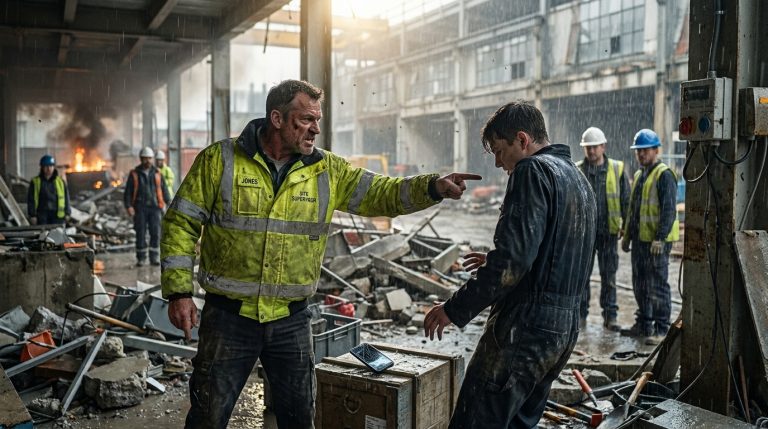
The letter didn’t just sit on the kitchen table; it occupied it, a thin, white intrusion against the dark, polished grain. I didn’t look at the HOA seal. I didn’t need to. I looked at Rachel Carter.
She stood near the pantry, her heels clicking softly against the linoleum—a deliberate, rhythmic sound that grated against the early morning silence. She clutched a clipboard to her chest like a shield, her face a carefully constructed mask of professional indifference.
“Thirty years, Jack,” she said, her voice smooth, devoid of the jagged edges I felt clawing at my throat. “The guidelines are not suggestions. They are the bedrock of our property values. The flagpole is a deviation.”
I stared at the yard through the window. The pole stood tall, anchored deep into the soil my grandfather had cleared with his own hands. The flag, a worn piece of history, caught the light, its fabric snapping in the breeze—a sharp, percussive sound that felt like a heartbeat.
“You’re talking about a flagpole, Rachel,” I said, my voice low, held tight by a leash of strained composure. “You’re talking about a pole erected by a man who crossed oceans for the right to stand under that fabric.”
“That is entirely irrelevant to the zoning bylaws,” she snapped. Her lip curled, just a fraction—the slip of a predator who realized the prey wasn’t running. “The fine is four thousand, two hundred dollars. It’s non-negotiable. If it isn’t down by Friday, the liens begin.”
My pulse thudded in my ears, a heavy, rhythmic beat. I wanted to grab the clipboard, to see the ink on the paper, to see if there was a crack in the corporate armor she wore so perfectly. But I kept my hands at my sides. I looked at the framed photos on the wall, the silver frames catching the cold morning sun, and then back at her.
“You think this is just about a rule, don’t you?” I asked, taking a step toward her. The floorboard groaned—a small, sharp protest in the quiet house.
“I think it’s about order,” she said, her eyes shifting to the window, watching the flag ripple with an intensity that bordered on hatred.
The air in the kitchen felt thin, metallic, tasting of impending friction. She turned, her movements precise and practiced, and walked toward the door. As she reached for the handle, she stopped, her shadow stretching long and distorted across the floor.
“Friday, Jack,” she said, not looking back. “Don’t make this harder than it has to be.”
The door clicked shut. Silence flooded the room, but it was heavy, suffocating. I walked to the window and placed my hand on the glass. It was freezing. Outside, the flagpole stood as it always had, a silent, defiant spire.
I looked down at the letter on the table. My eyes caught a faint, barely perceptible smudge on the HOA letterhead—a stamp from a satellite office on the edge of town, one that didn’t handle residential disputes. My brow furrowed. Why was a commercial zoning office stamping a residential fine?
The realization was a sharp, cold spike in my chest. This wasn’t just an HOA power trip. There was something buried underneath the rulebook, something that had nothing to do with aesthetics and everything to do with the land itself.
I picked up the letter, the paper feeling unnaturally heavy in my hand, and realized the battle wasn’t just starting—it had already been rigged.
CHAPTER 2: The First Breach
I stared at the letterhead until the black ink seemed to blur and swim. The logo was precise, the address legitimate, but the stamp—that satellite office stamp—was a ghost. It shouldn’t have been there. It meant this wasn’t an HOA administrative task; it was a file routed through a commercial zoning desk.
Outside, the flag snapped again. Snap. Pop. Snap. It sounded like a whip cracking in the thin, cold air. My grandfather had always kept the cable tightened, the pulleys greased. He hated the sound of loose metal hitting metal. “It’s a sign of neglect, Jack,” he used to tell me, his voice rough like gravel. “If you let the small things go slack, the whole structure loses its integrity.”
I looked at the letter. It was slack. Someone had been lazy in the deception, banking on the fact that I’d be too intimidated by the $4,200 figure to check the routing code. They wanted me to pay, to panic, and to pull that pole down without ever questioning the machinery behind the order.
The kitchen suddenly felt smaller, the walls leaning in with a geometric rigidity that made my skin crawl. The edge of the table pressed hard into my forearm as I leaned over it. I reached for my coat, the rough wool feeling like sandpaper against my fingertips. I didn’t have a plan, not a real one, but I had a target.
I moved to the back door, stepping out into the biting morning air. The yard was stark—dead grass, gray sky, and the pole rising like a bleached bone from the center of the lawn. I walked to it, my boots crunching on the frost-hardened earth. I didn’t look at the house, didn’t look at Rachel’s manicured, identical property looming two doors down. I looked at the base of the pole.
The cement footing was cracked, a hairline fracture running through the concrete. I knelt, my knees hitting the frozen ground. The cold seeped through my jeans instantly, a sharp, numbing sting. I ran my fingers along the seam where the metal met the stone. It felt solid, rooted, but something else caught my eye. There were fresh scratches in the dirt near the base, long, parallel grooves that looked like the marks of a heavy-duty tripod or a surveyor’s leveling tool.
They had been here. They had been checking the stability, measuring the footprint of the land, not the height of the flag.
My mind raced, jumping between the letter in my pocket and the dirt beneath my fingernails. Why would a developer care about a residential flagpole’s stability? Unless the pole wasn’t the violation—unless the violation was the land itself, and the pole was just the easiest thing to force me to tear out to get to the survey pins.
I stood up, my breath hitching in the cold. A figure moved in the periphery. Through the gap in the hedge, I saw Rachel. She was standing on her porch, her back to me, talking on a cell phone. She was perfectly still, but her hand—the one not holding the phone—was white-knuckled against the railing. She looked like a soldier guarding a bridge.
A surge of adrenaline, cold and sour, flooded my veins. She wasn’t just enforcing rules; she was acting as a sentry.
I didn’t wave. I didn’t call out. I turned and walked back toward the house, my pace steady and hard. The “No Time-Skip” rule of my own life felt pressing now; I couldn’t just rush to a conclusion. I had to go inside, I had to put the coffee on, and I had to start tracking exactly when those survey marks appeared. I had to build a timeline, a weapon made of dates and times, before Rachel or her partners came back to finish the job.
As I reached for the door handle, the house felt less like a home and more like a fortress. My grandfather’s spirit wasn’t just in the pole; it was in the foundation, and it was screaming that I was being watched. I entered, the warmth of the kitchen hitting me like a physical blow, and I knew: if I stayed passive, the house would be the next thing to be deemed “in violation.”
I walked to the drawer where I kept the old logbook, the one my grandfather used for his carpentry business. I opened it. The last entry was from three years ago, but there were dozens of blank pages left, waiting to be filled with the geometry of this war.
I didn’t turn on the lights. I sat in the dim morning gray, the letter in front of me, and began to write. Date: July 4th. Incident: HOA notice received. Observation: Satellite routing inconsistency. Physical Evidence: Surveyor marks at base of pole.
The pencil led snapped under the pressure of my grip. I didn’t replace it. I kept writing, the graphite scratching against the paper, each word a stake driven into the ground.
CHAPTER 3: The Geometry of Suspicion
The two halves of the lead point lay on the oak table, distinct and useless. I didn’t reach for another pencil. I sat still, my hands resting palms-down on the rough wood, the silence of the house feeling thick, almost pressurized. I had mapped the timeline, but looking at it now, the ink seemed to bleed into the paper, rearranging itself into patterns I hadn’t seen before.
The survey marks. The satellite routing code. They weren’t just disparate anomalies; they were lines of force pushing against the house. My gaze drifted to the window again. The flagpole stood, its silhouette cutting into the dusk-heavy sky like a blade.
I needed more than just dates. I needed to see the structure of their trap.
I pushed away from the table, my chair legs screeching against the floor—a sound that felt uncomfortably loud. I crossed the kitchen, the linoleum cold beneath my socks. I grabbed my jacket from the hook, the heavy fabric stiff with the scent of pine and damp earth. I wasn’t just leaving to go to the library; I was leaving to see what else they had marked.
The front door opened with a slow, deliberate creak. The air outside had turned frigid, the kind of cold that seemed to sharpen the outlines of everything it touched. I kept my head down, my eyes fixed on the perimeter of my yard. I walked the boundary line, my boots crunching rhythmically on the frosted mulch.
There, near the eastern fence post—another mark. A thin, fluorescent orange spray of paint, nearly invisible against the dark wood. And further down, near the corner of the lot, a plastic stake driven deep into the ground.
They weren’t just measuring the pole. They were partitioning the entire lot.
A car slowed down on the street. I stood upright, my posture rigid, and watched as a dark sedan crawled past. The engine note was low, rhythmic, the sound of a predator patrolling. It wasn’t moving with the purpose of a resident; it was moving with the mechanical indifference of an appraiser. I felt a cold prickle of paranoia dance along my spine. My hands formed into fists, the knuckles aching with the effort of suppressed tension.
I kept walking, not toward the library yet, but toward the boundary where my property met the alleyway. Every sense was dialed to a sharp, painful awareness. The way the wind whistled through the chain-link fence sounded like a half-whisper; the shadow of the elm tree stretched out like a reaching hand. I told myself it was just the stress, just the weight of the fight, but I couldn’t shake the feeling that I was standing inside a grid that was slowly tightening.
I reached the library, the brick building standing like a fortress of quiet paper and hidden truths. I pulled the heavy handle and stepped inside. The air here was different—stale, dry, smelling of aging glue and dust. It was a space of logic, the exact opposite of the chaotic, shifting reality outside.
I went straight to the public records terminal, my fingers moving with a frantic, focused energy. I didn’t search for “flagpoles” or “HOA guidelines” this time. I searched for “commercial variances” and “land-use rezoning.”
The screen flickered, a harsh blue light that washed out the color from my face.
Result: No active commercial variances filed for the Elm Street district.
I narrowed my eyes. That didn’t make sense. If they were surveying for a development, there had to be a paper trail, no matter how obscured. I dug deeper, accessing the city’s tax assessment maps. I pulled up the overlay for the Elm Street plots—my house, Rachel’s house, the entire block.
I clicked on the layers, one by one. The map was a tapestry of perfectly partitioned squares, but as I zoomed in on the block, I saw it. A thick, red boundary line highlighted a cluster of six lots, including my own and Rachel’s. It was marked “Project Horizon.”
I leaned closer, my breath hitching. Project Horizon was listed as a ‘pre-development site.’ But the date on the file was six months ago—long before Rachel had started her crusade against the flagpole.
The flag wasn’t the target. The flagpole was the key. By forcing me to pull the pole, they were forcing me to disturb the soil, to remove the legal anchor, to acknowledge that the homeowner would cooperate with property changes. It was a tactical, bureaucratic demolition.
I felt a sudden, dizzying sense of vertigo. I looked at the screen, the data points arranging themselves into a clear, malicious architecture. My brain struggled to process the scale of it. Rachel wasn’t just a neighbor on a power trip; she was a gatekeeper for something far larger, something that required this block to be vacant, cleared, and compliant.
I looked at the notes attached to the file. Clearing Phase 1: Removal of all non-conforming permanent structures.
Non-conforming.
My heart hammered against my ribs—a wild, trapped thing. I stood up, the chair clattering behind me, and walked out into the cool night air. The library lights blurred behind me. I didn’t want to go home. I felt like if I went back to that house, I would be walking directly into the center of a spider’s web.
But I had to go back. I had to know if the markings had changed. I had to know if they were already there, working in the dark, preparing the ground for the heavy machinery that would eventually erase my grandfather’s life from the landscape.
As I walked down the street, my own footsteps sounded too loud, too heavy. I was a man living in a ghost story, trying to convince myself the haunting was just physics. I reached my front gate and stopped, my hand hovering over the cold, rusted metal.
The house sat in the dark, silent and still. But the flagpole… the flagpole looked different. In the moonlight, it seemed taller, more fragile. I stood at the threshold of my own property, feeling like an intruder.
Then, I saw it.
A light flickered in Rachel’s window—a quick, strobe-like flash of blue. She was watching. She had been watching the whole time.
I didn’t enter the house. I walked to the side of the yard, my boots sinking into the soft earth near the survey stakes. I reached down, my fingers finding the cold plastic, and pulled. It came up with a sickening, wet pop.
I held the stake in my hand, the sharp point reflecting the moonlight, and felt the first true, cold spark of the fight. They wanted the land? They’d have to get through the ghost of the man who stood here first.
CHAPTER 4: The Silent Ally
The stake felt like a weapon, or perhaps a fool’s trophy. I dropped it into the shadows near the garage, the hollow thud barely audible over the wind. I didn’t go back into the house. I stayed in the dark of the yard, the cold biting into my cheeks, watching Rachel’s window. The blue flicker had stopped, replaced by a steady, oppressive yellow glow that suggested she hadn’t turned away at all. She was waiting.
I had the survey data now—the “Project Horizon” file. I had the knowledge that the pole was a decoy in their much larger game. But I lacked the one thing that would make this fight winnable: a direct line to someone who knew the cracks in this neighborhood’s foundation.
I needed Lena. She had been the one to hint at a deeper, messier legal past.
I crossed the lawn, my boots avoiding the frost-slicked concrete, and stepped onto the path that led toward her house. The neighborhood felt different at this hour—not just quiet, but watchful. Every streetlight seemed to be a spotlight, and every darkened window an eye. I reached her gate, the hinges singing a high-pitched, metallic protest that made me freeze, my hand clenching against the wood.
The front door opened before I could knock. Lena stood in the frame, bathed in the soft, diffused amber light of her hallway. She wasn’t surprised; she was expectant.
“You’re late,” she said, her voice a low murmur that barely carried over the wind. She stepped back, gesturing for me to enter.
Inside, the house was a sanctuary of soft, faded textures—worn velvet chairs, stacks of old law journals, and the faint, comforting scent of tea. It was a sharp contrast to the stark, aggressive geometry of my own home. I stepped inside, the heat of the house washing over me, and the sudden shift in atmosphere made my head swim.
“I found it, Lena,” I said, closing the door behind me and locking it with a sharp, definitive click. “Project Horizon. It’s not just an HOA guideline. It’s a development deal. They’re rezoning the entire block.”
Lena didn’t flinch. She walked to her desk, the floorboards sighing beneath her feet, and picked up a heavy, leather-bound volume. She didn’t look at me; she looked at the shelf where her career sat in dust-covered rows. “I know,” she said.
“You knew?” The words felt jagged in my throat. “You knew they were liquidating the neighborhood?”
She turned, her face illuminated by a small, green-shaded desk lamp. Her expression was guarded, etched with the weariness of a woman who had spent too many years cleaning up other people’s messes. “I suspected. I saw the appraisals coming in months ago. I didn’t say anything because, in this neighborhood, silence is the only currency that doesn’t depreciate.”
“Silence is exactly what they’re counting on,” I countered, stepping toward her. I pulled the printout of the zoning map from my jacket, the paper crinkling sharply in the silence. I laid it on her desk, the red lines of Project Horizon cutting across the printed street names like a fresh wound.
Lena leaned down, her eyes tracking the lines. She stopped at the cluster of lots—mine, hers, Rachel’s. A small, dry laugh escaped her. It was a sound devoid of mirth, brittle and sharp. “They’ve mapped it all. Even this house. Even Rachel’s.”
“Rachel is in on it?”
“Rachel,” Lena said, picking up a pen and tracing the outline of her own property, “is a desperate woman. She isn’t the developer, Jack. She’s the cleanup crew. She gets a cut for every lot she clears, for every resident she bullies into selling for pennies.”
“Why?” I asked, the word hitting the air with the weight of a physical blow. “Why would she ruin her own neighborhood?”
Lena looked at me then, her eyes hard, reflecting the sharp light of the desk lamp. “Because she doesn’t own this house, Jack. Not really. She’s been leveraged for years. If this block isn’t sold, her own financial house of cards collapses. She isn’t just enforcing rules; she’s fighting for her own survival.”
The logic clicked into place with the cold, precise snap of a machine. Rachel wasn’t a villain; she was a cornered animal, and I was the one threatening to pull the rug out from under her feet by refusing to sell.
I looked at the map, then at Lena. “If she’s being leveraged, we have a way to break her.”
Lena shook her head, her gaze dropping back to the papers. “It’s not that simple. I’ve tried to find the source of the leverage—the original deed, the transfer documents—but the property records for this block are locked tight. Someone in the clerk’s office is shielding the chain of title. It’s as if this house, and Rachel’s, were never officially recorded in the current system.”
A physical discrepancy. The missing deed.
“I’m going to the clerk’s office tomorrow,” I said, my voice steadying, hardening into a resolve that felt like iron. “If the record exists, it’s somewhere. Even if it’s in the basement of a building that hasn’t seen a sunbeam in fifty years.”
Lena reached out, touching the edge of the map. Her fingers were steady, but her eyes held a spark of something I hadn’t seen before—a flicker of the legal shark she used to be. “Take this,” she said, handing me a small, brass key from her desk drawer. “It’s the key to the restricted archives. I kept it from my last case. It shouldn’t work, but sometimes, the system is as lazy as the people running it.”
I took the key. It felt heavy, cold, and immensely powerful.
I left her house, stepping back into the biting cold of the street. Rachel’s window was dark now, the yellow glow extinguished. I walked home, the key tight in my pocket, feeling the weight of the coming confrontation. I had the map, I had the ally, and now, I had the key. The grid was tightening, but for the first time, I wasn’t just standing inside it. I was ready to tear it apart.
CHAPTER 5: The Architects Decoy
The walk back to my own front door felt like navigating a minefield. Every shadow cast by the streetlights seemed to stretch with predatory intent, and the silence of the Elm Street district felt brittle, as if it would shatter under the slightest vibration. I kept the brass key buried deep in my pocket, my fingers curled around it until the metal bit into my skin.
I entered my home and locked the door behind me, the deadbolt sliding home with a heavy, final thud. I didn’t turn on the lights. I moved through the kitchen by memory, my movements muted, efficient. The house was cold—the furnace had kicked off hours ago—but I didn’t reach for the thermostat. I sat in the dark at the kitchen table, the map from Lena’s house spread out before me, the red ink of “Project Horizon” glowing faintly in the moonlight streaming through the window.
The plan was solid, at least on paper. Tomorrow, I would hit the clerk’s office. I would use Lena’s key. I would find the deed that anchored this land to a reality that couldn’t be erased by a developer’s ink. But as I stared at the map, the geometry of the suspicion became undeniable.
My phone vibrated on the wood—a single, jarring pulse of light.
UNKNOWN NUMBER: “Don’t bother with the archives, Jack. Some doors are meant to stay locked.”
I didn’t answer. I didn’t even pick up the phone. I watched it sit there, the screen dimming, then blacking out. It was a tactical warning, a direct admission that my movements were being tracked. They knew about the archive key. They knew exactly where I had been.
I spent the rest of the night in the living room, listening to the house breathe. Every creak of the floorboards, every rattle of the windowpane in the wind, felt like an intrusion. I didn’t sleep. I sat in the corner, my eyes fixed on the front door, watching the hallway, waiting for the shadows to coalesce into something tangible.
Morning arrived as a gray, washed-out blur. I didn’t wait for the sun. I was at the city clerk’s office by 8:00 AM, the building a monolithic structure of cold granite and unyielding glass. I walked past the front desk, my face set into a mask of mundane purpose. I was just another resident looking for a property tax record. I kept my head down, my breath hitched in my chest as I navigated the winding, fluorescent-lit corridors of the records department.
The restricted archive was in the basement, behind a set of double doors marked with an peeling sign: Authorized Personnel Only.
I reached into my pocket, my heart hammering a frantic rhythm against my ribs. I inserted Lena’s brass key into the lock. It didn’t fit. It was a hair too thick, the teeth too jagged. I cursed under my breath, my hands shaking—not from cold, but from a sudden, sharp spike of panic.
I leaned my weight against the door, feeling the cold steel pulse with a low, mechanical hum from within. I turned the key again, applying a steady, rhythmic pressure.
Click.
The door groaned open, revealing a cavernous, dimly lit room filled with rows of towering steel shelves. The smell of ozone and damp paper hit me. I stepped inside, the door swinging shut behind me with a soft, final hiss.
I was in.
I spent the next three hours in a frantic, systematic search. I pulled binders, thumbed through microfiche reels, and scanned property deeds from the last forty years. The history of the neighborhood was here, laid out in sterile, bureaucratic detail. But as I reached the files for Elm Street, the shelves were empty.
A gap. A deliberate, surgical removal of the records.
My pulse spiked. I moved to the next row, searching for any scrap of evidence—a transfer document, a tax lien, a survey report—that mentioned “Project Horizon.” I found it wedged behind a stack of building permits, an unlabeled folder.
I opened it, my hands trembling. Inside were copies of the original land grants for the district, dating back to the late 1940s. I scanned the signatures, the maps, the boundary descriptions. My eyes locked onto a single, handwritten note in the margin of a 1952 document.
variance_01: illegal structure (R. Carter legacy site).
The “R. Carter” was Rachel’s family. The variance was the illegal structure Lena had alluded to—a foundation poured without a permit, a building site that invalidated the entire development’s legitimacy if it were ever formally recorded. Rachel wasn’t just being leveraged by the developer; she was protecting a house that, legally, did not exist.
The folder wasn’t just a collection of documents. It was the entire history of the neighborhood’s vulnerability.
I heard the heavy, rhythmic thud of footsteps in the corridor outside. Security.
I grabbed the folder, stuffing it into the lining of my jacket, the cold edges cutting into my ribs. I had to move. I had to get out, but the main door was already being cycled by an electronic lock.
I looked up, scanning the ceiling. A ventilation shaft, narrow and dark, was the only way out. I moved a heavy desk, the metal screeching against the floor, and climbed up, my fingers gripping the grate. I pushed, the metal giving way with a sharp, echoing clang.
I pulled myself up, the dust choking my lungs, and crawled through the tight, stifling space. Below me, the lights in the archive flickered on. I heard the door swing open, the sound of voices—sharp, professional, and entirely devoid of mercy.
I had the truth, but the trap was closing, and now, I was inside the walls of their machine.
CHAPTER 6: The Baiting
I pressed my back against the corrugated metal of the duct, the material cold and unforgiving. Every movement felt magnified in the suffocating quiet of the crawlspace. Ahead, the duct branched. Below, the archive floor was alive with the sweeping beams of heavy-duty flashlights. I moved on my stomach, my elbows raw and stinging as they scraped against the sharp ridges of the metal.
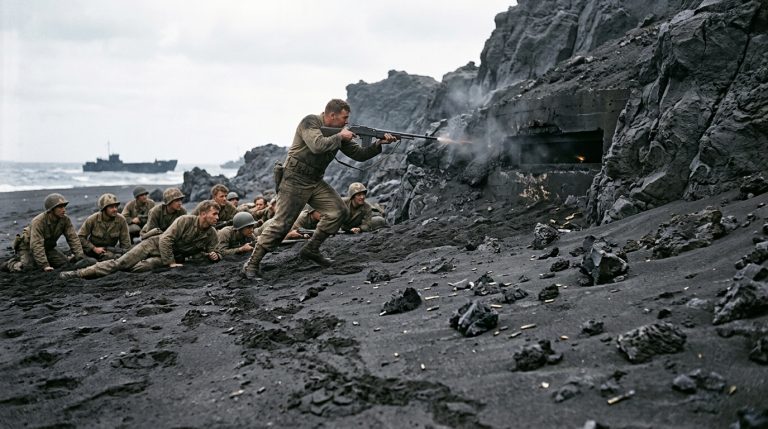
My grandfather used to talk about the tunnels in the Ardennes—how the dark was never really empty, how every breath you took felt like a betrayal of your position. I hadn’t understood him then. I understood him now.
I navigated the labyrinth of the building’s infrastructure, following the faint hum of the electrical grid. I knew if I could reach the maintenance bay at the far end of the facility, I could access the exterior service ladder. My lungs burned with the effort of breathing the recycled, dust-heavy air. I clutched the stolen folder to my chest, its edges digging into my skin, a constant, physical reminder of the stakes.
I reached the service grate that overlooked the utility corridor. I peered through the slits. The hallway was empty, save for a single security guard stationed at the end, his back to me, radio in hand.
“Target is confirmed in the basement sector,” he said, his voice clipped and bored. “Locking down all perimeter exits. Keep the focus on the southern wing.”
He turned, his flashlight beam cutting across the room. I held my breath, my muscles locked in a rigid, agonizing tension. He checked his watch, adjusted his belt, and then turned back toward the main desk. I didn’t wait for him to move again. I kicked the grate with the heel of my boot. It gave way with a sharp, metallic screech that sounded like a gunshot in the confined space.
I dropped into the corridor, landing on my feet in a crouch. The guard spun around, his hand flying to his holster.
“Hey! You there—!”
I didn’t try to reason with him. I sprinted toward the far exit, my boots pounding against the concrete floor. The guard shouted behind me, but I didn’t look back. I hit the emergency release on the heavy fire door, the mechanism sparking as it disengaged, and tumbled out into the wet, midnight alleyway behind the building.
The rain had started. It was a cold, thin drizzle that clung to my jacket like a second skin. I didn’t stop running until I hit the tree line of the nearby park, my heart hammering against my ribs, my breath coming in jagged, freezing gasps.
I was out. But I was marked.
I made my way back toward Elm Street, staying in the shadows, avoiding the main thoroughfares. My phone vibrated—a constant, frantic pulsing in my pocket. I pulled it out.
UNKNOWN NUMBER: “You took the wrong file, Jack. The real truth is much heavier than a piece of paper.”
I stopped, leaning against a damp brick wall, the rain soaking into my hair. The “real truth.” They were goading me. They wanted me to think I had the winning hand so they could justify the next step—a final, absolute move against me.
I reached my house at 3:00 AM. It felt like a different building than the one I had left just hours ago. The front door was unlocked.
I didn’t draw a weapon—I didn’t have one. I drew a breath, steady and deep, and pushed the door open. The living room was exactly as I had left it, but there was a scent in the air—the faint, lingering smell of expensive perfume, a floral, clinical scent that had no business being in my house.
Rachel was sitting in the armchair by the window, her hands folded neatly in her lap. She wasn’t holding a weapon; she was holding a checkbook.
“You’re making this very difficult, Jack,” she said, her voice devoid of its usual professional veneer. It was quiet, almost conversational, and infinitely more terrifying. She looked at me, her eyes tracking the mud on my boots, the tear in my jacket. “You have the folder. You think you have the leverage. But do you have any idea who you’re actually fighting?”
“I’m fighting a developer who hides behind HOA rules,” I said, my voice rasping from the exertion. I walked toward the table and tossed the folder onto the surface. It skidded, stopping right in front of her. “And I’m fighting a woman who’s so terrified of her own history that she’d burn down her neighbors to keep it buried.”
Rachel didn’t look at the folder. She looked at me, her expression shifting into something raw—a flash of genuine, unadulterated fear. “You think you’re the hero of this story, Jack. You think because you found a piece of paper, you’ve won. But if you take that folder to the city, you won’t just destroy me. You’ll destroy this entire neighborhood. This land will be condemned, the residents will be evicted, and the developer will collect the insurance while we’re left with nothing.”
“That’s exactly what the developer wants, isn’t it?” I asked, stepping closer, my voice low. “A clean slate. A condemned site.”
“They don’t want the land,” she said, her voice dropping to a whisper. “They want the silence. And you, Jack, are currently the loudest thing in the room.”
She stood up, her movements fluid and predatory. She walked toward me, stopping inches away. “Give me the folder. Walk away. I’ll take care of the fine, I’ll take care of the HOA, and you can keep your flagpole until the day you die. That’s the offer. Take it, or lose everything.”
I looked at the folder, then back at her. The choice was a physical weight, pulling at my shoulders. If I backed down, I’d be safe. If I fought, I’d be the catalyst for the very destruction I was trying to prevent.
I looked her in the eye. “My grandfather stood his ground, Rachel. He knew that the cost of freedom was never cheap. I’m not selling.”
Rachel stared at me for a long, agonizing beat. Then, she nodded—once, slowly.
“Then I guess we’ll see what happens when the sky falls,” she said, and walked out the door, leaving me alone in the house that suddenly felt like a tomb.
CHAPTER 7: The Courthouse
The morning of the hearing, the courthouse stood as a brutalist monolith under a sky the color of a bruised lung. I walked up the granite steps, my suit jacket feeling tight, the folder tucked inside my inner pocket like a second heartbeat. Every step on the cold, unforgiving stone felt like a calculation. I wasn’t just walking into a legal proceeding; I was stepping into the center of a trap.
I found Clara waiting in the vestibule. She looked tired, her eyes rimmed with the exhaustion of someone who had spent the night dissecting the zoning loopholes. When she saw me, her gaze shifted to the bulge in my jacket.
“You’re sure about this, Jack?” she whispered, her voice barely audible over the bustle of the lobby. “If this evidence is inadmissible, or if they claim it was obtained illegally, it won’t just destroy the case. It’ll give them everything they need to label you a trespasser.”
“It’s the only truth we have, Clara,” I said, my voice steady. “They’re forcing an eviction. We don’t have the luxury of playing by the rules when the deck is made of lead.”
We walked into the courtroom, the air thick with the smell of floor wax and stale coffee. Rachel was already there, seated at the defendant’s table. She wore a charcoal-gray suit that looked like armor, her posture rigid, her eyes fixed on the judge’s bench. She didn’t look at me as I took my seat. She looked through me, as if I were already a vacant lot, a space to be cleared.
The hearing began with the dry, mechanical rhythm of legal discourse. Rachel’s attorney, a man with skin like parchment and a voice that rasped, argued that the flagpole was a public nuisance, a danger to the integrity of the community’s master plan. He spoke about property rights with the fervor of a zealot, conveniently ignoring the fact that the “master plan” was a blueprint for a wholesale erasure of our homes.
Clara responded, her arguments sharp and precise, but I could see the judge’s impatience. He wanted this over. He wanted the file closed.
“Your Honor,” Clara said, her tone shifting, “the defense argues that the community guidelines are absolute. But we have evidence that the very basis of these guidelines—the underlying land grants for the district—is built upon a fundamental, illegal variance.”
The courtroom went silent. Rachel’s attorney stood up, his face reddening. “Objection! This is a zoning dispute, not a land-title investigation.”
“Overruled,” the judge said, his eyes narrowing as he looked at me. “Mr. Matthews, present your evidence.”
I stood up. The weight of the folder felt immense. I walked to the front, my boots echoing against the hardwood, and placed the document on the mahogany bench. I opened the file to the 1952 marginalia.
“The neighborhood’s foundation is fraudulent,” I said, my voice projecting into the high, vaulted ceiling. “The Carter estate was built on an illegal variance. If the developer succeeds in clearing this land, they aren’t just building a commercial complex; they are burying the proof that Rachel Carter never had the right to govern this district in the first place.”
The room erupted. Rachel’s composure finally shattered. She stood up, her chair clattering backward, her face a mask of rage. “It’s a lie! That document is a forgery!”
“Is it?” I asked, looking at her, really looking at her, for the first time. I saw the tremor in her hands, the way she clutched the edge of the table as if it were the only thing keeping her from collapsing. She wasn’t just losing a case; she was watching her entire life’s work evaporate in the glare of the courtroom lights.
The judge reached out, his hand resting on the document. He studied the faded ink, his brows furrowed in concentration. “Where did you obtain this, Mr. Matthews?”
“From the city archives,” I said. “Where it was buried to keep the neighborhood silent.”
The judge looked at Rachel. Her eyes, usually so calculated, were wide, haunted by the sudden, terrifying exposure of her position. The developer’s attorney looked toward the back of the room, his eyes scanning for an exit that didn’t exist.
The judge didn’t rule immediately. He closed the folder, the sound of the cardboard hitting the wood resonating like a gavel. “This hearing is adjourned until tomorrow morning. We will have a representative from the city planning office present to verify this record.”
I walked out of the courtroom, the adrenaline finally beginning to ebb, leaving behind a cold, hollow ache in my chest. Rachel was still sitting there, frozen in the middle of the room, a woman whose foundation had just been exposed as sand.
I didn’t win—not yet. But the silence had been broken, and for the first time, the neighborhood wasn’t just a grid on a map. It was a place with a history, a secret, and a chance to survive. I stepped out into the rain, the cool water washing the dust of the archive from my skin. The final act was tomorrow, and for the first time in my life, I wasn’t afraid of the falling sky.
CHAPTER 8: The Residual
The judge didn’t look at the files. He looked at Rachel.
“The documentation is clear, Miss Carter,” he said, his voice cutting through the stale courtroom air like a razor. “The variance that anchors the Carter estate—and by extension, the governing authority of the Elm Street Homeowners Association—is null and void. It was never recorded, never legally binding, and fundamentally illegal in its origin.”
Rachel didn’t scream. She didn’t argue. She simply stopped tapping her fingers. Her face turned a shade of gray that looked like dust, her eyes glassy and unfocused as the reality of the exposure settled over her. The “Project Horizon” development was effectively dead on arrival; without the legal standing to clear the district, the developer had no foothold.
“This court finds in favor of the plaintiff,” the judge continued. “The HOA authority is suspended, pending a full review of all current zoning and land-use records. Mr. Matthews, your property is under the jurisdiction of the city, not the association. You are free to keep the flagpole. And Miss Carter? Expect a formal inquiry regarding the nature of your management practices.”
The gavel fell—a dull, wooden thud that sounded like the final nail in a coffin.
I stood up, but there was no rush of triumph. My limbs felt heavy, my internal clock still tuned to the frequency of a fight that had consumed every waking hour of the last few weeks. Clara touched my arm, her smile tight but genuine. “We did it, Jack.”
I nodded, but my eyes were on Rachel. She was gathering her papers, her movements mechanical, devoid of their usual predatory grace. She looked at me once—not with hatred, but with a hollow, profound exhaustion. She knew what was coming next: the creditors, the legal fallout, the unraveling of a legacy built on the very lie I had just exposed. She walked out of the courtroom, and I realized with a sudden, stinging clarity that she was already gone. The antagonist had been defeated, not by a strike, but by the weight of her own architectural fragility.
I left the courthouse and walked out into the afternoon. The rain had stopped, but the streets were slick, reflecting the neon signs of the city in broken, shimmering patterns. I drove back to Elm Street. The neighborhood looked the same, but the energy in the air was different—less watchful, less claustrophobic.
I pulled into my driveway. The flagpole stood tall, the fabric still and limp in the damp air. I walked up the path, the sound of my boots on the concrete feeling like a homecoming. I reached the base of the pole, the spot where I had been digging just days ago. I knelt, pushing the soil back into place, my fingers working the earth with a slow, deliberate care.
I found a loose bolt near the base, a remnant of the tension from the survey stakes, and tightened it. The metal felt cold, grounding.
Lena was waiting on her porch. She didn’t call out; she simply watched as I worked. I finished, stood up, and brushed the dirt from my hands. I walked over to her. The silence between us wasn’t heavy anymore; it was just quiet.
“It’s over,” I said.
“Is it?” she asked softly, looking out at the rows of houses. “The association is gone, Jack. But the neighborhood… we still have to live here. We have to rebuild the trust. That’s going to take longer than a courtroom ruling.”
I nodded. She was right. The victory wasn’t the end; it was the foundation for something else. I looked at the flag, now starting to lift in the light breeze, a steady, rhythmic snap beginning to resonate in the quiet street. It wasn’t a warning anymore; it was a heartbeat.
I walked back into my house. The air inside was still cool, but it felt cleaner, purged of the synthetic scent of Rachel’s perfume. I sat at the kitchen table, the map of Project Horizon still there, and tore it into long, jagged strips. I didn’t feel the need to keep it, to study it, or to remember it. I threw the pieces into the wastebasket and stood at the window, watching the sun begin to dip behind the line of elms.
I was tired. My hands still ached from the crawlspace, my muscles throbbed with the residual fatigue of the last few days. But as the shadows lengthened across the lawn, I felt a deep, resonant calm. I hadn’t just saved a piece of land; I had reclaimed my own agency.
I went to the sink, washed the grit of the archive from my hands, and poured a cup of coffee. The house was mine. The history was mine. And for the first time in thirty years, the wind didn’t sound like a threat. It sounded like the future.