The Weight of Steel and Sulfur: One Man’s Stand on the Jagged Ridges of Iwo Jima
CHAPTER 1: THE HEAVY LOAD
The canvas strap bit into the muscle of Wilson Watson’s shoulder with familiar, grinding friction.
Sergeant Calhoun stood in front of the formation at Camp Pendleton, his boots crunching sharply against the dry California gravel, handing out weapons with the brisk indifference of a man distributing shovels to a ditch-digging crew.
M1 Garand.
Thompson.
M1 Garand.
Each Marine stepped forward, took his piece of walnut and steel, and melted back into the ranks with a quiet nod.
When Calhoun stopped in front of Watson, the sergeant paused, looking up past six feet of broad, sun-baked frame shaped by endless years of splitting fence posts and hauling hundred-pound loads from before sunrise until dark.
Calhoun dropped the heavy, flat-receivered bulk of the Browning automatic rifle squarely into Watson’s massive hands.
Congratulations, Watson, Calhoun muttered, his voice flat and dry. You just became the most popular target on the battlefield.
Watson did not smile, nor did he shift his grip.
His fingers closed around the cold metal with the instinctive adjustment of a man who spent his youth testing tools against stubborn timber and heavy stone.
Twenty pounds of steel and walnut.
Add twelve loaded magazines, his helmet, his canteen, and the standard infantry pack, and the total weight climbed past thirty-five pounds before he even took his first step across the parade deck.
Around him, men adjusted their lighter nine-pound rifles with relative ease, offering sideways glances that carried a mixture of grim sympathy and guarded distance.
Every man in the squad knew the arithmetic of the weapon resting against Watson’s chest.
It had a distinctive, heavy hammering report that cut through the noise of any firefight, marking its carrier as the primary target for every enemy gunner within earshot.
It emptied its twenty-round magazine in less than three seconds of continuous fire, leaving a dangerous gap of silence while the operator fumbled for a fresh reload.
Watson simply checked the bolt, cleared the action with a smooth, practiced pull, and settled the dead weight across his body.
He had spent his whole life carrying the heaviest loads because his shoulders were the widest available, and the sharecropper’s logic of his upbringing had taught him one simple truth.
Complaining about the weight never made the load an ounce lighter.
Calhoun turned down the line, barking the next name, while Watson adjusted the sling and stared straight ahead toward the dusty hills rolling off into the distance.
The weapon was heavy, awkward, and universally dreaded by the men who carried it.
And by the time they reached the black volcanic sand of the Pacific, that twenty-pound chunk of steel would become the only thing standing between the platoon and total annihilation.
CHAPTER 2: THE SULFUR TRAP
The black volcanic ash sucked at his boots like wet cement, offering no traction and no mercy.
Around him, the beach remained unnaturally quiet for forty-seven minutes, a heavy, suffocating silence that felt entirely wrong.
Watson trudged forward with the twenty-pound Browning automatic rifle braced across his chest, his broad shoulders aching under the combined weight of the heavy weapon, extra magazines, and full combat gear.
Sergeant Calhoun moved just ahead, his eyes darting across the jagged ridges rising sharply above the flat expanse.
Not a single shot had been fired since they hit the surf, but every instinct hammered at the back of Watson’s mind, warning him that the silence was an engineered illusion.
A sharp metallic clink rang out from an unseen crevice in the rocks above as an ammunition clip shifted against stone.
Watson stopped instantly, his gaze locking onto a seemingly solid face of gray volcanic rock forty yards ahead.
There was no visible opening, no movement, and no glint of steel to betray the position.
Yet the air grew suddenly heavier, thick with the invisible tension of hundreds of hidden rifle barrels tracking their every step.
The island’s defenders were not fighting at the waterline; they were watching from deep within the interconnected network of caves and tunnels, letting the landing force crowd into the open killing zone.
Calhoun raised a clenched fist, signaling the squad to drop flat into the shifting black powder.
Watson sank into the ash, keeping the heavy receiver of the BAR cradled carefully against his chest to prevent the volcanic grit from jamming the mechanism.
The silence snapped open like a frayed cable as hundreds of hidden positions erupted simultaneously across the bluffs.
Machine-gun fire sheared through the air inches above their heads, accompanied by the dull, thumping roar of knee mortars launching high-explosive shells down from the heights.
A mortar round struck a cluster of volcanic rocks just five yards to Watson’s left, showering his helmet in jagged stone fragments and choking black dust.
The standard tactical doctrine drilled into them at training camps demanded that the BAR operator set up a stable bipod base and return suppressive fire from a fixed position.
Watson unfolded the bipod legs and planted them into the loose ash, squeezing off a controlled burst toward the muzzle flashes winking from the cliff face.
Sparks flew where his bullets struck solid rock, but the enemy firing slits were too narrow, too deeply recessed into the natural stone to penetrate with area fire.
Worse still, the moment the distinctive hammering report of the BAR echoed across the ridge, the incoming mortar fire immediately zeroed in on his exact coordinates.
Two more shells landed uncomfortably close, the concussive force slamming against Watson’s ribs and driving sulfur-tinted dust deep into his eyes.
The pre-registered targeting data was undeniable.
Staying in this fixed position meant certain death, and the conventional doctrine taught by the manuals was proving to be a fatal trap.
Watson ripped the bipod legs back against the stock, pulled the heavy weapon into his arms, and rolled sideways into a shallow depression just as another mortar shell obliterated the rock he had occupied seconds before.
CHAPTER 3: THE CONCRETE EMPLACEMENT
Forty yards of open black ash separated their shallow depression from the enemy bunker.
A heavy machine gun inside the concrete embrasure swept the approach with systematic bursts, locking the entire platoon flat against the jagged ground.
Sergeant Calhoun shouted an order for covering fire, but every fixed position the squad attempted to establish immediately drew lethal mortar corrections.
The enemy had engineered this exact stalemate to bleed them dry yard by yard.
Watson adjusted the twenty-pound weight across his chest, his large calloused hands tightening around the stock with grim calculation.
Following the training manual’s doctrine meant staying put and dying slowly in a pre-targeted kill zone.
He looked past the churning dust toward the narrow concrete slit spitting fire.
— We can’t sit here waiting for permission to breathe, — Watson muttered, his voice raspy from sulfur.
Calhoun caught his eye and shook his head sharply, trying to warn him off a suicidal dash.
Watson did not wait for approval or argument.
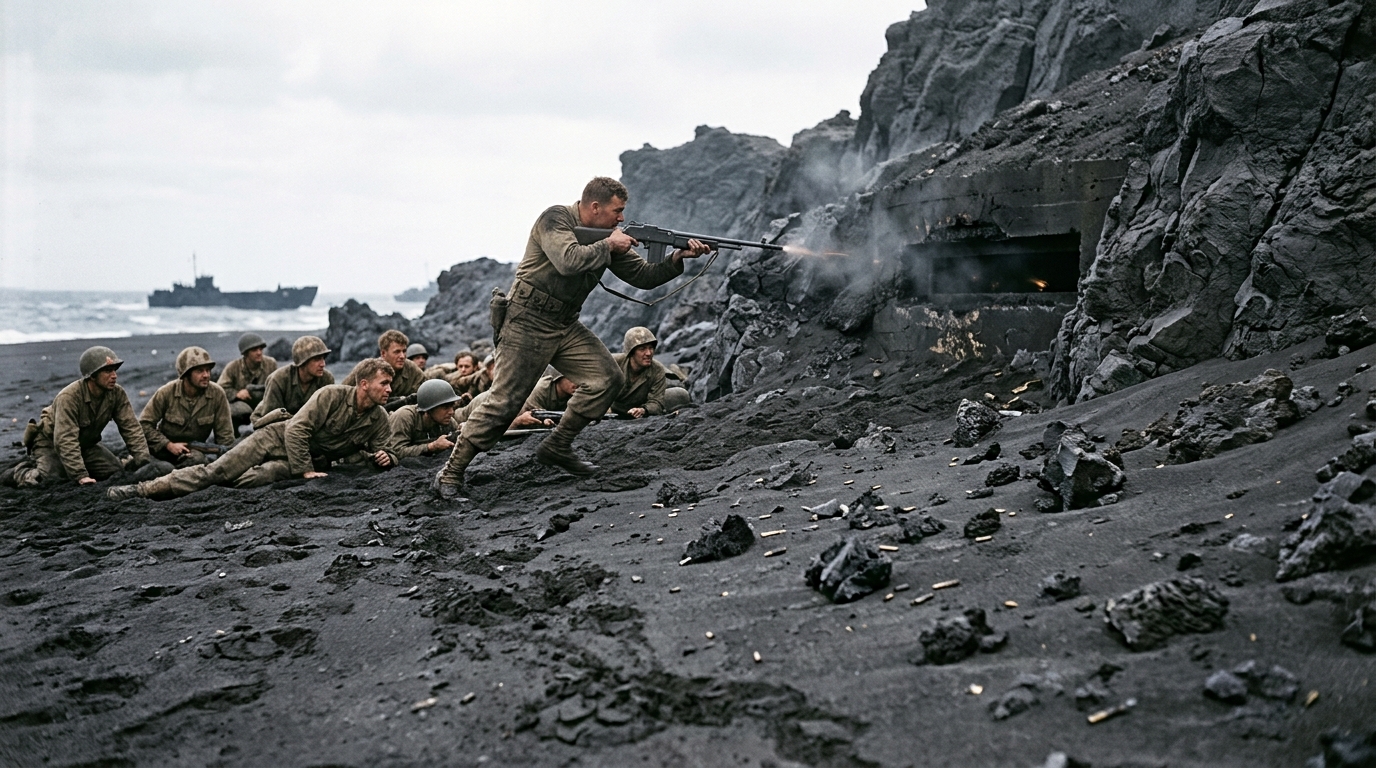
He rose abruptly out of the depression, wrenching the heavy weapon free, and began sprinting straight down the gun’s throat.
The sudden movement broke every rule of tactical positioning, turning him into a moving target across open terrain.
Instantly, the machine gun swung to track him, its bullets chewing up the volcanic ash inches from his boots.
Watson gripped the receiver tight and fired from his hip, sending sustained automatic bursts directly into the concrete embrasure to blind the enemy gunner.
The recoil hammered against his shoulder, but the heavy steel frame kept the barrel remarkably steady despite the chaotic motion of his sprint.
As he closed the distance to fifteen yards, the enemy firing aperture loomed large directly in front of him.
He hauled a fragmentation grenade from his belt with his free hand, pulled the pin with his teeth, and hurled it straight through the narrow concrete slit.
A muffled shockwave shuddered through the emplacement as the grenade detonated inside.
Watson hit the ground rolling just past the rear exit as surviving defenders scrambled outward into the open air.
He swept the heavy weapon around in a swift, devastating arc, ending the threat at point-blank range before the smoke could even clear.
CHAPTER 4: THE FORTIFIED RIDGE
The incline rose sharply before them like a jagged wall of dark, shattered teeth.
From the unseen crest above, relentless machine-gun fire swept the rocky approaches with absolute precision, locking the platoon flat against the volcanic slope.
Sergeant Calhoun crouched behind a fractured boulder, wiping soot and sweat from his forehead.
— They’ve got every yard pre-sighted, Watson, — Calhoun warned, his voice tight with strain.
Watson scanned the rocky face, noticing an odd silence in the intervals between enemy bursts—a rhythmic cadence that hinted at coordinated spotters directing mortars from higher ground.
Every route of advance funneled straight into intersecting kill zones designed to trap a static force.
The standard textbook play of setting up a fixed support base would only trigger another immediate barrage of incoming shrapnel.
They needed elevation, but every visible path was chewed up by lead and flying stone.
Grimes crawled up beside him, his fingers clutching extra magazines tightly as he checked the horizon.
— If we stay put, we’re sitting ducks for their next mortar drop, — Grimes muttered, shifting his weight against the sharp rock.
Watson adjusted the heavy weapon’s sling over his aching shoulder, feeling the familiar, grinding weight of the steel frame.
The ridge had to be taken, but the old rules of engagement were entirely useless against an enemy hidden inside solid stone.
He gripped the textured stock, his jaw set in stubborn defiance as he mapped out the treacherous climb ahead.
— We don’t wait for them to finish sighting us in, — Watson said quietly, pulling his helmet down tight.
He rose to a crouch, ignoring the burning fatigue in his legs, and prepared to challenge the high ground on his own terms.
CHAPTER 5: FIFTEEN MINUTES OF FIRE
The slope rose at an angle that demanded fingers as well as boots.
Grimes scrambled closely behind him, his pockets bulging with spare magazines while enemy mortar rounds began chewing up the stone ahead.
— Keep moving, — Watson grunted, his lungs burning from the acrid sulfur thick in the air.
They crested the jagged edge into full view of the opposing defense lines.
Instead of diving for stationary cover, Watson braced the heavy weapon across his waist and began sweeping the crest with sustained mobile fire.
The enemy counterattacked instantly from the reverse slopes, rushing the summit in coordinated waves that expected a pinned target.
Watson pivoted sharply, feeding the weapon’s relentless rhythm into the oncoming rush while Grimes shoved fresh magazines into his open palm.
Every three seconds brought a frantic reload, a brief window of raw vulnerability where only grit and movement kept them alive.
The heavy barrel radiated intense heat against his gloves, smoking slightly in the cool mountain wind.
— They’re coming over the left flank! — Grimes shouted over the deafening roar of automatic fire.
Watson swung the heavy iron around, ignoring the searing pain in his muscles and the sharp shrapnel stinging his helmet.
He did not stop to take cover; he walked the fire straight across the ridge, refusing to yield a single inch of the contested stone.
The minutes stretched into an eternity of noise, smoke, and relentless physical exhaustion as the enemy tried desperately to break his line.
CHAPTER 6: THE DUSTY SILENCE
The ridge fell completely quiet except for the distant rumble of surf against volcanic ash.
Sergeant Calhoun stepped over the tumbled stones of the crest, looking at the stillness spread across the slopes with hardened eyes.
— You held the line, Watson, — Calhoun said, his voice flat and exhausted.
Watson did not answer right away.
He unlatched the heavy, empty receiver from his aching shoulder and let the twenty-pound mass rest against the dirt.
The battle for the ridge was over, but the physical toll remained carved deep into his muscles and bones.
The platoon finally reached the summit, moving past the silent terrain with quiet steps.
There was no grand celebration or loud cheering on the captured heights, only the grim satisfaction of men who had survived another day of impossible math.
Watson rubbed his calloused palms against his trousers, feeling the familiar grit of the earth ground deep into his skin.
He picked up the heavy piece of steel once more because it was his to carry, and turned his gaze toward the long road stretching back toward home.
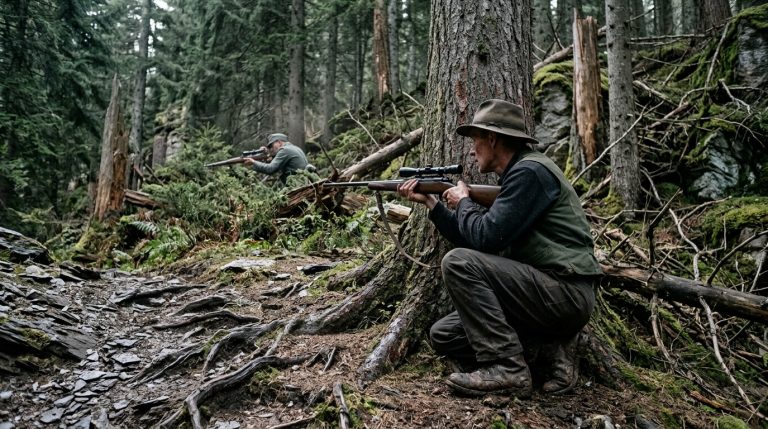
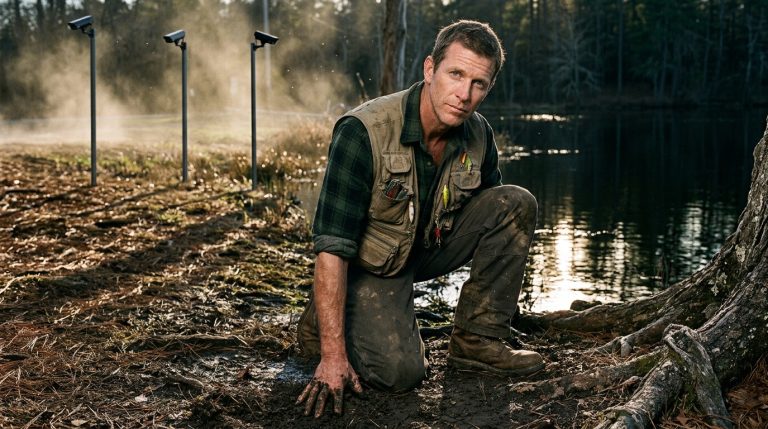
Years later, sitting quietly in the Tennessee timber with a simple hunting rifle across his knees, the noise of the sulfur islands faded entirely into memory.
The heavy loads of the world had tested him to his absolute limit, but common sense and endurance had seen him through every trial.
He finally had his silence, his woods, and the peaceful peace of a simple life well earned.