The Iron Key of Inheritance: How a Quiet Woman Dismantled Years of Entitlement and Reclaimed Her Peace
CHAPTER 1: THE KITCHEN TABLE SILENCE
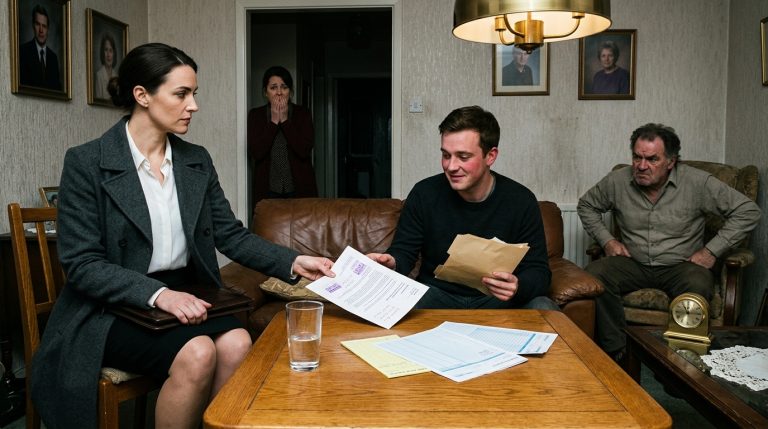
The legal pages sat flat against the dark wood of the dining table. Outside the window, the New York traffic hummed a steady, gray rhythm.
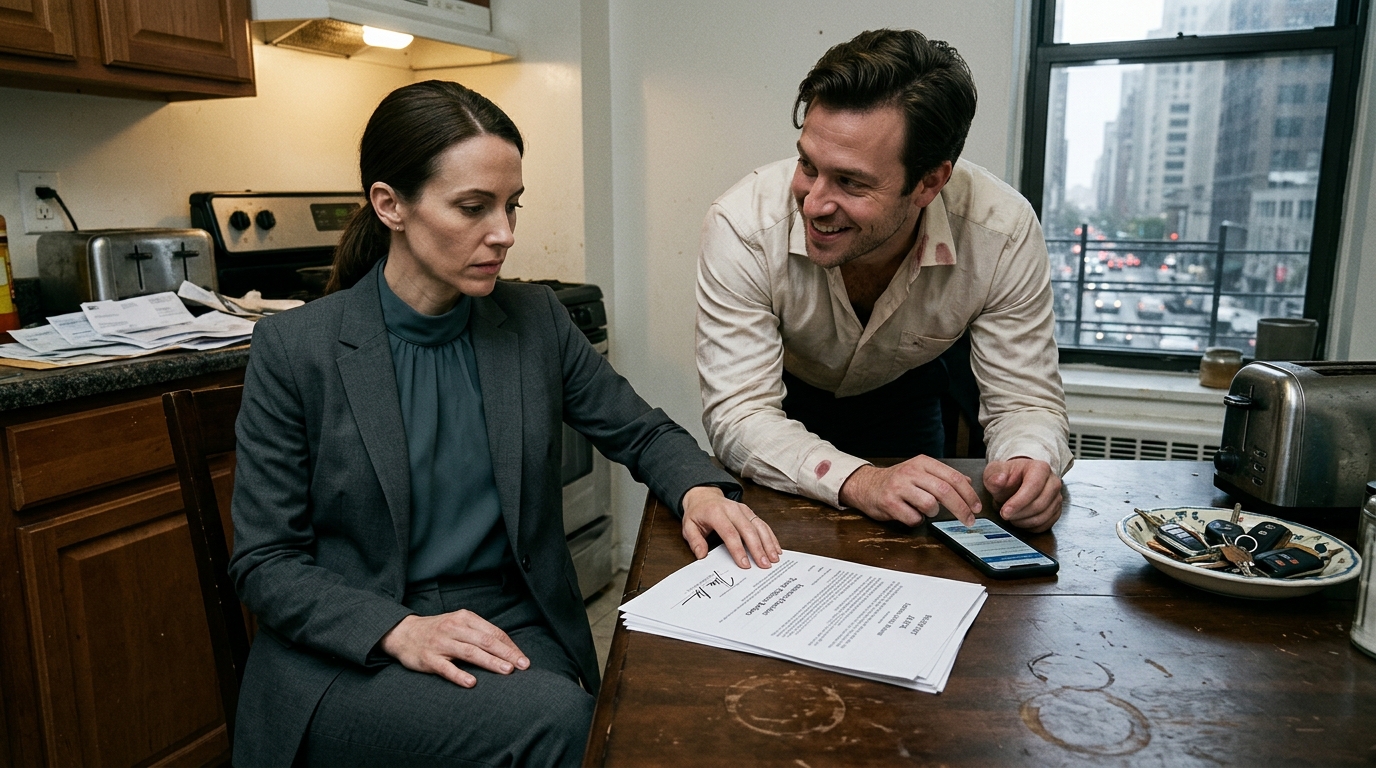
I traced the margin of the document where my father’s signature ended. Three million dollars was not just a number; it was thirty years of sterile hospital corridors and late-night property ledgers.
From the hallway, the sharp clink of car keys hitting the ceramic dish cut through my thoughts. Jack strode into the kitchen without knocking on the open door frame, his phone clutched in his palm.
“We are looking at new sedans by Friday,” Jack announced, his grin stretching across his face with effortless entitlement. “Mother wants the sunroof package.”
I didn’t look up from the page. The kitchen air smelled faintly of yesterday’s burnt coffee and cold iron.
“That money isn’t for a car, Jack,” I said, my voice flat, holding the weight of a decade’s worth of unwashed dishes and silent endurance.
Jack let out a sharp, dismissive scoff, tossing his phone onto the table next to the lawyer’s seal. He leaned over the back of my chair, invading my space with the stale scent of cheap cologne.
“Don’t start acting difficult now, Kelly,” Jack muttered, tapping a finger against the inheritance clause. “What’s mine is ours, and what’s yours is family. We’ve earned this break.”
CHAPTER 2: THE EMPTY PANTRY
Jack’s laughter echoed from the hallway as he tossed another glossy store catalog onto the kitchen counter.
“We need a second vehicle for weekend trips,” Jack said, his voice entirely unbothered by the bills stacking up beside the toaster.
I set the mug down with a dull thud, watching the remaining coffee swirl against the porcelain rim.
The pantry shelves were noticeably lighter, stripped of staples we usually kept stocked.
“The joint account isn’t an endless well, Jack,” I said, my voice carrying the steady, heavy friction of eight years of keeping score.
Jack waved a hand dismissively, his eyes fixed on a screen displaying luxury resort bookings.
“What does it matter? The three million is clearing any day now,” Jack muttered, tapping his phone screen with a manicured nail. “My mother deserves a proper vacation after all these years of stress.”
I didn’t argue. Arguing with a man who refused to see reality was like shouting into an iron wall.
Instead, I picked up the mail piled by the bread box. A credit card statement sat on top, showing a balance that had doubled over the past week alone.
“You haven’t touched a dish or a single household bill in eight years,” I said quietly, running my thumb over the rough edge of the paper statement.
Jack didn’t even look up from his screen. “You’re much better at managing the small things, Kelly. Just handle it.”
The front door slammed shut as his mother walked in, her arms laden with high-end shopping bags that rustled with expensive tissue paper.
“The boutique downtown finally has the silk scarves in stock,” she announced, dropping her keys into the brass dish with a sharp metallic clatter.
I looked down at the brass key tray, noticing immediately that my spare silver duplicate ring was missing from its usual hook.
CHAPTER 3: THE DEPARTURE GATE
Jack rolled his travel bag toward the front door, his face flushed with the nervous energy of a man who believed he had won life’s lottery.
“We are heading to the terminal now, Kelly,” Jack called out, not bothering to look back as he zipped his jacket. “Don’t wait up for dinner this week.”
His mother followed close behind, her fingers adjusting the collar of a newly purchased designer coat.
“Make sure the mail is collected properly while we are gone,” she instructed, her voice dripping with casual condescension as she stepped past me toward the elevator. “And don’t touch the thermostat; we don’t want an exorbitant utility bill waiting when we return.”
I stood silently by the console table, watching the elevator doors slide open to swallow them whole.
The heavy thud of the metal doors closing marked the exact boundary I had been waiting for.
I walked over to the heavy oak door and slipped my own key into the deadbolt, turning it twice with a sharp, final click.
The apartment felt instantly different—quieter, denser, stripped of their constant, demanding chatter.
I pulled a small leather pouch from my coat pocket, containing the new cylinder lock set I had purchased during my lunch break.
If they wanted to live like wealthy travelers, they could start by learning how it felt to return to a locked door.
CHAPTER 4: THE IRON BOUNDARY
The brass pins of the old mechanism spilled across the entryway table.
For eight years, I had turned that lock from the outside, carrying groceries, mail, and the quiet weight of a marriage built on quiet compliance.
Now, the hollow space inside the door frame stood exposed, waiting for a boundary that could not be crossed by a spare key.
I slid the new deadbolt housing into place, tightening the screws with steady, deliberate turns of the wrist.
The metal resisted at first, catching against the paint line, but I forced it straight until the mechanism seated flush.
There was no legal advice guiding my hands, only the clean, mechanical certainty of iron meeting steel.
Jack and his mother were halfway across the Pacific, spending money they assumed was already theirs, while the perimeter of my own home narrowed to a single, impenetrable click.
I tested the latch twice from the inside, feeling the solid resistance of a door that finally belonged to me alone.
CHAPTER 5: THE CAFE CORNER
The condensation from the water glass pooled onto the sticky tabletop, forming a small, cold ring next to my knuckles.
Jack and his mother pushed through the cafe door, their aloha shirts looking painfully out of place against the gray New York afternoon.
“What kind of sick joke is this?” Jack slammed both palms onto the wood, his face darkening with a frantic, unhinged rage. “The key doesn’t turn! The lock has been changed!”
I didn’t flinch, keeping my posture entirely level as I slid the divorce petition across the laminate surface.
“You can’t do this—we have a trip coming up, we have plans!” his mother shrieked, leaning over the table with spittle flying from her lips. “Hand over the new keys right now before we call the authorities!”
“Go ahead and call them,” I said quietly, my voice cutting through their noise like a dry blade. “Check your joint account balance first.”
Jack’s eyes flared wide with sudden panic. He whipped his smartphone out of his pocket, his thumb swiping frantically across the banking app.
“No—that’s impossible,” Jack muttered, his breath hitching as the screen refreshed to show a blank ledger. “The fifty thousand was right there! Where did it go?”
“It went into my separate account as part of the property division,” I replied, staring straight into his widening eyes. “And don’t look for the three million either, because inherited assets are legally protected from being split.”
Jack slammed his phone onto the table, his face turning a mottled, furious red.
“You lied to us! You trapped us!” Jack roared, leaning in close with his fists clenched at his sides. “You’re going to fix this right now or I swear—”
“You’ll do nothing,” I interrupted, standing up from the booth and smoothing down my coat. “The divorce papers are right there. Sign them, or deal with the debt you’ve already accumulated.”
CHAPTER 6: THE DUST SETTLES
The ink on the divorce papers dried under the dim cafe lighting.
Jack stared down at the blank screen of his phone, his shoulders caving inward as the weight of unpayable credit card bills and sudden unemployment finally hit home.
“We have nowhere to go,” Jack whispered, his voice cracking under the realization of his own manufactured ruin.
His mother sat beside him in silence, her flashy composure completely shattered, staring blindly at the laminate tabletop.
I capped my pen with a sharp, definitive click and slid the petition toward the edge of the wood.
There were no grand speeches left to make, only the quiet, heavy reality of actions meeting their natural consequences.
I stood up, leaving them to the arithmetic of their own debt, and walked out into the cool New York air.
An hour later, I unlocked the door to my father’s apartment, stepping into rooms filled with the quiet scent of old paper and polished wood.
The condominium downtown was sold, the old life was behind me, and the hallway tray sat empty of duplicate keys.
I set my keys down on the mahogany surface, poured a fresh cup of coffee, and sat down by the window to watch the evening traffic flow smoothly through the gray streets.