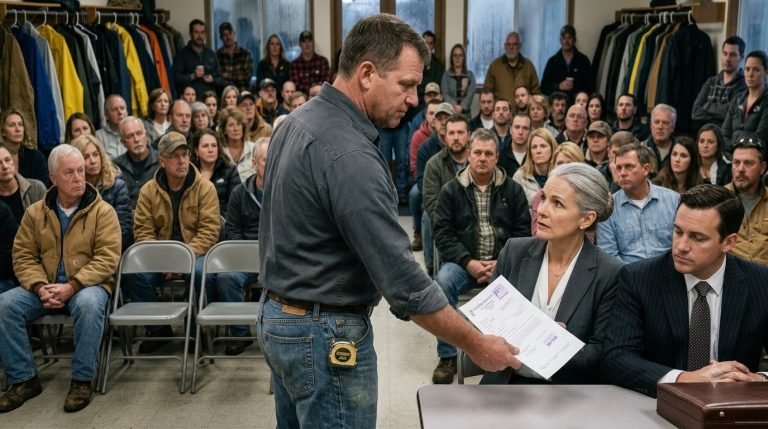
The Iron and the Dust: Defending Forty Acres Against the Quiet Machinery of Paper Empires
CHAPTER 1: The First Rust
The coffee had gone cold hours ago, a dark, bitter skin tightening across the surface while the wind dragged dry tumbleweeds against the base of the western fence. Forty acres of hard-won dirt, fenced clean along boundary lines marked by iron pins I had driven into the earth myself with a twelve-pound sledge. This place was built on friction and sweat, bought for a single, unyielding reason: to be left alone by men who lived their lives behind neatly trimmed hedges and committees.
Then the notice arrived.
It sat there on the wood, smelling faintly of cheap toner and municipal ambition, demanding payment for an association called Silver Creek Estates. There were no shared gates here, no common tarmac, no mutual easements. Just dry grass, open sky, and a property line sitting miles away from the nearest subdivision curb.
The first impulse wasn’t anger; it was the cold, dry realization that someone was trying to manufacture a claim out of thin air.
An email sent to the contact address brought a reply within ten minutes. The HOA president’s voice on the phone later that afternoon had the smooth, practiced texture of a lawyer who had practiced her lines in front of a mirror. No documents. No county filing numbers. Just a polished assurance that the board had reviewed the matter and that everyone in the district paid their share.
The cursor on the screen blinked against the white background, steady and mechanical, waiting for a reply that would either accept the fiction or force the issue into the open dirt.
CHAPTER 2: Tracing the Iron Pins and Buried Survey Markers
The silence of forty acres at midday is heavy, broken only by the dry rasp of bunchgrass scraping against the bottom wire of the boundary fence.
I left the screen blinking. An electronic response sent to an anonymous billing desk would only churn the air like dust in a closed shed. Instead, I stepped out from the cool shade of the porch into the dry glare, the sun hitting my shoulders with the flat weight of an anvil. My boots crunched over gravel that had settled into the ruts over twelve years of maintenance, each stone worn smooth by tires and rain.
At the western corner post, where the property met the rise of the dry creek bed, the work began.
There were no shortcut assumptions here. In construction, you don’t guess where a load-bearing beam sits; you drop a plumb bob and measure twice from a fixed datum. The county had set these markers decades before Silver Creek Estates ever carved its first suburban curve out of the sagebrush. I crouched in the dirt, wiping a crust of dry, reddish soil away from the head of an old iron pin driven deep into the hard-pack.
The metal was oxidized, pitted with iron rust that flaked off in thin red scales under my thumb. It sat dead level with the ground, precisely where the original plat map recorded it in the county archives.
To the east, two miles away through the shimmer of heat haze, the manicured lawns and tiled roofs of the subdivision sat hidden behind a rolling swell of scrub oak. From their side of the ridge, the world was managed by committees, green lawns watered on automated timers, and rules written on laminated paper. From this side, the world was measured in feet of galvanized wire, cedar posts seasoned by thirty winters, and the immovable geometry of legal deeds.
I ran a heavy tape measure from the pin to the base of the corner post, noting the exact clearance. No overlap. No shared corridor. The gap between my fence and their closest platted lot wasn’t a matter of inches or ambiguous zoning lines; it was a wide, undeniable strip of open county land that belonged to no association, no board, and no corporate management group.
A white SUV topped the distant rise three hundred yards out on the county road, moving at a slow, deliberate crawl. Its tires threw up a thin, pale plume of caliche dust that hung suspended in the still air long after the vehicle had rolled past the property line. The tinted glass of the driver’s side window faced the ranch without turning. No stop was made, no horn sounded, but the message was written plain in the lingering cloud of dust—they were watching, waiting to see if the pressure would warp the timber.
I stood up, wiping the red dust from my palms onto the thighs of my jeans, and stared down the empty line of the fence. The notice back on the table was just paper, but paper has weight when it’s backed by people who think no one will check the math.
The sun dropped another inch toward the western ridge, casting long, sharp shadows across the dry earth. I turned back toward the house, leaving the iron pin buried in the dirt where it had stayed for thirty years, holding its ground against the wind and the weight of what was coming next.
CHAPTER 3: The Cold Wire and the First Guarded Phone Call
The dust kicked up by the white SUV settled back into the caliche ruts, turning the gravel the color of dried bone. I stood frozen on the back step for three long heartbeats, my hand resting on the rough grain of the cedar porch post. The timber was weathered gray, split by summer heat and winter frost, unchanging in its defiance.
A cell phone sat inside on the kitchen table, its screen dark, resting right beside the red-stamped notice.
In my line of work, you don’t answer a problem until you’ve scoped the site. You don’t pick up a hammer when you’re angry, and you certainly don’t call an administrator when your blood is hot enough to blur the measurements. But the silence inside the house felt different now. It had a weight to it, a low-frequency hum like an ungrounded electrical wire vibrating against a dry wall.
I walked back inside, letting the screen door slam shut with a sharp, heavy thud that rattled the old windowpanes.
The phone remained dark until I tapped the screen. The call log showed the number from the initial notification—a local exchange, registered to a corporate management office three towns over. I didn’t wait for coffee or a notepad. I dialed, keeping my thumb steady against the glass.
It rang twice before a voice picked up, smooth and practiced, carrying the brittle polish of someone who lived behind a reception desk.
“Silver Creek Estates administration, how may I direct your call?”
“This is the property owner at parcel four-zero, out on the western ridge,” I said, keeping my voice flat, sanded down to the texture of gravel. “I’m calling in reference to the notice delivered this morning.”
There was a microsecond pause on the line, just enough time for digital switching or a quick glance at a ledger. When the voice returned, the professional warmth had cooled into something transactional.
“Ah, yes. The account review for the outer boundary sector. You’ve reached the desk of the association president. Let me pull up your file.” Papers rustled in the background—the crisp, dry sound of heavy cardstock sliding across a polished desk. “We note that the compliance deadline was outlined explicitly in the mailing. The board expects settlement before the end of the week to avoid further administrative escalation.”
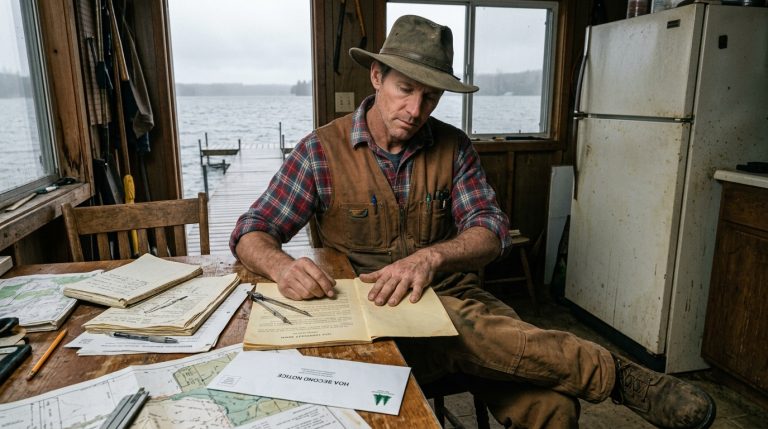
“There’s nothing to settle,” I said, leaning my hip against the edge of the wooden table, staring down at the county plat map spread beneath my palm. “My land sits outside your platted district. There is no shared infrastructure, no mutual access road, and no recorded covenant attached to my deed.”
The rustling stopped. A soft, measured exhale came through the speaker, loaded with an artificial patience designed to make a working man feel small.
“Sir, let’s not complicate matters with technicalities,” she replied, her tone dipping into a register of patronizing calm. “The community board has reviewed the geographic parameters. Older agreements dictate our oversight across this entire pocket of the valley. Everyone along that corridor participates. It ensures uniformity, property values, and structural standards for the district as a whole.”
“Standards I never signed up for,” I countered, the friction in my voice sharpening. “Show me the recorded document. Not an internal memo, not a hand-traced map. Give me the county book and page number where an annexation was legally executed and signed.”
The line went quiet for three seconds—not the silence of a dropped call, but the hard, defensive silence of someone whose bluff had just hit a stone wall.
When she spoke again, the polish was gone, replaced by a thin, brittle edge. “The board doesn’t operate by individual demands, Mr. Miller. Our legal counsel has confirmed our authority, and continued non-compliance will result in formal administrative filings that carry heavy financial penalties. I’d strongly advise you to reconsider your position before the matter leaves our office.”
The line clicked dead before I could answer.
No dial tone. Just abrupt, mechanical silence. I pulled the phone away from my ear and stared at the dark screen. The air in the kitchen felt dry, smelling faintly of old cedar and iron dust drifting in through the open window. They weren’t interested in the law; they were interested in compliance through exhaustion.
I set the phone down precisely in the center of the table, right on top of the red-stamped notice, and walked out the back door to check the perimeter fence once more before dark.
CHAPTER 4: Tire Tracks in the Dry Dirt and the White SUV
The silence in the kitchen did not last. Three days after the call, the dry air outside was split by the low, mechanical rumble of a heavy engine idling too close to the western boundary line.
I set down the crescent wrench I had been using to tighten a loose hinge on the feed room door and walked out into the open yard. The sun was sitting heavy and white over the ridge, baking the caliche dust until the road shimmered like a dry salt flat.
Parked thirty feet past my outer gate—just far enough off the private easement to test the definition of public right-of-way—was a late-model white SUV. The engine was running, vibrating the chassis with a steady, low-frequency hum that carried across the dry brush. The driver’s side window was rolled down an inch, revealing nothing inside except the dark, reflective glare of tinted glass.
I didn’t yell. I didn’t reach for a tool or change my pace. In construction, when a foundation settles unevenly, you don’t kick the concrete; you watch where the cracks form to see where the stress is pooling.
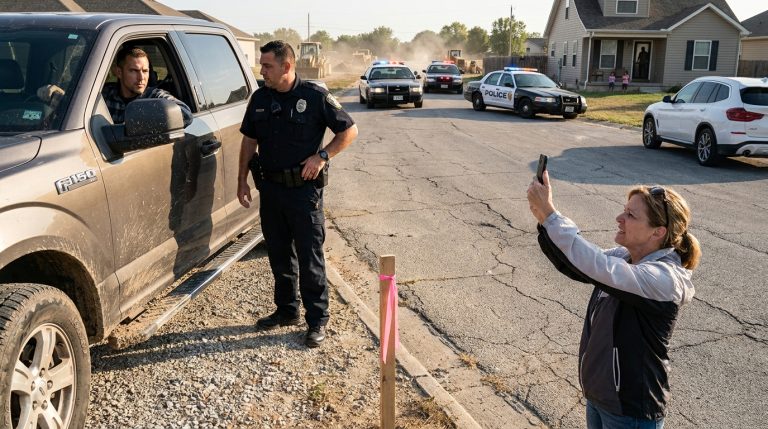
As I walked slowly down the gravel track toward the fence line, a phone lens flashed twice from behind the tinted glass—quick, silver reflections catching the harsh afternoon light. They weren’t inspecting the property lines for utility maintenance or surveying drainage. They were documenting the layout, logging the outbuildings, and building a visual file to back up the letters sitting on my table.
Before I reached the gate, the SUV shifted into gear with a sharp clunk of transmission linkage. The tires spun briefly in the loose dust, kicking up a choking plume of gray-brown grit that drifted across the fence line, before the vehicle accelerated down the county road toward the highway.
An hour later, the notification chime on my phone pinged twice.
I picked it up off the kitchen table. It was an email from the management company, bearing a fresh time-stamp and a revised balance sheet. This time, the text cited “visible property infractions” discovered during a routine compliance review. No specifics were listed, no photos attached, just a flat, bureaucratic warning that failure to clear the balance by the end of the week would trigger formal lien paperwork with the county recorder’s office.
They were turning the screws, tightening the pressure just enough to make resistance feel expensive.
I pulled a heavy yellow legal pad from the drawer, uncapped a black ink pen, and began writing down the date, the exact time, the vehicle description, and the wind direction. If they wanted to build a paper trail out of threats and blurry observations, I would build a parallel ledger out of absolute, unyielding facts.
CHAPTER 5: The Feed Store Conversation and the Smoke of Local History
The feed store sat three miles down the county road, a weathered cinder-block building smelling permanently of molasses, crushed corn, and rusted galvanized iron.
I pulled the truck off the gravel into the narrow dirt lot, cutting the engine with a dry shudder of the worn mounts. Inside, the air was dim and cool compared to the glare outside. Stacks of livestock salt blocks sat piled near the roll-up door, and the counter was cluttered with weathered catalogs and spare tractor parts.
Old Tom was behind the register, wiping down a greasy scale with a rag that had seen better decades. He looked up as the screen door slapped shut behind me, his eyes squinting through the bifocals perched on the bridge of his nose.
We talked about cattle feed first, about the price of alfalfa climbing three dollars a bale, and about the dry snap settling into the valley before the autumn rains. There was a rhythm to it—slow, deliberate, measured by the steady hum of a floor fan wobbling in the corner.
Then, as I dropped a heavy canvas bag of galvanized nails onto the wood counter, Tom paused, resting his palms flat on the worn surface.
“Hear you’re getting some mail from over the ridge,” he said quietly, his voice like gravel rolling in an empty tin.
I didn’t blink. I kept my hand on the nail bag, feeling the sharp points pressing through the heavy fabric. “Word travels fast down a two-lane road.”
“Ain’t just a two-lane road,” Tom muttered, leaning forward over the counter, lowering his voice until it blended with the drone of the fan. “Silver Creek Estates likes to stretch its arms when the ledger starts looking thin. They tried the same trick four years back on a patch of timber behind the Miller place further north. Sent letters, threatened liens, talked real smooth about community unity.”
I tilted my head, keeping my expression flat. “What happened to the Miller place?”
“Nothing,” Tom said, spitting the word out dryly. “Old man Miller didn’t shout back. He just got a lawyer and made them pull their records. Turned out they were bleeding cash from a botched golf course maintenance fund and needed a quick revenue bump along the margins. They backed off the minute a subpoena landed on their desk. They go after edge properties because they think folks out here are too tired to check the county books.”
The pieces clicked together with the heavy, unyielding snap of a well-fitted joint. It wasn’t an oversight. It was an extraction method.
I picked up the bag of nails, the cold iron biting into my palm, and tossed a twenty onto the wood. “Appreciate the read, Tom.”
“Check your filings, son,” he called out as I turned toward the door. “Paper don’t lie, but folks holding it usually do.”
I stepped back out into the bright, blinding glare of the afternoon, the weight of the old man’s words settling deep into the quiet rhythm of the truck’s suspension as I turned the ignition and headed back toward the ranch.
CHAPTER 6: The County Clerks Fluoros and the Empty Files
The county seat sat twenty miles east in a valley floor carved by an ancient riverbed. The administration building was a squat, two-story block of poured concrete and yellow brick, built in the mid-seventies and smelling permanently of floor wax, old paper, and stale coffee.
I parked the truck in a narrow stall against a rusted chain-link fence, cut the ignition, and stepped out onto the hot pavement. My boots made a heavy, hollow sound against the concrete stairs as I pushed through the heavy glass doors into the air-conditioned dimness inside.
The basement level housed the Land Records Division. It was a long room lined with green steel shelving units that held heavy, leather-bound plat books going back to the territory days. Overhead, twin fluorescent tubes hummed at a low sixty-cycle frequency, flickering faintly against the acoustic tile ceiling.
Behind the high oak counter sat an older woman with thin reading glasses suspended around her neck by a silver chain. Her fingers were stained faint violet from carbon paper, and a heavy brass stamp rested on a felt pad to her right.
“Looking for a plat search or an easement verification?” she asked without looking up from the ledger she was indexing. Her voice was flat, dry, and entirely immune to urgency.
“Both,” I said, laying my palm flat against the cool grain of the counter. “Parcel four-zero, Section twelve, West Ridge township. I need every recorded instrument attached to the deed since ninety-eight.”
She nodded once, pulled a paper slip across the wood, and typed the parcel number into an old, clunky terminal. The green-monitored screen flickered, text cascading down in jagged lines of monochrome code. She scrolled slowly, her index finger tracing the line on the CRT display.
“Deed is clean,” she said after a long minute. “Original patent from the state in nineteen-fifty, warranty deed transferred to you twelve years back. No mineral severances, no municipal utility easements beyond the county right-of-way.”
“Check Silver Creek Estates,” I said, leaning closer to the counter, the smell of vinegar and old binding glue rising from the open ledger beside her keyboard. “Check for an annexation agreement, a master covenant, or a boundary extension covering that section.”
She adjusted her glasses, her fingers clicking against the mechanical keyboard with the sharp, steady rhythm of a telegraph operator. She ran the search three different ways—by developer name, by geographic section, and by master index number.
“Nothing,” she said simply. “Silver Creek Estates has a recorded master plat for Phases One through Four. Their jurisdiction stops dead at the east bank of the dry creek bed. There’s no filing on record that touches your western boundary.”
“Pull the public disclosures for their association,” I requested. “The annual financial filings submitted to the state.”
She hesitated, looking up at me over the rims of her glasses. “Those are public record, but they aren’t indexed on this terminal. You’ll need the archived physical binders from the back room.”
She turned, her rubber-soled shoes squeaking against the linoleum tile, and disappeared into a narrow aisle between the steel shelving units. I stood alone at the counter, listening to the hum of the fluorescent tubes and the distant rumble of traffic out on the street above.
When she returned five minutes later, she dropped a thick, black vinyl binder onto the oak counter with a heavy, dusty thud. The binder was labeled Silver Creek Estates HOA – Annual Filings & Special Assessments.
I opened the ring mechanism, the cold iron snaps biting into my thumbs, and began turning the heavy paper pages line by line.
The numbers were laid out in black ink, certified by the association treasurer. In the early years, the operating budget was stable, backed by a healthy capital reserve fund earmarked for road maintenance and drainage repairs. But three years back, the graph took a sharp, downward dive. The reserve fund had been drawn down by nearly forty percent to cover an unbudgeted drainage remediation project along their eastern perimeter.
Tucked behind the financial disclosure for the previous year was a folded sheet of yellowed paper—a copy of an internal board audit. Margin notes written in red pencil detailed a growing operational deficit, alongside a handwritten notation near the bottom line: Peripheral Assessment Program – Outer Corridor Realignment.
It wasn’t a mistake. It was a calculated, desperate dragnet.
They were bleeding cash from bad engineering inside their own walls, and rather than raise dues on the voting homeowners who held seats at their annual meetings, they were attempting to quiet-bill the rural edge properties outside their legal boundary. They calculated that folks living off the grid, miles down gravel roads, would pay five hundred dollars a year in bogus administrative fees rather than spend five thousand dollars on a land-use attorney.
I pulled out my phone, snapped a sharp, clear photo of the financial page and the handwritten audit notes, and carefully smoothed the paper back into its place within the binder.
“Find what you were looking for?” the clerk asked, stepping back over with her brass stamp in hand.
“Found the ledger,” I replied, closing the heavy vinyl cover until the metal rings snapped shut with a cold, final click. “Now I just need to see how long they’ve been running the book.”
I walked back out toward the concrete stairs, the heavy air of the basement giving way to the heat of the afternoon, holding the digital trail in my palm like a loaded tool waiting for the right joint to set.