The Cold Reckoning of a Grounded Mother: How a Neglected Wife Reclaimed Her Dignity
CHAPTER 1: THE CURB ON ELM STREET
The cold rain was just starting to slick the asphalt when the first sharp spasm hit my lower back. I gripped the plastic handle above the passenger window, my knuckles turning white against the grey vinyl of David’s sedan.
“David, stop the car,” I said, keeping my voice as flat as the pain would allow. “My water just broke. We need to turn toward St. Jude’s right now.”
David didn’t look at me. He kept his eyes locked on the windshield, his hands tight on the steering wheel at ten and two. “Don’t start this now, Lisa. My mother has been prepping the guest room since yesterday. The whole family is waiting at the cabin.”
“I am in labor,” I said.
He pulled the sedan over to the gravel shoulder, threw the transmission into park with a harsh clunk, and unbuckled his seatbelt in one violent motion. He didn’t check on me. He leaned across the console, popped the passenger door open, and pressed his palm flat against my shoulder, pushing hard enough to force me back against the door frame.
“Get out,” he said.
The air in the cabin went still. “What?”
“You’re going to ruin the cloth seats,” he spat, his voice dropping into that quiet, venomous register he used whenever I failed to anticipate his mother’s expectations. “Look at you. You’re dripping on the floor mat. Get out on the curb and call a cab. I’m not bringing a soaked car to my parents’ place.”
I stared at his profile—the clean-shaven jawline, the neat collar of his work shirt—waiting for the joke. It didn’t come. His hand stayed clamped on my collarbone, shoving forward until my right foot hit the wet concrete outside.
“David, it’s forty-five minutes to the city hospital,” I whispered. A second contraction rolled through my abdomen, heavy and dull, shutting off my breath. “I don’t have a cab app on this phone. The battery is at twelve percent.”
“Then you should have charged it,” he said. He leaned past me, grabbed the door handle, and pulled it shut with enough force to rattle the window in its frame.
The tires kicked up wet gravel as the sedan pulled away, the red taillights shrinking down Elm Street before turning hard toward the highway.
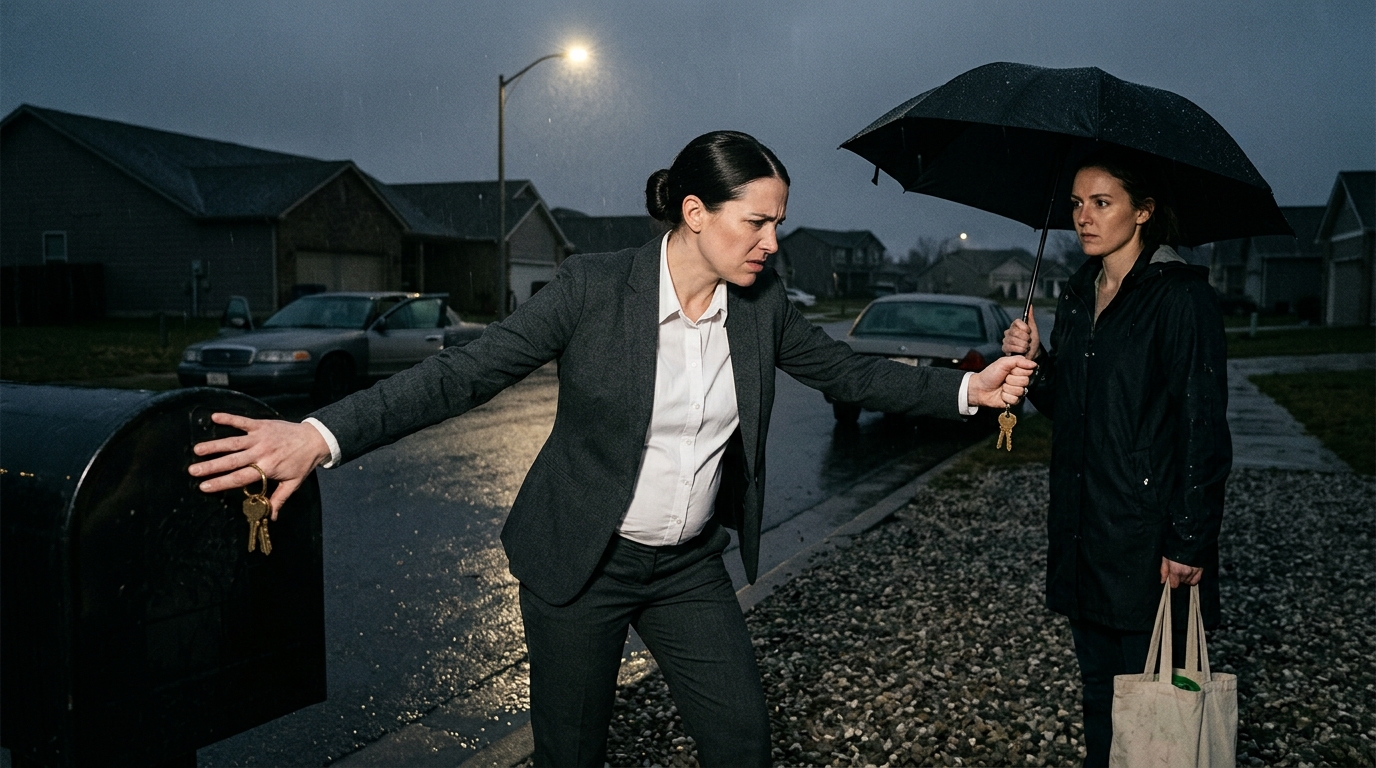
I stood on the shoulder of the road, one hand pressed against the icy metal of a mailbox to keep my knees from buckling. The rain hit my neck, soaking into the cotton of my sweater.
A key ring was heavy in my jacket pocket—a heavy brass ring with three keys I no longer needed. I pulled it out, rolling the thick metal edge over my thumb, pressing the hard brass into my skin until the sharp physical sting anchored the panic rising in my chest.
Footsteps crunched on the gravel behind me.
“Lisa?”
Sarah stood three feet away under a broad black umbrella, holding a canvas grocery bag against her hip. She took in the wet sweater, the posture of my spine, and the dark streak of red taillights fading at the end of the block.
She didn’t ask a single stupid question. She stepped forward, caught my elbow under her arm, and locked her frame against mine to take half my weight.
“My car is in the driveway,” Sarah said, her voice crisp and steady. “We aren’t waiting for an ambulance. Move your feet.”
CHAPTER 2: COLD SANCTUARY
The windshield wipers beat a steady, rhythmic slap against the glass as Sarah navigated the turn onto the main avenue. My breath fogged the cold side window, each shallow inhale bringing the sharp, antiseptic smell of wet wool and street oil.
“Hold on,” Sarah said quietly, her eyes fixed on the spray kicking up from the pavement ahead. “Emergency intake is three miles out. I called ahead to the desk.”
My phone vibrated in my coat pocket. Once. Twice. The screen lit up against the dark fabric, displaying David’s name across the glass before switching to his mother’s contact tag. I didn’t reach for it. I tightened my grip on the brass key ring, letting the square edges cut into my skin until the sharp focus drowned out the dull, heavy pressure rising low in my spine.
“Let it ring,” I said.
“It’s not just him,” Sarah said, making a smooth lane change around a delivery truck. “His mother tried my landline two minutes before I found you on the curb. She wanted to know if I’d ‘seen you making a scene’.”
A sour taste rose in my throat. I leaned my head back against the headrest, watching the streetlights bleed into long yellow streaks across the rain-pitted glass. “She knew he was dropping me.”
“She planned the timing,” Sarah said plainly. “Your husband isn’t smart enough to coordinate a two-car departure on his own.”
We pulled under the bright fluorescent canopy of St. Jude’s Emergency Entrance. The heavy glass doors slid open automatically, spilling warm, bleach-scented air into the wet night. Two orderlies stepped out with a wheelchair, their rubber-soled shoes squeaking against the wet tile.
Within twenty minutes, the chaos of the street was replaced by the low, mechanical hum of the triage room. A blood pressure cuff pinched my upper arm, inflating with a soft, rhythmic hiss. The monitor beside the bed beeped—steady, stubborn, real.
“Vitals are holding,” the nurse said, snapping off her latex gloves with a crisp pop. “Dr. Vance will be in shortly. You’re fully dilated, Lisa. We’re moving you to delivery.”
My phone on the bedside tray buzzed again. A text preview flashed on the dark screen: Pick up now. Mom says you’re overreacting and ruining the weekend. If you aren’t at the house by nine, don’t bother coming back.
I picked up the phone. My battery icon hovered at four percent. I didn’t reply. I swiped to the voice memo application, tapped the red record button, and laid the device face-down on the stainless steel tray, right next to the brass keys.
The door swung open, and Sarah stepped in, holding two paper cups of cheap hospital tea. She set one down on the tray, her eyes dropping to the glowing red recording dot on my phone screen.
“He called my husband’s office line,” Sarah said, settling into the vinyl armchair beside the bed. “David thinks because my husband sits on the board, he can leverage him to make me stay out of this.”
“What did your husband say?”
“He told David that if he set foot on hospital grounds tonight, security would have him removed for trespassing,” Sarah replied, taking a slow sip of tea. “David hung up on him.”
A sharp contraction seized my abdomen, tighter this time, pulling a harsh, dry breath from my lungs. I clamped my teeth together, refusing to give the empty room a sound. I looked at the small leather purse Sarah had grabbed from my hallway before we left.
Tucked into the side pocket was David’s spare work ledger—a small, black vinyl notebook he’d left on the kitchen counter that morning. Sticking out from the back cover was the edge of a thick, cream-colored envelope bearing his mother’s handwriting and the blue crest of a private regional bank down the valley.
I reached out, my fingers trembling slightly as I pulled the envelope free. Inside wasn’t just a letter; it was a set of duplicate transaction slips, stamped and dated over the last six months. Every withdrawal from our joint checking account had a matching deposit entry here—transferred directly into a private trust bearing his mother’s maiden name.
The door opened again, and my mother stepped into the room, her coat dripping rainwater onto the linoleum floor, her face pale but set like iron.
“The doctor is outside,” my mother said, stepping directly to the side of the bed and taking my cold hand in hers. “Your father is in the lobby handling the admission forms. He’s already spoken to the facility administrator.”
“David called,” I said, my voice barely a whisper against the hum of the heart monitor.
“I know,” my mother said, her fingers tightening around mine with a strength that surprised me. “He called your father three times. Demanded to know why you weren’t answering your duties.” She let out a short, cold breath. “Your father told him that if he stepped through those front doors, he’d better bring a lawyer.”
The monitor’s rhythm quickened slightly as another wave of pressure built behind my hips. I stared at the cream-colored bank slips sitting on the tray beneath the harsh fluorescent lights.
Layer by layer, the polite fiction of three years was stripping away, leaving only the hard, unyielding truth of what had to be done.
CHAPTER 3: THE UNRAVELING ASSET
A gentle tap at the doorframe cut through the hum of the bassinet monitor. Sarah stepped inside, carrying a manila folder under her arm, her boots clicking softly on the linoleum.
“He tried to get through the main lobby twenty minutes ago,” Sarah said, setting the folder on my tray table. “He brought his mother. She was wearing a tailored coat and holding a silver baby blanket, demanding to see ‘her grandchild’.”
I didn’t turn my head from the window. “What did security do?”
“They read them the trespass notice your father filed at midnight,” Sarah replied, clicking open the metal clasp on the folder. “David threatened to call the police. My husband overheard him from the administrative corridor and stepped out. He handed David his official suspension notice right there in front of the lobby desk.”
I looked down at the documents inside the open folder. Bank statements, internal corporate audit summaries, and notarized ledger copies spread across the plastic surface.
“David thought his regional manager job was bulletproof,” I said, my thumb tracing the cold paper edge. “He thought your husband didn’t pay attention to regional payroll.”
“He didn’t, until David tried to use corporate legal funds to cover up his personal transfers,” Sarah said flatly. “Look at page three.”
The numbers aligned in neat, dark columns. For eighteen months, David hadn’t just been moving our joint savings into his mother’s private trust. He had been using his corporate expense account to pay off her credit cards, listing them as “client hospitality” while marking my personal healthcare expenses as “unapproved household surcharges.”
The desk phone beside the bed rang—a single, sharp chime before the nurse’s station redirected it.
Instead, my personal cell phone buzzed against the nightstand. The caller ID showed my mother-in-law’s number. I pressed speaker and laid the phone between the bank ledgers.
“—unreasonable, calculating woman!” Her voice blasted through the small speaker, sharp and trembling with uncontrolled fury. “You have no right to hold David’s child hostage in a public hospital! Do you know what you’ve done to his reputation? His manager called him into the office an hour ago!”
I kept my voice dead level. “He left me on the side of Elm Street while my water was breaking.”
“It was a misunderstanding about the leather seats!” she shouted, her voice cracking under the strain of her unearned audacity. “He was under immense stress planning our family weekend! You are his wife, Lisa. Your duty was to accommodate him, not ruin his career over a few drops of water!”
“The bank slips are on my table, Evelyn,” I said quietly. “The duplicate passbooks from your regional branch down the valley.”
The line went completely dead for three full seconds. The background noise of her living room faded into absolute silence.
“You had no right to go through his briefcase,” she hissed, her tone shifting instantly from outraged matriarch to a cold, venomous cornered animal. “That money belongs to the family estate. David earned every cent of it while you sat at home.”
“The court will decide who earned it,” I said. “And the forensic auditor Sarah’s husband appointed this morning is currently reviewing your trust account.”
“You think you’re so clever,” she snarled, slamming her hand down on a table on her end of the line. “David will never sign a divorce agreement. He will drag this through every court in the state until you don’t have a dime left for diapers. You won’t get a single cent of child support, and I will personally ensure the judge sees you as an unfit, vindictive mother!”
I didn’t argue. I didn’t raise my voice. I simply reached out and tapped the red end button on the screen, cutting her off mid-sentence.
Sarah looked at me from across the bed, her eyebrows raised slightly. “She’s going to make him fight dirty.”
“Let them,” I said, sliding the bank statements back into the manila folder and closing the clasp with a firm click. “The lawyer is arriving at two o’clock. And every single transfer has her signature on it.”
CHAPTER 4: THE FINAL SETTLEMENT
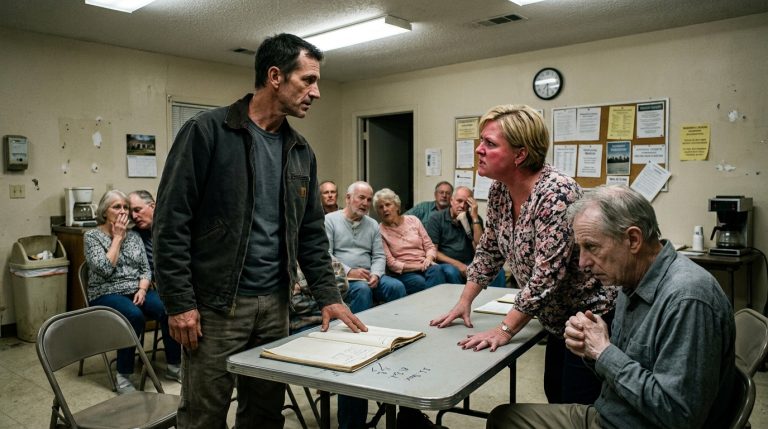
David’s tie was loosened at his collar, his eyes rimmed with red. Evelyn sat rigid beside him, her gloved hands gripping the edge of the mahogany table so tightly the leather stretched over her knuckles.
“This is extortion,” Evelyn said, her voice trembling as she glared at my attorney, Mr. Vance. “You think you can drag my family through the mud over a few mismanaged household funds? My son built his career from the ground up!”
Mr. Vance didn’t even look up from his fountain pen. He uncapped it, laid it neatly beside the signature line of the decree, and pushed the two-page document across the grain.
“Your son’s former employer has already finalized his termination audit,” Mr. Vance said, his tone dry and unbothered. “The bank records show forty-two separate transfers from the joint marital account into your private trust, Mrs. Miller. That constitutes intentional dissipation of marital assets under state law.”
“I’m not paying child support,” David barked, slamming his palm flat on the table. The brass clock chimed twice in the silence that followed. “I don’t even have a job right now because of your friends! You ruined my standing in the industry, Lisa. You expect me to hand over half my remaining savings after what you did?”
I reached into my coat pocket and pulled out the heavy brass key ring I’d carried from the shoulder of Elm Street. I laid it on the polished wood with a dull, heavy clatter right on top of the settlement papers.
“You aren’t giving me anything, David,” I said, keeping my eyes fixed directly on his. “You’re returning what you took. The court garnishment order for your severance package is already signed. The bank has frozen the trust account down the valley.”
Evelyn snapped her purse shut with a loud metallic click. “We’ll appeal! We’ll fight custody in open court!”
“You can try,” Mr. Vance replied, opening a second blue folder. “Though I should inform you that the hospital audio recording—where David explicitly refuses to transport my client during active labor—has already been admitted into the custody evaluation file. The family court referee reviewed it this morning.”
David’s face drained of color. He looked at his mother, his jaw working silently as the last piece of his false leverage crumbled against the hard, unyielding wall of his own documented actions.
“Sign the division of property,” I said softly, sliding the pen toward his hand. “Or we go straight to the judge’s chambers at nine o’clock tomorrow.”
David’s hand shook as he picked up the pen. He didn’t look at his mother, whose lips were pressed into a thin, white line. He scrawled his name across the bottom of the final page, the ink bleeding slightly into the heavy paper.
Three hours later, the afternoon sun washed across the quiet porch of my parents’ house.
The brass keys were gone, turned over to the estate executor along with the house deed. Inside, the low, steady sound of my daughter breathing filled the quiet living room as I folded a warm cotton blanket over her bassinet.
Sarah stepped out onto the porch, carrying two mugs of fresh coffee, and handed one to me without a word. We stood together against the railing, watching the gentle breeze rustle the green leaves in the garden, the silence around us completely devoid of tension.