The Serpent’s Shadow: A Legacy Written in Blood, Where Every Action Demands an Ultimate Reckoning
CHAPTER 1: THE TENSION OF THE COLD STEEL
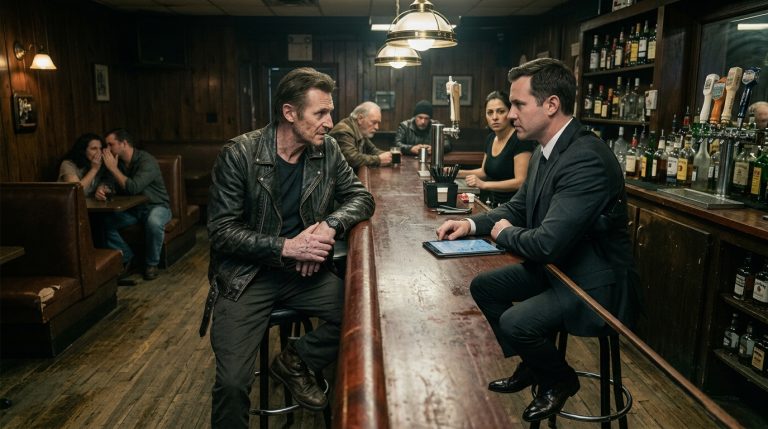
The vinyl of the booth was cracked, a thousand tiny fissures that caught the morning light and threw it back at Glenn Patterson’s eyes. He didn’t move. He didn’t blink. He only felt the heavy, calloused weight of Cutler’s finger pressing into his forearm, right against the faded ink of the serpent.
It was a cold, calculated pressure. Cutler wasn’t just being a bully; he was probing. He was testing the structural integrity of the old man’s composure. The diner had gone deathly silent, the kind of quiet that precedes a landslide.
“I’m waiting, Grandpa,” Cutler hissed, his voice a serrated blade in the stagnant air. “You’ve got five seconds to tell me which unit allowed that mark, or I’m going to take it off you, skin by skin.”
Glenn felt the phantom sensation of a bamboo needle and the metallic tang of blood in his throat—not from the diner, but from the humid, suffocating jungle of 1968. He kept his breathing slow, rhythmic. He knew the cost of panic. He calculated the distance to the cutlery drawer behind the counter, the firing angle from the street, and the precise moment of inertia if he had to stand.
“You’re making a mistake,” Glenn said, his voice a low, steady rumble that defied his years. “Some stories weren’t meant to be read by the light of day.”
Cutler’s eyes widened, then darkened with a predatory glee. He pressed harder, his knuckle digging into the nerve cluster. “I like mistakes.”
The bell above the door jingled, a sharp, piercing sound that shattered the tension. But it wasn’t the police. It was the synchronized click of combat boots on tile. Through the diner window, Glenn saw the formation. Three black Suburbans, engines idling with the deep, hungry purr of high-end tactical vehicles.
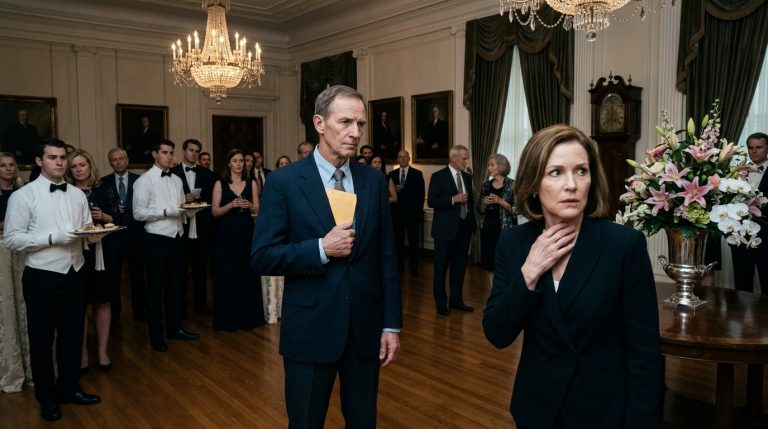
The door swung open, and the light shifted, caught by the four silver stars on the General’s collar as he stepped inside. The room felt smaller suddenly, the air pressurized. General Marcus Thorne didn’t look at the patrons, or the frightened waitress. His gaze, cold and clinical, locked directly onto the hand that Cutler was using to press against Glenn’s arm.
Cutler froze, his arrogance momentarily suspended by the raw, kinetic authority radiating from the man in the doorway.
“Remove your hand,” Thorne said. It wasn’t a request. It was a sentence.
As Cutler hesitated, his face turning an ash-gray, Glenn noticed something that made his heart stutter. The General’s right hand was resting on the grip of his sidearm, the holster unlatched. It was a gesture of protection, or perhaps, of final disposal.
“Marcus,” Glenn whispered, the name hanging like a funeral shroud.
The General took a step forward, his shadow stretching across the table to swallow them both, and for the first time in his life, Glenn realized he wasn’t being rescued. He was being managed.
CHAPTER 2: THE ANATOMY OF A SALUTE
Glenn felt the shift before he saw it. It wasn’t the sound of the General’s boots—which had stopped with the precision of a tomb closing—but the way the air in the diner turned frigid. Thorne stood over him, the four silver stars on his collar reflecting the harsh, overhead fluorescent glare. They were sharp, geometric, and perfectly aligned.
Cutler had pulled his hand back, his face a landscape of pallor and twitching nerves. He looked at his own fingers as if they were contaminated, his gaze darting between the General’s sidearm and the worn vinyl of the booth. The diner had become a vacuum. Even the hum of the refrigerator seemed to have cut out, leaving only the sound of Glenn’s own steady, raspy breathing.
Glenn didn’t look at the General’s eyes. He looked at the General’s hands. Thorne was a master of control, yet his right hand was hooked into the belt, thumb resting against the textured grip of his sidearm. It was a posture of tactical readiness, or perhaps, a desperate habit of a man who was always expecting a breach.
“Marcus,” Glenn repeated, the name tasting like copper and old dust.
The General didn’t answer immediately. He was processing the room, his eyes scanning the periphery with the cold, unblinking focus of a predator surveying a kill zone. When his gaze finally settled on Glenn, it wasn’t with the warmth of an old friend. It was with the analytical detachment of a field commander assessing a strategic asset that had become loose.
Then, with a motion so fluid it bordered on the hypnotic, Thorne brought his right hand up. He snapped into a salute. It was textbook, sharp enough to cut, a perfect angular display of discipline. But there was no love in it. There was only the recognition of a rank that no longer existed on any roster, a ghost talking to a ghost.
“It’s been a while, Glenn,” Thorne said. The voice was deep, resonant, but it lacked the inflection of genuine memory. It was calibrated. “I heard rumors you were still in the area. I didn’t think I’d find you in a place like this.”
Glenn didn’t return the salute. He let his arm stay on the table, his fingers tracing the edge of the serpent tattoo. He felt the phantom itch of the jungle—the biting, acidic smell of mud and rot—bleeding through the sterilized atmosphere of the diner. It was a sensory dissonance that threatened to ground him in the present while his mind clawed at the past.
“You’re a long way from the Command building, Marcus,” Glenn said. His voice was a low grind of gravel. “And you brought a lot of company for a social call.”
The General’s eyes flickered to the door, where his security detail stood in a silent, impenetrable wall of dark suits and mirrored sunglasses. He looked back at Glenn, his expression unreadable, a mask of iron forged in the same dark furnace that had created the tattoo on both their arms.
“There are threats, Glenn. Old ones. They have a way of surfacing when the tide goes out,” Thorne said, his voice dropping to a conspiratorial hum. He stepped closer, leaning over the table so that his face was inches from Glenn’s. “People are talking about the ’68 deployment again. They’re looking for the map, the coordinates we burned before the extraction. They think there’s something left in the brush.”
Glenn felt the cold tighten in his chest. The map. He hadn’t thought of the coordinates in decades. He had buried them, along with the names of the three men who hadn’t made it out. To hear the General speak of them now, here, amidst the smell of grease and burnt coffee, felt like a violation.
“That’s a grave, Marcus. Not a warehouse,” Glenn said.
“To you,” the General replied, his gaze intensifying. “But to the people who hold the strings now, it’s a loose end. A very dangerous, very long thread that needs to be snipped.”
Thorne straightened up, his silhouette blocking the light from the window. He was a monument to the system, the personification of the very machine they had once been built to serve. He looked at Cutler and Reyes, who were still trembling, their presence rendered irrelevant by the General’s arrival.
“Take them outside,” Thorne commanded, not looking at them. “And don’t come back until I signal.”
The two operators didn’t hesitate. They scrambled, their movements frantic and uncoordinated, fleeing the booth as if the air around Glenn were poisonous. As they passed the General, Thorne didn’t even acknowledge them. They were discarded tools.
“We have things to discuss, Glenn,” Thorne said, pulling out the opposing chair and sitting down. He moved with the slow, calculated grace of a leopard. “And I think it’s time we both remembered who we were before we became what they wanted us to be.”
Glenn watched him, his mind cataloging the General’s posture, the tension in his neck, the way his hand still hovered near his sidearm. He was in the presence of a man who held the power to erase his existence, yet who was clearly terrified of the very secret Glenn kept locked in his own pulse. The diner wasn’t a refuge anymore. It was a pressure cooker, and the seal was about to break.
Glenn looked past the General, out the window to the gray, overcast sky. He felt the weight of the years, the weight of the promise, and the sudden, sharp realization that he wasn’t just being watched. He was being hunted by the very brother who claimed to be guarding him.
“Buy me a coffee, Marcus,” Glenn said, his voice quiet. “I want to hear how you plan to bury the past without digging up the dirt that’s going to choke us both.”
Thorne smiled then, a thin, colorless line. “I’m not burying it, Glenn. I’m ensuring it stays dead.”
CHAPTER 3: THE WEIGHT OF THE UNVEILING
The General didn’t wait for a response. He rose from the table with that same unsettling, predator’s grace, his movements perfectly calculated. He smoothed his jacket, the brass buttons catching the dull diner light, and turned without looking back at Glenn. His security detail—the silent, hulking men in the dark suits—melted backward toward the entrance, their movements so synchronized it felt choreographed.
Glenn remained seated, his hand still resting on the table. He watched the General’s back, observing the way the man held his shoulders: rigid, braced for an impact that was happening entirely in the shadows. Thorne was leaving, but he was leaving a vacuum. The silence that rushed back into the diner wasn’t the same silence from before; it was heavier, laced with the frantic, unspoken questions of the patrons and the terrified rigidity of the staff.
As the General reached the door, he paused. He didn’t turn around. His voice, pitched just low enough to be heard over the distant, metallic hiss of the coffee machine, cut through the room. “The program is long since dismantled, Glenn. Don’t go looking for parts of a machine that’s been melted down.”
The bell chimed—a light, cheerful sound that felt like a mockery—and the General stepped out into the bright, uncompromising sun. The black Suburbans surged to life, their engines a low, guttural growl that shook the windowpane. Within seconds, the parking lot was empty, the tactical formation having dissolved as quickly as it had arrived.
Glenn exhaled, a long, jagged breath that felt like he was expelling gravel. He looked down at his arm. The serpent seemed to stare back at him from the wrinkled skin, the ink blurred and indistinct. Melted down. Thorne’s words were a warning, but they were also a confession. If the machine were truly dismantled, Thorne wouldn’t have bothered to come here himself. He wouldn’t have felt the need to physically confront a man he treated as a liability.
The waitress, Sarah, approached the booth. She didn’t look at Glenn; her eyes were fixed on the empty chair where the General had sat, her hands clutching a tray with such force that her knuckles were white. The bravado she had shown in the office had vanished, replaced by a deep-seated, instinctive fear.
“He’s gone,” she whispered, her voice barely audible.
“For now,” Glenn murmured. He reached into his pocket, pulled out a stack of bills—far more than the coffee was worth—and placed them on the table. He didn’t want to leave, but the diner was no longer safe. The moment Thorne had walked through that door, the space had been tagged. It was a monitored zone now, under the invisible lens of the Command’s oversight.
Glenn stood up, his legs feeling heavy, as if the floor were pulling him down. He walked toward the door, every step a conscious effort to maintain the rhythm of a man who had nothing to hide. Outside, the air was crisp, the smell of asphalt and pine needles failing to mask the faint, metallic scent of the tactical vehicles’ exhaust.
He didn’t head straight to his truck. He walked to the edge of the parking lot, standing near a rusted-out delivery van. He waited, his eyes scanning the horizon. He knew how the game worked. Thorne wouldn’t just leave him to disappear. He would have left a tail—a junior analyst or a surveillance tech—to keep a watch on the ‘asset.’
He spotted it within two minutes: a nondescript gray sedan parked three rows back, windows tinted to a charcoal black. It hadn’t moved when the Suburbans left. It sat there, an island of stillness in the busy morning.
Glenn’s heart didn’t race. He felt a familiar, cold sharpening of his senses. He didn’t feel anger, or even fear. He felt the cold, hard logic of the predator-prey dynamic clicking into place. He was the bait, and the General was testing the line.
He didn’t make a move toward the sedan. Instead, he turned and began the long, deliberate walk back to his own vehicle—a battered, old-model pickup that looked like it belonged in a scrapyard. As he walked, he felt the weight of the secret in his pocket: a small, weathered leather notebook he had carried for over fifty years. He hadn’t touched it since the extraction, but he knew exactly what was on page fourteen. The coordinates.
The General thought he was the kill-switch, a man who had long since forgotten his own power. But Thorne had underestimated the one thing he couldn’t simulate in his tactical briefings: the capacity for an old man to endure.
Glenn climbed into his truck, the engine turning over with a reluctant, grinding sound. He didn’t look at the gray sedan in the rearview mirror. He started driving, keeping his speed steady, his hands light on the wheel. He wasn’t going home. He was going to the one place that still held the fragments of the machine Thorne claimed was melted down. He was going to the source of the rust.
The road ahead was open, but the horizon felt narrow, closing in with the inevitability of a trap. He drove, watching the patterns in the side mirror, waiting for the first sign that the shadow behind him was ready to make its move.
CHAPTER 4: THE FRACTURE IN THE FOUNDATION
The transmission didn’t just fail; it surrendered with a violent, bone-jarring shriek of shearing metal that vibrated up through the steering column and into Glenn’s palms. He didn’t curse. He didn’t slam the wheel. He simply eased his foot off the gas and guided the sputtering pickup toward the gravel shoulder of the service road, his eyes flicking to the rearview mirror.
The gray sedan was still there. It had been maintaining a perfect, invisible distance for the last twelve miles, never closing in, never dropping back. It was a professional tail, the kind that didn’t care if the target stopped—it only cared that the target didn’t disappear.
As the pickup lurched to a final, shuddering halt in the shadow of a decaying barn, Glenn turned the ignition off. The silence that followed was heavy, broken only by the ticking of the cooling engine and the distant, lonely call of a crow. He sat for a moment, his hands resting on the wheel, letting his senses expand outward. He could feel the pressure in the air—the way the humidity was gathering, hinting at a storm.
He didn’t grab the door handle yet. He reached into the glove box, his fingers brushing against a heavy, cold Maglite, and then down to the floorboards. He knew exactly where the emergency tire iron was kept. It wasn’t a weapon by design, but in the right hands, it was a tool of undeniable efficacy. He gripped it, feeling the familiar, reassuring bite of the iron against his palm.
He stepped out of the truck. The air outside was colder than he expected, carrying the smell of wet earth and impending rain. He walked around to the front of the truck, popping the hood with a familiar, practiced motion. As the hood groaned open, he didn’t look at the engine. He looked at the reflection in the side mirror of the truck.
The gray sedan had slowed, pulling over nearly fifty yards behind him. It didn’t stop directly behind his pickup; it drifted to the opposite side of the road, keeping the width of the pavement between them. A single silhouette sat in the driver’s seat. They weren’t stepping out. They were waiting.
Glenn leaned over the engine, his back to the road. He began to fiddle with a loose vacuum hose, his mind racing through the tactical calculus. Thorne wasn’t just tracking him; he was isolating him. By letting the pickup die here, in this stretch of forgotten road, the General was forcing a confrontation on ground of his own choosing. Or perhaps, he was waiting to see what Glenn would do when the mask of the ‘compliant veteran’ finally slipped.
He reached into his pocket and touched the corner of the leather notebook. The coordinates. They were a map to a ghost-site, a place in Laos where the geography had been rewritten by fire. If the General’s people found it, they wouldn’t just be excavating a grave; they’d be unearthing the records of the ‘Omega’ shadow-ops. It was the evidence that proved the project had been an unauthorized violation of international law—a fact that, if leaked, would topple Thorne’s career and legacy in a single news cycle.
A door slammed in the distance.
Glenn didn’t turn around. He heard the crunch of gravel beneath steady, rhythmic footsteps. It wasn’t the clumsy pace of a civilian; it was the measured, toe-to-heel walk of an operator who had been trained to move without making a sound.
“You’ve got a bad alternator, Patterson,” the voice said. It was young, clean, and entirely devoid of the arrogance Cutler had displayed. It was the voice of someone who viewed the world through a lens of cold, sterile function.
Glenn wiped his hands on a rag, turning slowly to face the man. He was tall, dressed in nondescript outdoor gear that screamed ‘tactical concealment.’ He had the posture of a man who spent his life waiting for the signal to act.
“I’ve got a lot of things that aren’t working right today,” Glenn said, his voice a low rasp. He kept his right hand shielded behind the hood of the truck, the cold steel of the tire iron heavy and ready. “Who sent you? Thorne, or one of the suits who don’t like dirty secrets?”
The man stopped ten feet away. He didn’t reach for a weapon, but his eyes were scanning Glenn’s hands, his center of gravity, the way his weight shifted. “The General just wants to make sure you get where you’re going safely. You’re an important man, sir. A historical artifact. We’re just here to keep the history from being… misplaced.”
“Misplaced,” Glenn repeated, the word tasting like bile. He took a step forward, his boot crunching on the gravel. “You’re not here to guard me. You’re here to make sure I don’t reach the end of the road.”
“That depends entirely on how much road you have left,” the man said.
Glenn looked at him, really looked at him—the way his pulse throbbed in his neck, the way his left hand twitched toward his waistband. The man wasn’t just a guard. He was a courier, sent to see if Glenn still had the capacity to act. The ‘accident’ with the truck hadn’t been a coincidence; it was a test. And by standing here, engaging in this hollow dance of words, Glenn was already failing it.
He didn’t wait for the man to close the gap. He didn’t wait for the inevitable offer of a ‘ride’ that would end in a concrete basement. Glenn tightened his grip on the tire iron, his knuckles white, and shifted his weight forward, the ancient muscle memory of the jungle taking control of his limbs. He wasn’t the old man in the booth anymore. He was the survivor of a mission that officially never happened, and he knew exactly how to make a predator regret standing too close.
CHAPTER 5: THE SHADOWS REACH
The operator didn’t flinch. He didn’t even drop his hands. He watched the tire iron with the detached, clinical curiosity of a man observing a museum piece. “You’re a long way from home, Mr. Patterson,” he said, his voice as smooth and sterile as a polished floor. “And you’re holding a weapon that’s about forty years out of date.”
Glenn didn’t respond. He didn’t need to. He focused on the man’s stance—the way his weight was distributed on the balls of his feet, the subtle, almost imperceptible angle of his shoulders. He was looking for the tell. Every man, no matter how highly trained, had a micro-gesture that preceded an attack. A tightening of the jaw, a slight shift in the pupils, a fractional lean in the hips.
As the man moved, his jacket flared slightly, revealing the corner of a patch on his inner tactical vest. Glenn’s eyes locked onto it for a split second. It wasn’t the standard JSOC insignia. It was a distorted, monochromatic version of the Omega emblem—the serpent and the star, but redesigned, colder, stripped of the original’s meaning. It was a black-site patch, the kind used by teams that officially didn’t exist.
The realization hit Glenn with the force of a physical blow: this man wasn’t just sent to track him. He was sent to sanitize him.
“You’re not JSOC,” Glenn said, his voice a low, raspy rumble.
“I’m whoever you need me to be, sir,” the operator replied. He stepped forward, his hand moving to his side with a speed that defied the gravity of the situation.
Glenn didn’t hesitate. He swung the tire iron—not in a wild, panicked arc, but with the short, violent precision of a man who had spent his youth in the mud, fighting for every breath. He aimed for the man’s knee, the soft tissue that couldn’t be hardened by training or discipline.
The operator side-stepped, his movement so fluid it felt like he was predicting the trajectory before Glenn had even fully committed to the swing. He caught Glenn’s wrist with a grip like a vice, his fingers digging into the nerve clusters. The tire iron clattered to the gravel, lost in the shadows of the truck.
Glenn grunted, throwing his shoulder into the man’s chest, trying to create distance. They collided—a brutal, grinding impact of muscle and bone. For a moment, they were locked, two generations of violence colliding in the silence of the woods. The operator was younger, stronger, faster, but he was operating on a manual of textbook mechanics. Glenn was operating on a manual of survival, the kind that had been written in the dark and never meant for the light of day.
Glenn went low, sweeping his leg behind the man’s heel. It was a desperate, unrefined move, the kind of dirty fighting that had kept the five survivors of the Omega mission alive. The man stumbled, his composure fracturing for the first time. He grunted, his grip on Glenn’s wrist loosening, and Glenn seized the opening. He lunged upward, his forehead colliding with the bridge of the man’s nose.
There was a sickening crunch. The operator reeled back, clutching his face, blood blossoming dark and thick between his fingers. He was disoriented—a tactical window of maybe three seconds.
Glenn didn’t wait. He didn’t pursue. He lunged for the cab of the truck, his lungs burning with the effort. He grabbed the door handle, his hand slick with sweat and the faint, metallic scent of the man’s blood. He scrambled inside, slamming the door just as the operator regained his footing, his hand fumbling for his sidearm.
The engine sputtered, groaned, and then roared to life—a miraculous, dying gasp of the machine. Glenn slammed the truck into reverse, tires spinning in the mud, gravel spraying in a chaotic arc. He saw the operator raise his pistol, the muzzle flash a blinding, silent spark in the growing gloom. A bullet hissed through the thin metal of the door, missing Glenn’s leg by inches.
He floored it, the old truck lurching backward, then spinning violently onto the road. He didn’t look back. He kept his eyes on the road, on the way the light was failing, on the way the world seemed to be closing in around him.
He was out, but he was marked. The patch he had seen—that distorted emblem—meant the project wasn’t just alive; it had been corrupted. It was no longer a legacy of service. It was a business. And he was the only living key to the vault that contained the evidence of their rot.
He drove for miles, his heart hammering against his ribs, his hands shaking on the wheel. He wasn’t just being hunted by the General anymore. He was being hunted by the ghosts he had tried to bury. He looked at the dashboard, at the fuel gauge needle dancing near the red, and realized he had no destination left. There was only the road, the rain that had finally begun to fall, and the cold, hard realization that the serpent in his skin wasn’t just a promise—it was a target.
CHAPTER 6: THE HARDWARE OF REGRET
The truck swerved as Glenn took a turn too sharply, the tires skidding on the slick, rain-dusted asphalt. He fought the wheel, his muscles aching from the strain of the struggle, his breath coming in short, jagged gasps. He didn’t look at the gauges, but the smell of scorched rubber and boiling coolant was thick enough to taste. The truck was dying, and every mile it managed to cover felt like a loan he was taking against his own life.
He knew where he was going now. Not a destination, but a necessity. There was a small, dusty shop on the outskirts of the next town, a place that dealt in agricultural salvage and forgotten tools. It was where he had spent the better part of his retirement, turning bolts and fixing machinery that the world had long since decided was trash. It was the only place he felt the kind of controlled, mechanical certainty that his current reality had stolen from him.
As he drove, the adrenaline began to ebb, replaced by a cold, numbing clarity. His hand drifted to his side. The bruise where the operator had gripped him was already blooming into a dark, painful shade of purple, but the physical hurt was secondary. What gnawed at him was the patch. The distorted serpent. He had spent decades believing that the Omega mission was a singular, isolated trauma—a dark chapter that had ended in the jungle. Seeing that symbol repurposed, refined, and wielded by a new generation of cleaners meant that the project hadn’t been a mistake. It had been a template.
The realization made his skin crawl. He wasn’t just a veteran protecting a secret; he was the last surviving record of a crime that was currently being rebranded as policy.
The town appeared ahead, a cluster of lights flickering against the bruised purple of the twilight sky. Glenn slowed, keeping his speed low to avoid drawing attention. He didn’t take the main road; he cut through the back alleys, his truck rattling with a dying, discordant symphony of loose metal. He finally turned into the gravel lot of the salvage shop, pulling the truck into the deepest shadow of the main bay.
He killed the lights. The sudden darkness was absolute.
He sat for a moment, listening. His ears were tuned to the cadence of the night—the hum of power lines, the rustle of dry weeds, the distant, muffled sound of a highway that felt miles away. There was no sound of a following engine. Either he had lost the tail in the backroads, or the man he had fought was busy reporting the failure to someone who wouldn’t be pleased.
Glenn climbed out of the cab, his legs shaky. He walked to the side of the bay, sliding the rusted corrugated door open just enough to slip through. Inside, the shop smelled of grease, dry iron, and the familiar, grounding scent of old oil. It was a cathedral of discarded things.
He navigated the dark by touch, his hands moving over the cold surfaces of lathes, drill presses, and bins of mismatched hardware. He reached the back bench, fumbling until he found the hidden release under the lip of the wood. A false compartment dropped open. Inside, wrapped in an oil-stained rag, was a heavy, stainless-steel lockbox.
He pulled it out, the weight of it a sobering anchor. He sat on a stool, the grit of the shop floor crunching under his boots, and laid the box on the bench. He didn’t open it immediately. He looked at his hands—they were trembling, not from age, but from the raw, kinetic energy of the past few hours.
The memory flared again: the face of the man who had died in the swamp, the young lieutenant who had been Thorne before he was a General. Thorne had been a boy then, scared and broken. He had been a partner, a brother. And now, he was the architect of this new, sanitized malice.
Glenn popped the latch. The lockbox groaned, the mechanism stiff with disuse. Inside was a collection of faded, plastic-covered documents, a roll of 35mm film, and a handwritten ledger. It was the entire accounting of the Omega mission—the unauthorized targets, the chain of command that led directly to a desk in D.C., and the names of the men who had been sacrificed to keep the secret.
He didn’t read the pages. He knew what they said. They were the sentences that would dismantle the current power structure. But he also saw something else: a small, silver tracking device, the size of a coin, tucked into a velvet-lined insert in the corner of the box.
He froze. He hadn’t put that there.
He brought the device up to the light of a single, flickering bulb hanging above the bench. It was clean, modern, and pulsed with a faint, steady red light. It wasn’t an artifact from 1968. It was the latest in signal-emitting technology.
They hadn’t just followed him. They had lured him here, to the one place he thought was safe, the one place he had kept as his final retreat. He wasn’t just being hunted—he was being herded. The gray sedan, the mechanical failure, the fight in the woods—they were all breadcrumbs leading him right back to his own sanctuary.
He stood up, the chair clattering loudly against the concrete, the sudden noise echoing in the claustrophobic space of the shop. He turned toward the door just as a single, low beam of light cut through the cracks in the corrugated siding.
He wasn’t alone. And for the first time in his life, the old, ingrained instinct to survive was warring with a new, dark resolve to see the cycle broken, no matter the cost. He reached for the tire iron he’d retrieved from the back of the truck, the cold steel feeling like the only honest thing left in a world of ghosts and signals.
CHAPTER 7: THE SILENT EXTRACTION
The light didn’t sweep the room. It was held steady, a single, piercing needle of white radiance that fixed on the lockbox resting on the workbench. Glenn stood motionless, his shadow stretching long and jagged against the grease-stained wall. He felt the cold iron of the tire iron in his hand, the metal biting into his palm, but his focus was entirely on the doorway.
A figure emerged from the glare, silhouette-masked by the backlighting. They moved with a terrifyingly efficient, hushed cadence—a predator that had already mapped the room and was now simply walking through its geometry. They weren’t wearing the tactical gear of the man in the woods; they were in dark, civilian-grade utility clothing, the kind that vanished into the background of an urban or rural setting with equal ease.
“The box, Glenn,” the voice said. It wasn’t the man from the road. This voice was softer, pitched with a haunting familiarity that made Glenn’s breath hitch in his throat. It was a voice from 1968, a voice he had heard over a radio in a rainy, blood-soaked bunker.
Glenn’s grip on the iron tightened until his knuckles ached. “You’re a ghost,” he whispered. “You didn’t make the extraction.”
The figure stepped forward, the light hitting the lower half of their face. It was a man, mid-sixties, his features lined with the same weary, hard-won experience that marked Glenn’s own. He had been one of the five, one of the men who had shared the circle. He was supposed to have been killed by a mortar strike three days before the end.
“I didn’t make the extraction because I was ordered to stay behind,” the man said, his tone devoid of malice, flat and informative. “Thorne needed someone to watch the coordinates, to make sure the site stayed buried. He couldn’t trust a civilian or a standard unit. He needed an Omega.”
The betrayal hit Glenn harder than the physical fight in the woods. It wasn’t just that Thorne was a criminal; it was that the entire history of his service, the very foundation of his grief, had been a manufactured narrative. The men he had mourned, the brothers he had carried in his heart for half a century—they had been discarded, repurposed, or, in this case, repurposed into the very jailers of the project they had helped build.
“You’ve been watching me,” Glenn said, the realization settling like ice in his veins. “All these years.”
“Watching over you,” the man corrected. He reached into his jacket, and for a heartbeat, Glenn thought he was reaching for a weapon. Instead, he pulled out a small, handheld terminal. He tapped the screen, and the red light pulsing from the tracking device in the lockbox vanished. “The General sent me to perform the final maintenance. He’s tired, Glenn. We’re all tired. The coordinates aren’t a secret anymore. They’re a liability. If they ever resurfaced, the international fallout would be absolute.”
“So you’re here to finish it.”
“I’m here to stop the noise,” the man said, his eyes scanning the shop with the same cold, tactical precision. “Give me the box. I’ll make sure the record is destroyed, and you can go back to your shop, your routine, and your coffee. No one has to know that the last variable couldn’t be closed.”
Glenn looked at the lockbox, then at the man who had been his brother-in-arms. He saw the flicker of doubt in the man’s eyes—the weight of decades of service to a lie. The man wasn’t a monster; he was a machine that had been running for too long, fueled by a directive that had long since lost its moral foundation.
“If I give it to you, it doesn’t end,” Glenn said, his voice quiet, almost mournful. “You’ll just come back for me later. Because as long as I’m breathing, there’s a witness.”
“There are no witnesses, Glenn. Just history,” the man said. He took a slow, measured step forward. “Don’t make me do this in a place that meant something to you.”
Glenn didn’t answer. He watched the way the man held his weight, the way his finger rested against the trigger guard of the pistol hidden inside his jacket. Glenn calculated the distance—five feet. He had the iron, but he had no armor. He had the resolve, but he had no backup. He was standing in the dark, surrounded by the ghosts of his own making, and the man who was once his shadow was now his executioner.
He didn’t look for an exit. There were none. He looked at the lockbox, then back to his former friend. He knew what had to happen next. He had spent his life waiting for the war to end, and he realized now that it was never going to end—not as long as he was the one holding the history of the world in his hands.
He stepped back, his boot catching on a stray bolt, and in that split second of instability, the man lunged.
CHAPTER 8: THE SERPENTS END
The movement was a violent, unthinking collision of bodies. The man crashed into Glenn, the weight of his intent driving them both backward into the clutter of the shop. They hit a heavy steel workbench with a sound like a tolling bell, metal ringing against metal. Glenn felt the air leave his lungs, a sharp, white-hot spasm of pain, but his hands remained focused. He didn’t try to wrestle the gun away—he went for the man’s heart, a desperate, frantic push against the fragile, beating center of a man who had long ago forgotten his own.
They tumbled to the floor, rolling over shattered glass and oily metal shards. The pistol fired—a deafening, concussive crack in the confined space—but the bullet sparked harmlessly against the concrete. Glenn scrambled, his grip tightening on the man’s jacket, and then, with a sudden, sickening release of tension, the man went limp.
He slumped against a lathe, his breath hitching, then stopping.
Glenn backed away, his own chest heaving. He leaned against a rack of industrial steel, his hands slick with the oil of the shop floor. The silence returned, more profound and absolute than ever before. He looked at the man he had once trusted with his life—the man who had been a ghost, a warden, and finally, an executioner. The betrayal hadn’t just been an act; it was the final, tragic fulfillment of the mission they had started in Laos.
He walked over to the workbench. The lockbox lay open, the ledger and film spilling out onto the grease-stained wood. He picked up the tracking device—the faint red light now extinguished—and realized the truth. He wasn’t the kill-switch because he was a soldier. He was the kill-switch because he was the only one who remembered.
He moved to the center of the shop, where the main power coupling for the heavy equipment was located. He had installed it himself years ago. With a steady hand, he opened the panel, pulled the master breaker, and then, using a pair of heavy industrial shears, he cut the primary lead.
The shop went dark. The hum of the town’s grid, the faint, electronic whine of the surveillance equipment Thorne had likely hidden in the walls—it all died. The shop became a tomb of dead metal, and for the first time in fifty years, Glenn Patterson was invisible.
He took the ledger, the film, and the tracking device, and he carried them to the industrial furnace in the corner of the bay. He fed the papers, the plastic film, and the cold, metallic device into the fire. He watched as the history of Project Omega curled, blackened, and vanished into the ash.
The Payoff was not a victory parade or a public reckoning. It was the quiet, agonizing removal of the burden he had carried since 1968. He was no longer an asset. He was no longer a legacy. He was just a man.
He walked back to his truck, the tire iron now discarded in the dust of the shop floor. He didn’t look at the body, and he didn’t look back at the shop. He climbed into the driver’s seat, the engine turning over with a steady, quiet rhythm that hadn’t been there before.
He drove out into the cool, rain-washed air of the night. The town was asleep, unaware that a war had started and ended in the space of a single day. He drove toward the mountains, toward the places where the earth still held the secrets he had finally purged from the world.
He stopped at a small park near the edge of the woods, a place where the trees grew thick and untroubled. He stepped out and walked to the edge of a stream. He sat on the bank, the sound of the water washing away the grit and the grease of the shop. He reached into his pocket and pulled out a small, sharp knife—a tool he had carried since the jungle.
With a steady, slow motion, he etched a circle into the bark of an old oak tree, then a star in the middle. It wasn’t the serpent. It was just a mark. A sign that he had been there, that he had lived, and that he was finally, completely free.
He looked at his arm, at the faded ink of the tattoo. It was just a scar now. A memory of a promise he had fulfilled. The darkness of the night felt different—it didn’t feel like a threat; it felt like a blanket. He rested his head against the tree, closing his eyes, and let the rhythmic, soft sound of the forest replace the ringing in his ears. He was home.