The Glass Tower Falls: How a Dismissed Employee Engineered the Ultimate Corporate Checkmate Without Her Trust Fund
CHAPTER 1: The Boardroom Mockery
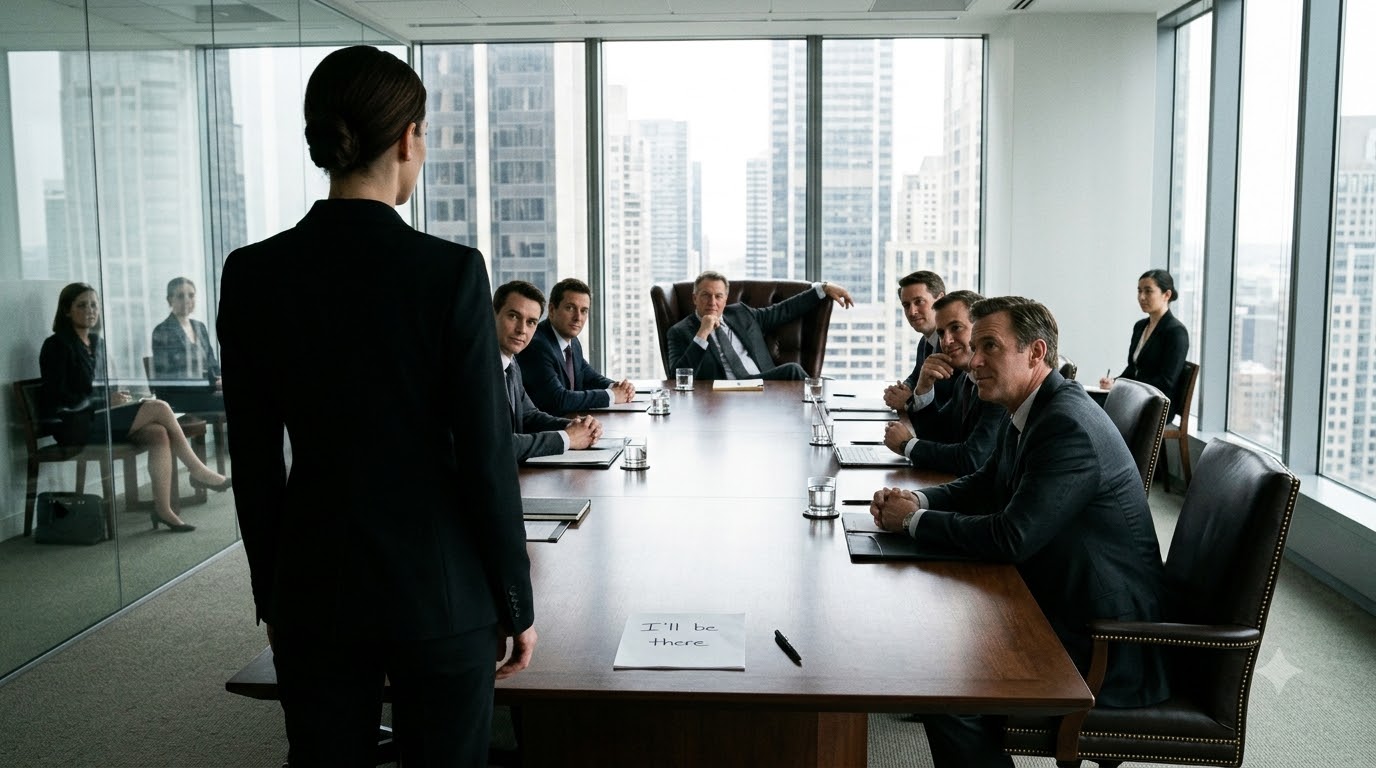
The glass-walled boardroom gleamed under soft golden lights, engineered to project absolute dominion. At the head of the long table, the chief executive leaned back, his posture loose and dripping with casual arrogance. Around him, vice presidents mirrored his smirk, leaning forward to catch the anticipated sting. Across the room, my notes lay neatly squared, my presence invisible until he spoke my name.
“Don’t forget to mark your calendar for the charity gala next week,” he said, his voice laced with mock hospitality. “You might finally see what high society looks like.”
A sharp ripple of laughter bounced off the glass walls. Every executive at the table understood the cruel subtext: I was the quiet back-office ghost, someone whose clothes were too plain and whose voice was too soft to ever cross that threshold. They waited for my cheeks to burn, for my eyes to drop in shame.
Instead, I lifted my gaze, keeping my breathing completely level. I didn’t blink, and I didn’t offer the satisfying twitch of humiliation they craved.
“I’ll be there,” I said. My voice was steady, cutting cleanly through the fading chuckles.
The CEO’s smile faltered for a fraction of a second, his eyebrows twitching upward in mild surprise before his polished mask snapped back into place. He leaned further into his leather chair, amused by what he assumed was foolish defiance. He had no idea that the game had already changed, and that the board they trusted was built on shifting sand.
CHAPTER 2: The Quiet Preparation
The office hummed with its usual midday frenzy, phones chiming and printers spitting out quarterly projections that nobody read closely enough. At my desk in the corner, the monitor glowed with rows of data detailing the firm’s recent expansion into overseas logistics. I didn’t reach out to corporate legal or lean on the board members who owed me favors. That leverage was gone, stripped away by design.
Instead, I dialed a private, unlisted number that hadn’t rung in three years.
“The vault remains sealed,” a familiar voice answered on the second ring, deep and measured. “Are you calling to check the locks or unlock the door?”
“I’m walking through,” I said, my voice dropping an octave to match the quiet gravity of the line.
There was no need for explanations or long greetings. The network I had built long before taking a back-office desk still remembered how to move without a digital footprint. Within minutes, the logistics chain requested by the CEO’s expansion team was flagged for physical audit under standard regulatory compliance. I didn’t need a majority share to expose a crack; I just needed a single unread signature on an acquisition file.
Later that evening, I stepped out of the humdrum office tower and into a discreet, low-lit fitting room across the city. The tailors here didn’t blink when I handed over the specifications for the evening gown. They treated the fabric not as clothing, but as an instrument of reclamation.
The silk was heavy, midnight-black, and cut with absolute, austere precision. When I ran my fingers over the seam, there was no hesitation left in my pulse. The foundation was set.
CHAPTER 3: The Grand Entrance
The ballroom swallowed sound beneath towering crystal chandeliers and vaulted ceilings painted with old-world extravagance. Crystal glasses chimed in a low, controlled rhythm while flashbulbs popped around the periphery. Every guest wore the uniform of absolute privilege, moving with the practiced ease of people who believed they owned the floor.
I didn’t pause at the threshold to scan for familiar faces or look for validation. My posture remained upright, each step measured against the polished marble floor with absolute calm.
A sudden draft from the side doors carried the scent of expensive cologne and ozone as a group of executives turned toward the entrance. Their idle chatter snapped shut mid-sentence like a pair of heavy shears.
“Who is that?” a voice muttered from the edge of the fountain display, sharp with sudden uncertainty.
The fluid motion of the silk dress caught the low golden light, casting a subtle, brilliant shimmer that refused to be ignored. Heads turned in a slow, synchronized wave across the room. The people who spent their days dismissing quiet employees now found themselves paralyzed by a presence they never anticipated.
I kept my gaze fixed straight ahead, bypassing the murmurs entirely. I wasn’t here to play their game or beg for a seat at their table. I was here to show them the foundation they stood on was cracking.
CHAPTER 4: The Convergence of Elites
The investor, a man whose portfolio usually dictated market trends across three continents, paused mid-stride. His eyes flicked from the midnight silk of my gown to my face, recognition hitting him with the force of a physical impact.
“I didn’t realize you were attending tonight,” he said, his voice dropping its usual transactional edge to offer a nod of genuine respect.
“Charity draws interesting crowds,” I replied, my tone remaining level and unreadable.
Across the room, several other industry figures shifted their attention toward our exchange. The realization rippled outward that I wasn’t an accidental interloper or a confused guest. They saw history in the way he greeted me, and the sudden shift in social gravity left them scrambling to re-evaluate every assumption they had ever made in the office.
The CEO, standing thirty feet away among his inner circle, caught the exchange over the rim of his crystal glass. His fingers tightened around the stem until his knuckles turned bloodless.
He had expected a spectacle of embarrassment. Instead, he watched his own peers pivot their attention away from him to acknowledge someone he had spent years treating like office furniture.
The silence between us across the crowded room stretched tight as a pulled wire. He set his glass down on a passing waiter’s tray with a sharp, metallic clatter and began to cross the floor toward me.
CHAPTER 5: The Checkmate Conversation
He forced a practiced, tight-lipped smile that didn’t reach his eyes, attempting to reassert the easy dominance of the boardroom.
“I see you found a way past the dress code,” he said, his voice dropping into a low, patronizing register meant only for my ears. “A bit theatrical for someone who usually spends her days filing invoices, isn’t it?”
I didn’t step back, nor did I offer the defensive flinch he expected. My fingers remained steady against the matte-black pen resting in my clutch.
“The invoices usually require accurate signatures,” I replied, my tone entirely level. “Especially when they involve overseas logistics acquisitions signed off without board review.”
The color drained instantly from his face, leaving his skin looking chalky beneath the golden gala lights. His smile vanished completely, replaced by a dark, dangerous glare of a cornered man.
“You are stepping completely out of line,” he hissed, his teeth clenched so tightly the words barely escaped. “You think a clever dress and a petty bluff give you power here?”
“It isn’t a bluff,” I said softly, meeting his furious gaze without blinking. “The regulatory compliance audit was filed this afternoon. Your expansion is already frozen.”
He lunged forward a fraction of an inch, his chest heaving with suppressed rage, refusing to admit defeat or surrender an inch of ground.
“You think you’ve won something,” he spat, his voice trembling with venomous denial. “You’re nothing without this company, and I will tear your reputation apart before the night is over.”
CHAPTER 6: The Final Collapse
He didn’t make it three steps before his private phone vibrated violently against his tailored wool vest.
He snatched the device from his pocket with a sharp jerk, his breathing ragged as he pressed it to his ear.
“What do you mean the accounts are frozen?” he barked, his voice cracking slightly under the sudden weight of the disclosure.
Across the room, the small circle of executives who had laughed in the boardroom days earlier stopped talking. They watched him fumble with the screen, the reality of the unread logistics audit rippling through the firm’s financial network.
I didn’t pursue him or offer a parting word. Vindication didn’t require shouting or gloating when the structure itself naturally corrected its own flaws.
“The board emergency meeting was called ten minutes ago,” a senior vice president muttered, staring past the CEO with wide eyes.
The CEO lowered his phone slowly, his fingers losing all their grip until the device slipped and clattered against the marble floor. He stood entirely alone in the center of the brilliant ballroom, stripped of the unearned entitlement that had sustained his authority for years.
Later that week, back at my modest apartment, the morning sunlight filtered quietly through clean blinds. I set my coffee mug down on the wooden table with a soft, even click, the room entirely devoid of tension. The noise of the corporate tower was gone, leaving behind only the steady, unshakeable peace of a boundary firmly held.